Daikoku JDM Car Meet Private Tour Dedicated Guide and Hotel Pickup
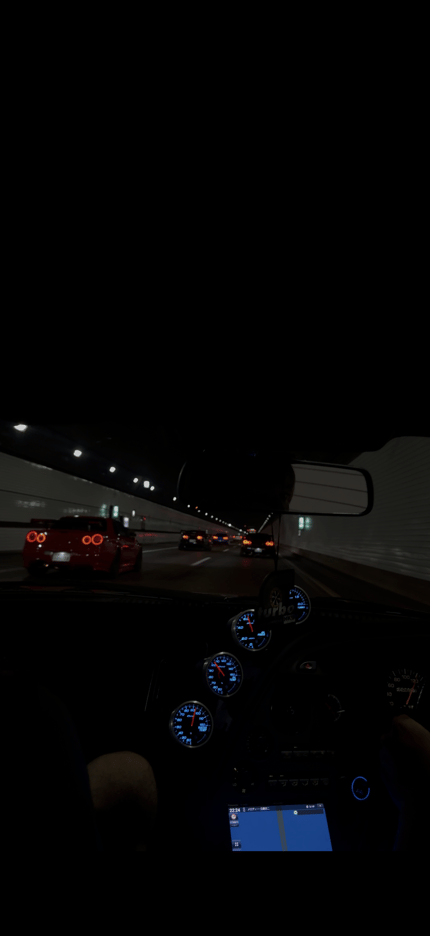
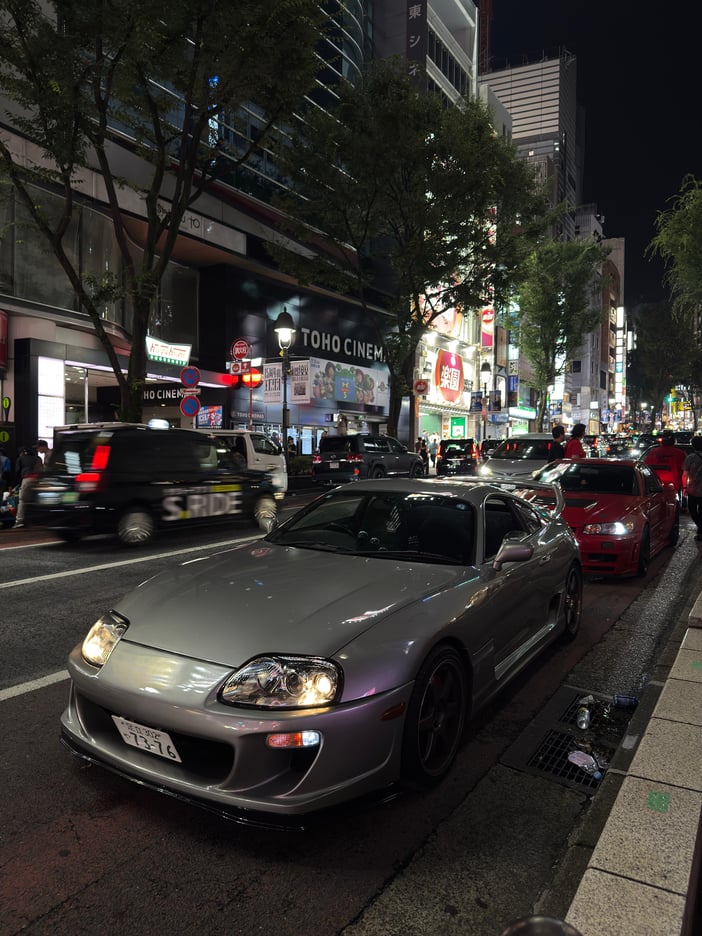
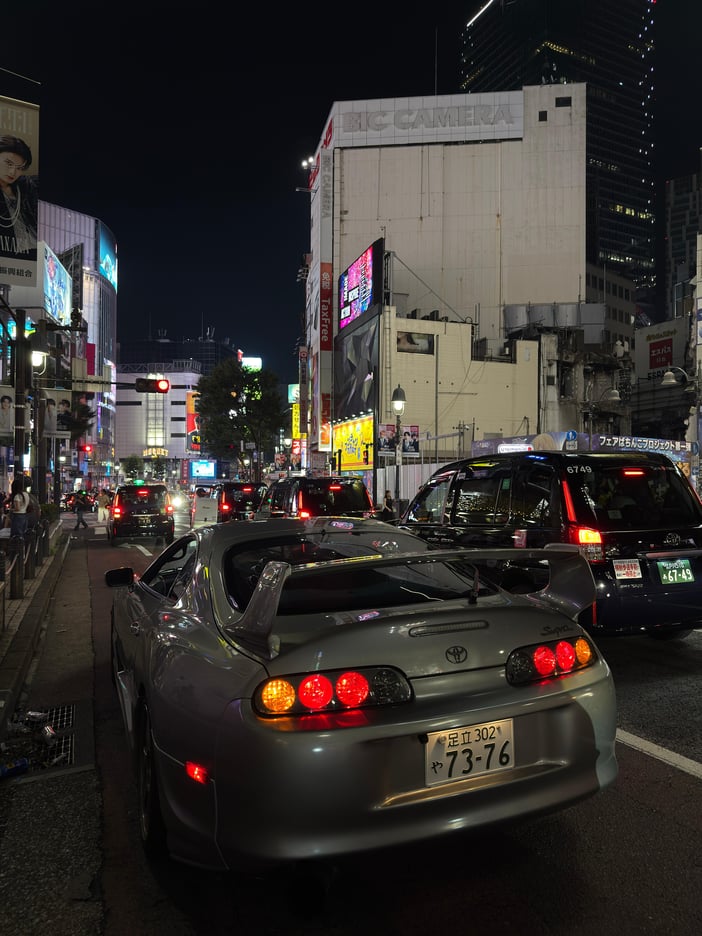
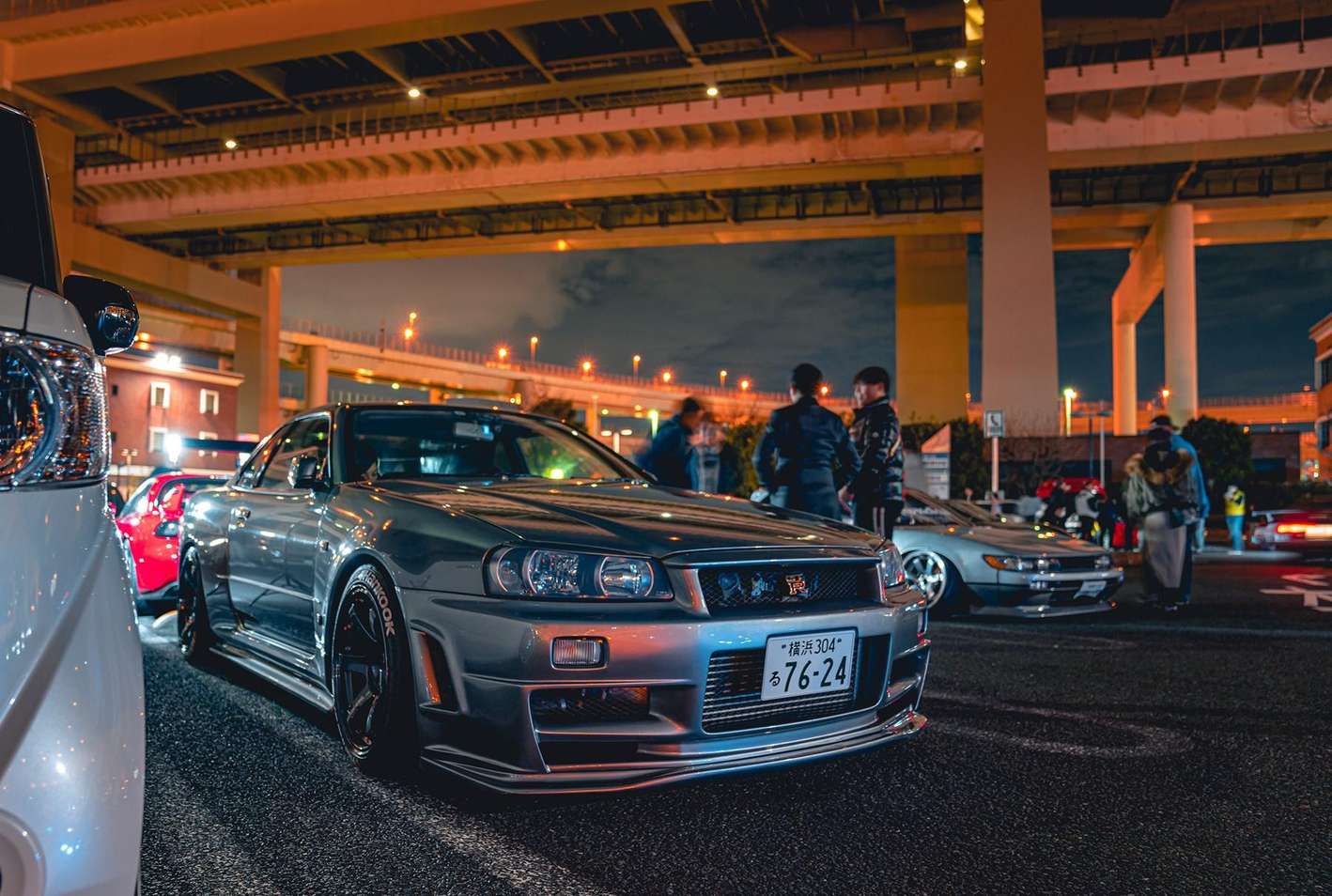
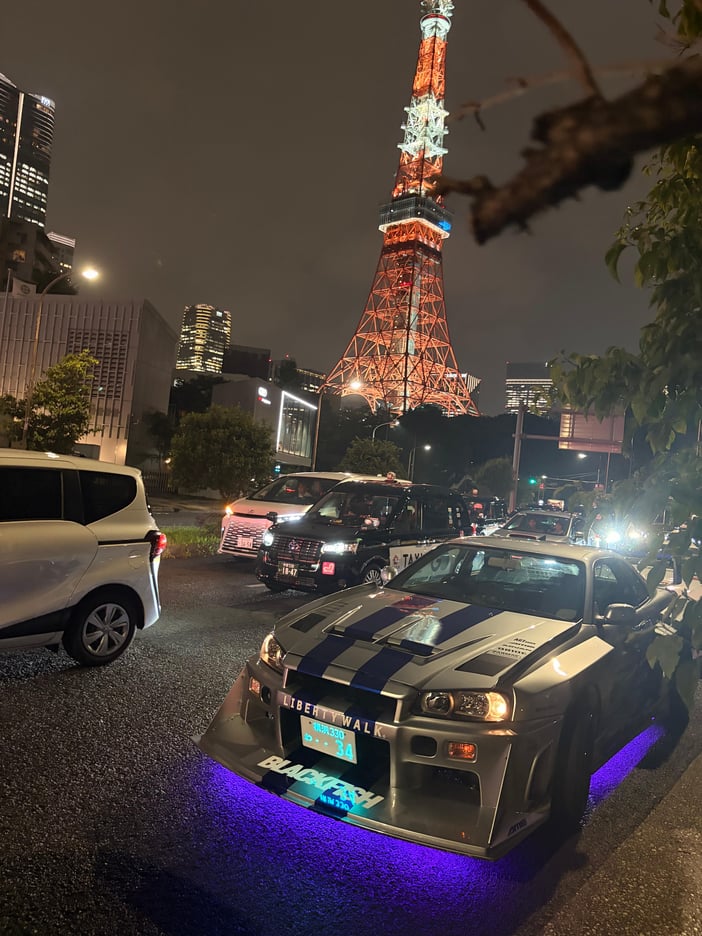
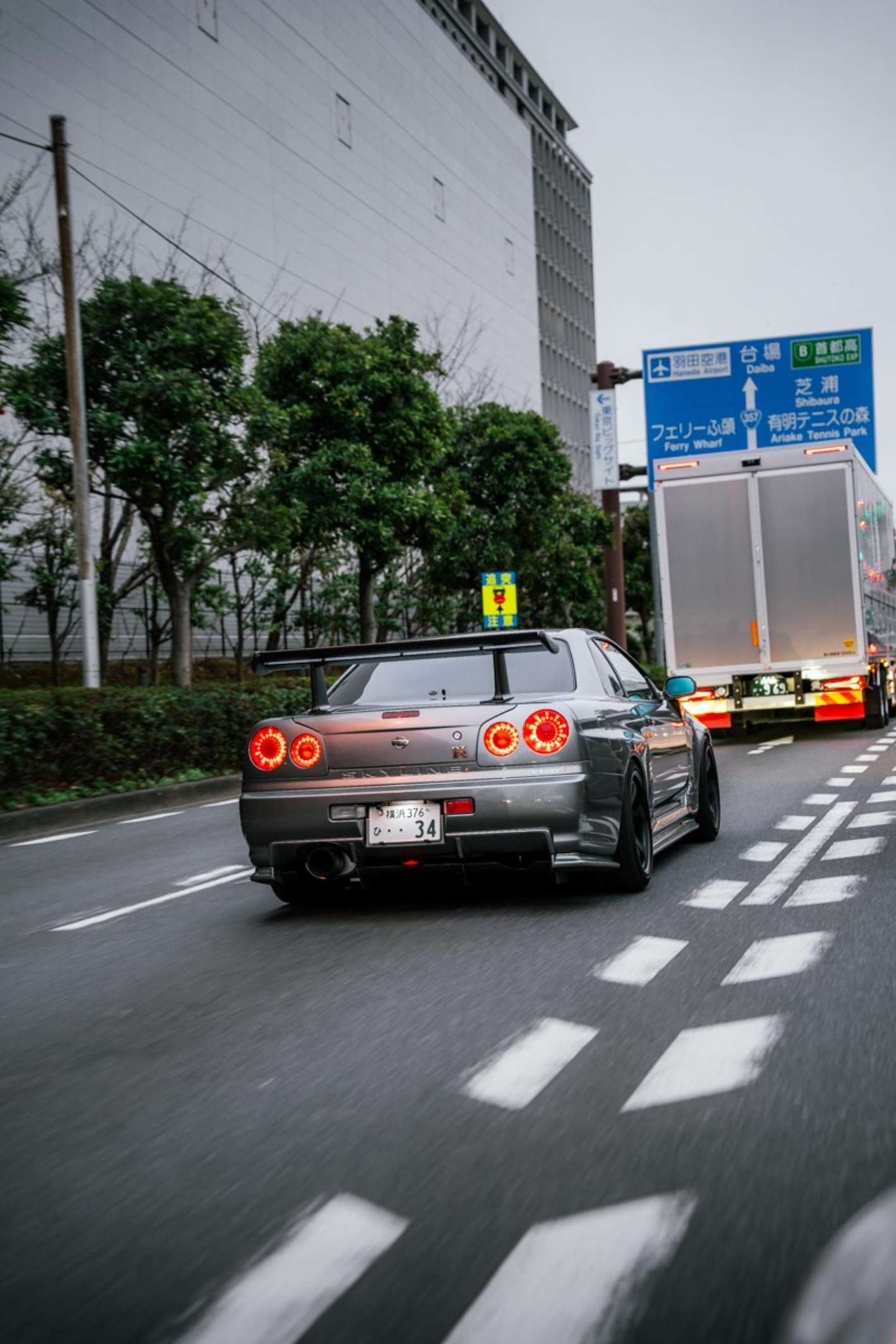
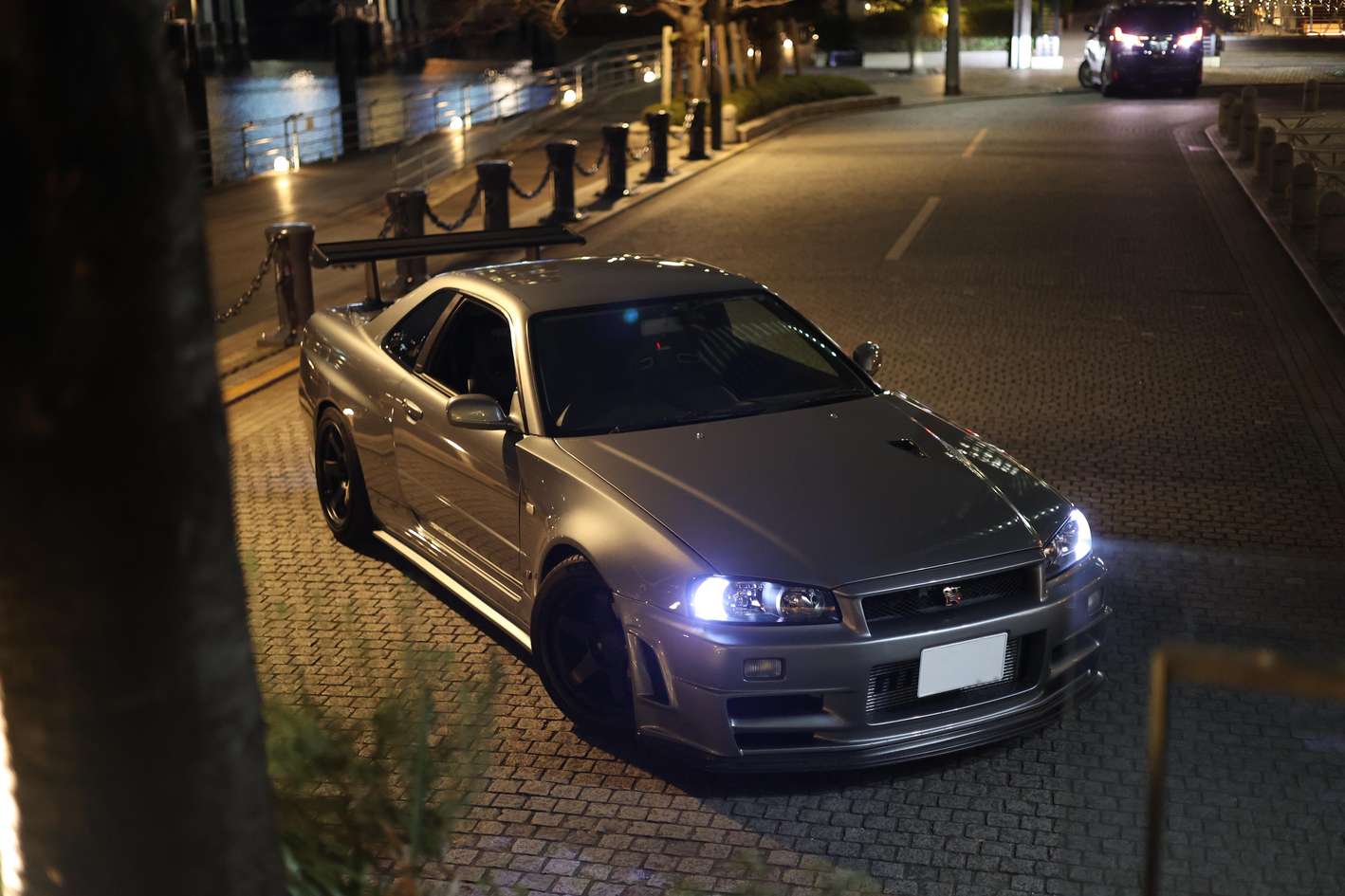
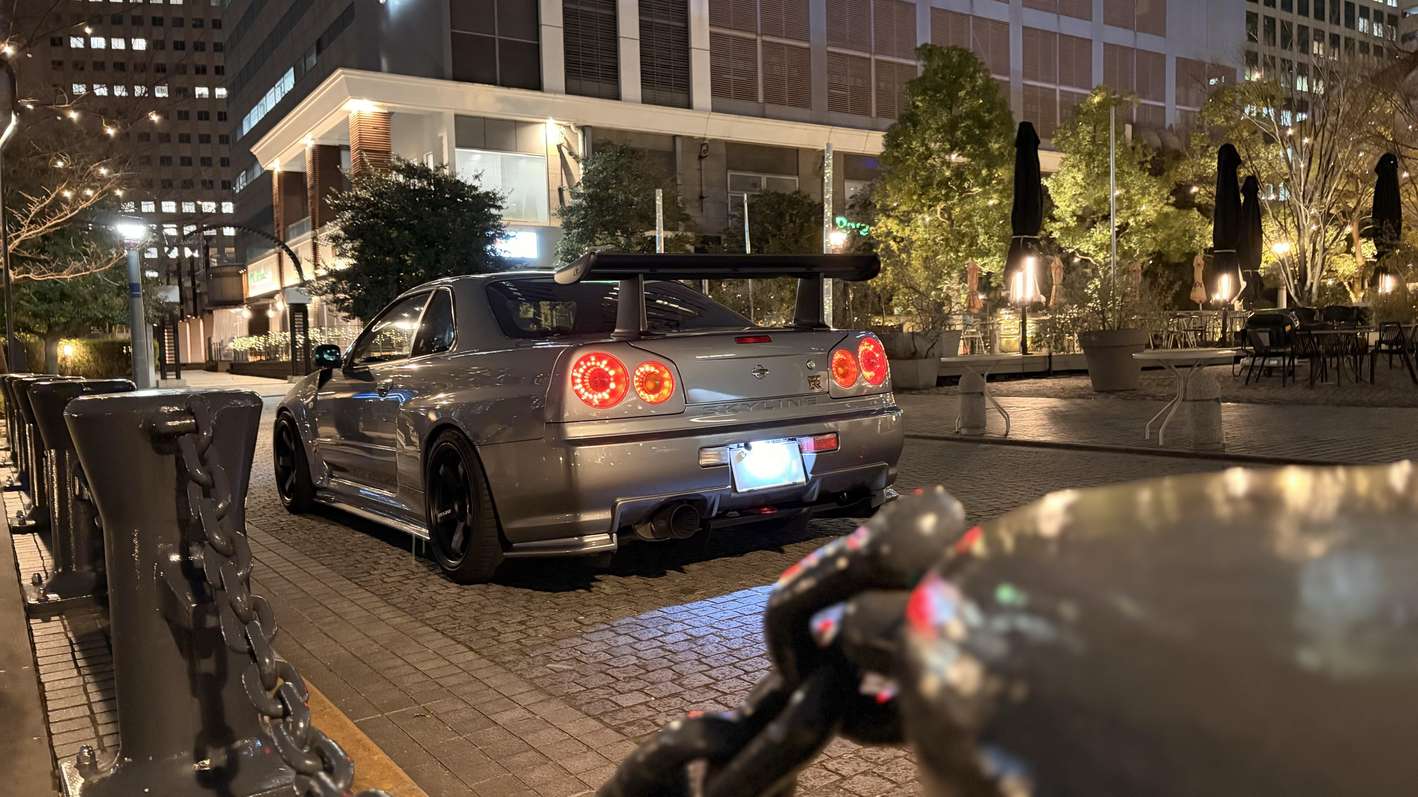
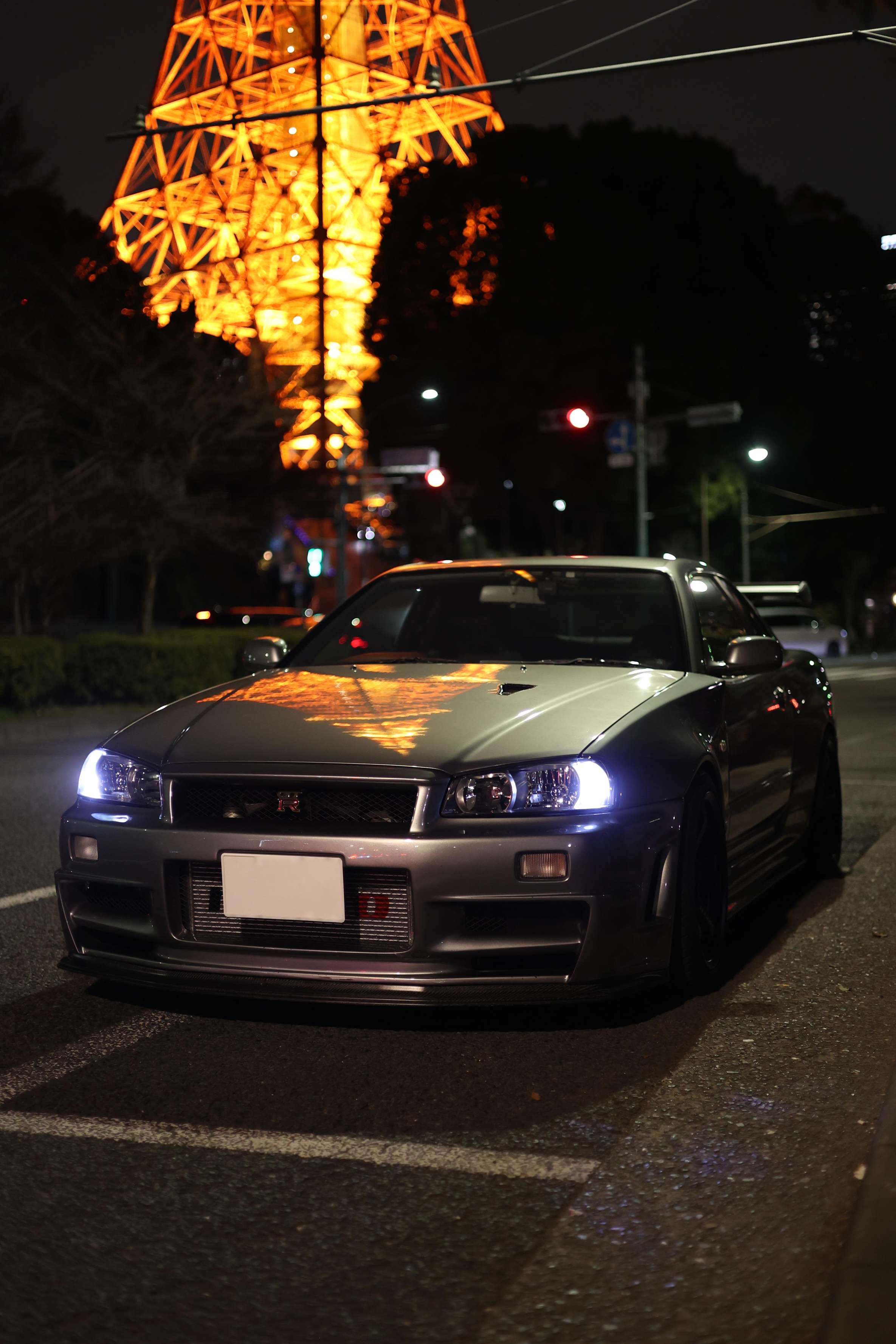
Book a private night run to Daikoku PA. Ride in your own R34 GT-R or Supra with a real enthusiast driver, no strangers in the cabin. Hotel pickup anywhere in central Tokyo, routes shaped around where the cars actually are, and a smooth plan B when police close the lot. Reserve your car tonight.
"Masaru's R34 Skyline drive through Tokyo was incredible. His passion and JDM knowledge made it unforgettable. The Autobacs stop was spot on, and Daikoku felt like a real, authentic car meet, not touristy."
4.9★average rating3,084traveler reviews100%free cancellation59countries travelers came from
Daikoku JDM private tour - picking your night ride
Two choices shape the night: a shared guided run in a manual JDM car, or a private charter where the vehicle belongs to your group. Every ride here is a passenger seat with a professional driver, so no license is needed. Couples and small groups usually land on a private car.
Getting thereAccess: Daikoku PA sits on an expressway island with no train, bus, taxi stand or pedestrian entrance, so your ride there has to bring you back.
Closuresweekend night crowds can trigger police shutdowns as early as 7:30 pm, and most tours then divert to Umihotaru PA or another spot.
DocumentsPassengers need no International Driving Permit or license, because a driver is arranged for you.
ChildrenSeveral tours set minimum ages between 5 and 10, and Japanese law requires a child seat for kids under six, so check compatibility first.
MobilityLowered cars with bucket seats do not suit wheelchair users, and you must be able to get in and out without help.
WeatherRain runs as usual with thinner turnout, but typhoons or highway closures can reschedule a tour or earn a full refund.
BookingSpecific cars depend on availability, so message the operator early, up to 48 hours ahead, if a particular model matters to you.
On boardSeatbelts are required in every seat, food and alcohol stay out of the car, and large luggage has no room in a coupe.
EtiquetteNever sit on, lean on or touch the parked cars, and skip revving or burnouts, since noise is what brings the police in.
Which JDM private tour fits your night?
Answer a few quick questions and see the private JDM run that suits your group.
1Who's coming?
2What's your budget?
3What do you want to see?
4What kind of trip?
Your best match
match
Tokyo: JDM Night Run in EVO, WRX & Skyline to Daikoku★ 4.9 (1,056) · 3 - 4 hours · Classic car meet
Popular with solo travelers; 99% gave it 4 or 5 stars.
Booked 6 times yesterday
The shared ride in a manual EVO, WRX STI or Skyline, with a private GT-R upgrade.
closurePolice sometimes close Daikoku PA's entrances on weekend nights when crowds get too big, and the parking area sits on an expressway island with no way in or out on foot.
Book a private tour that picks you up and brings you back by car, since taxis cannot collect you from inside the parking area. Good operators watch the night closely and reroute to spots like Umihotaru PA or Tatsumi PA, or refund the affected booking if Daikoku cannot be visited.
Private JDM tour picks for the Daikoku car meet
Cheapest way in
3.5 - 4 hours·Arabic, Chinese
4.6(186)
Tokyo: Daikoku or Umihotaru Tour (Silvia S15, GR86, 370Z)
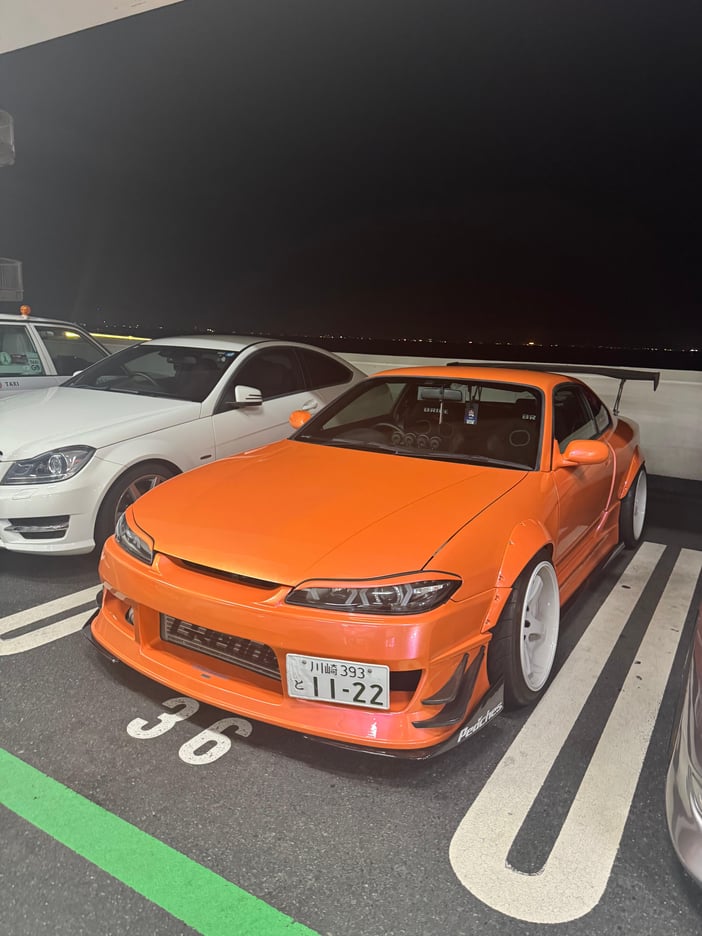
Option: Silvia S15 Turbo Private Tour (Choose Your Spot)
From the lowest starting price on the page, with a guide, all tolls and fuel covered, and a private Silvia S15 upgrade if you want your own car.
Free cancellationHotel pickup includedIn Arabic and Chinese
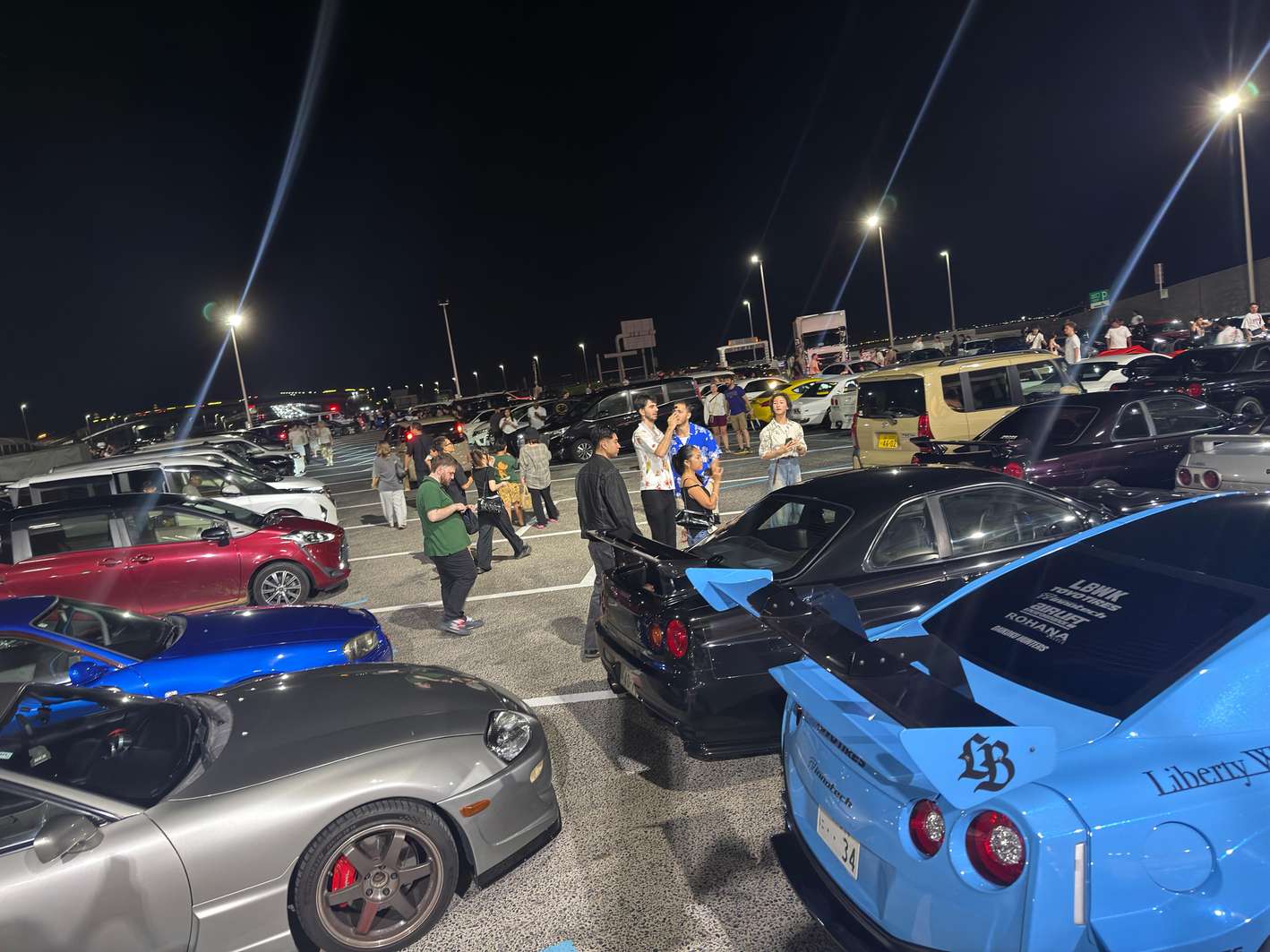
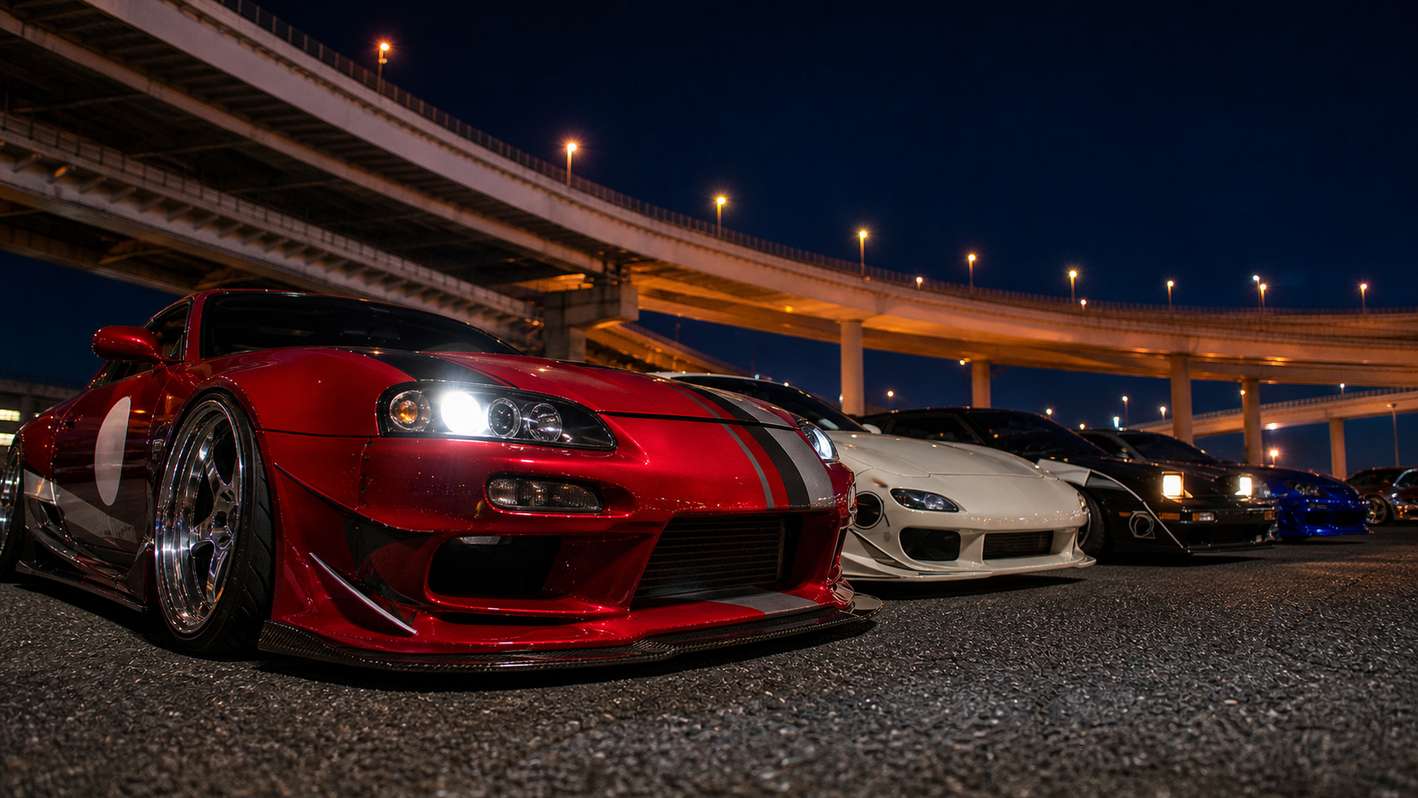
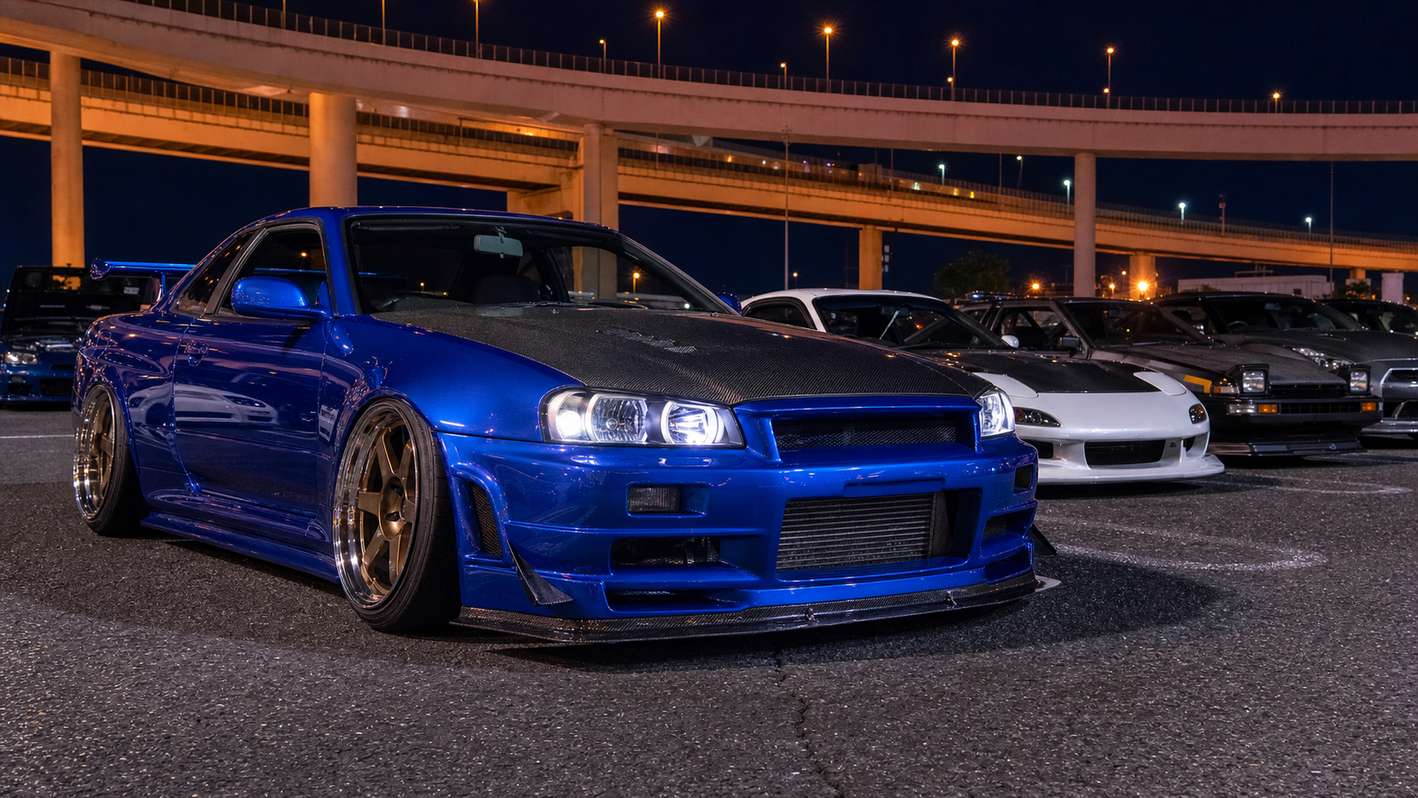
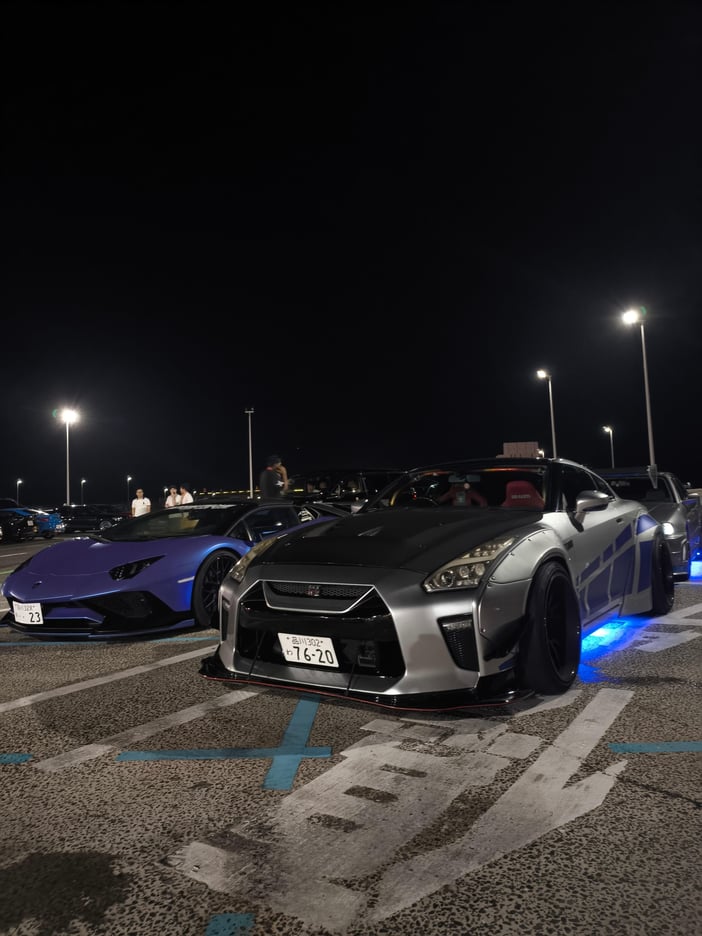
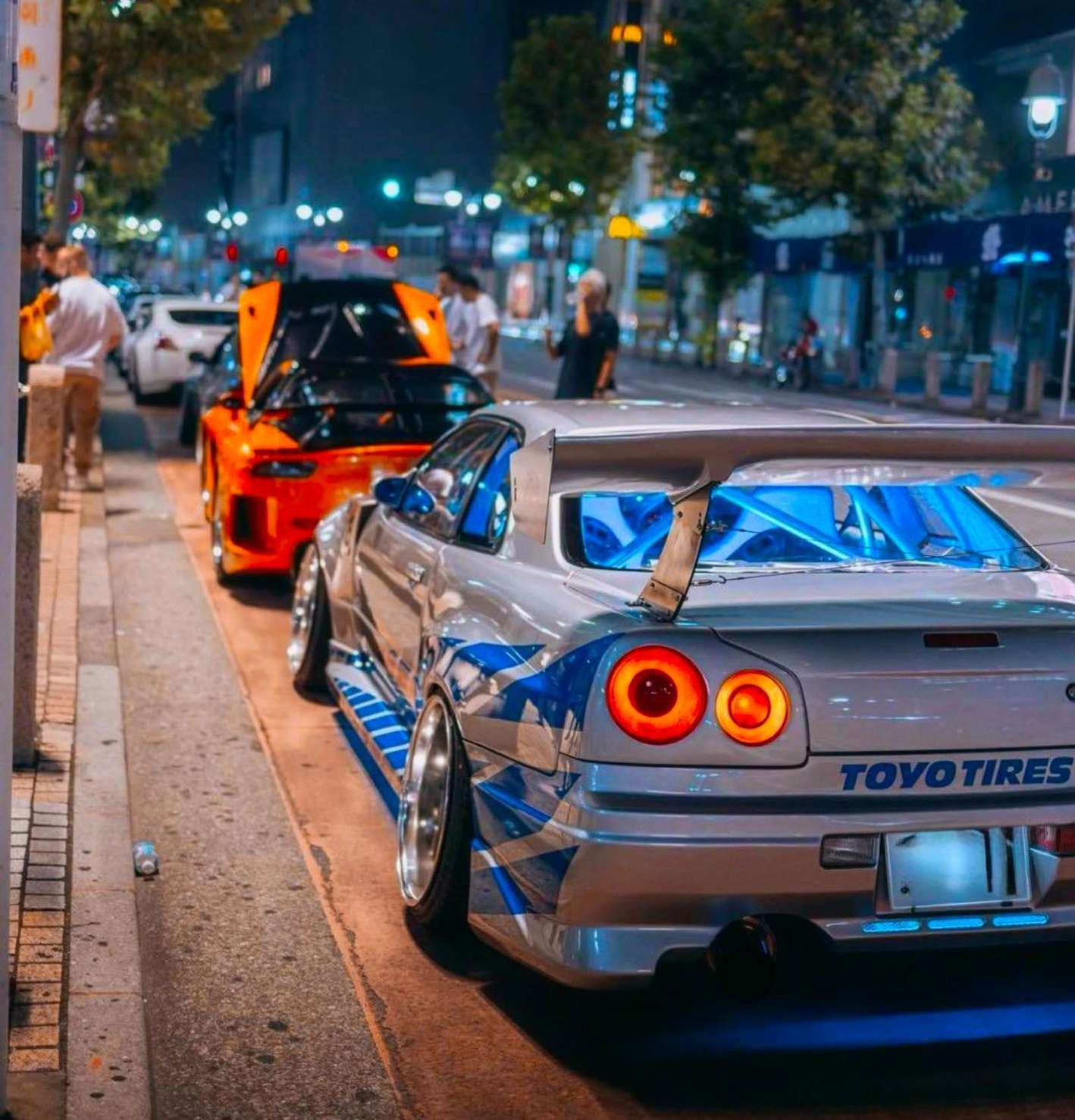
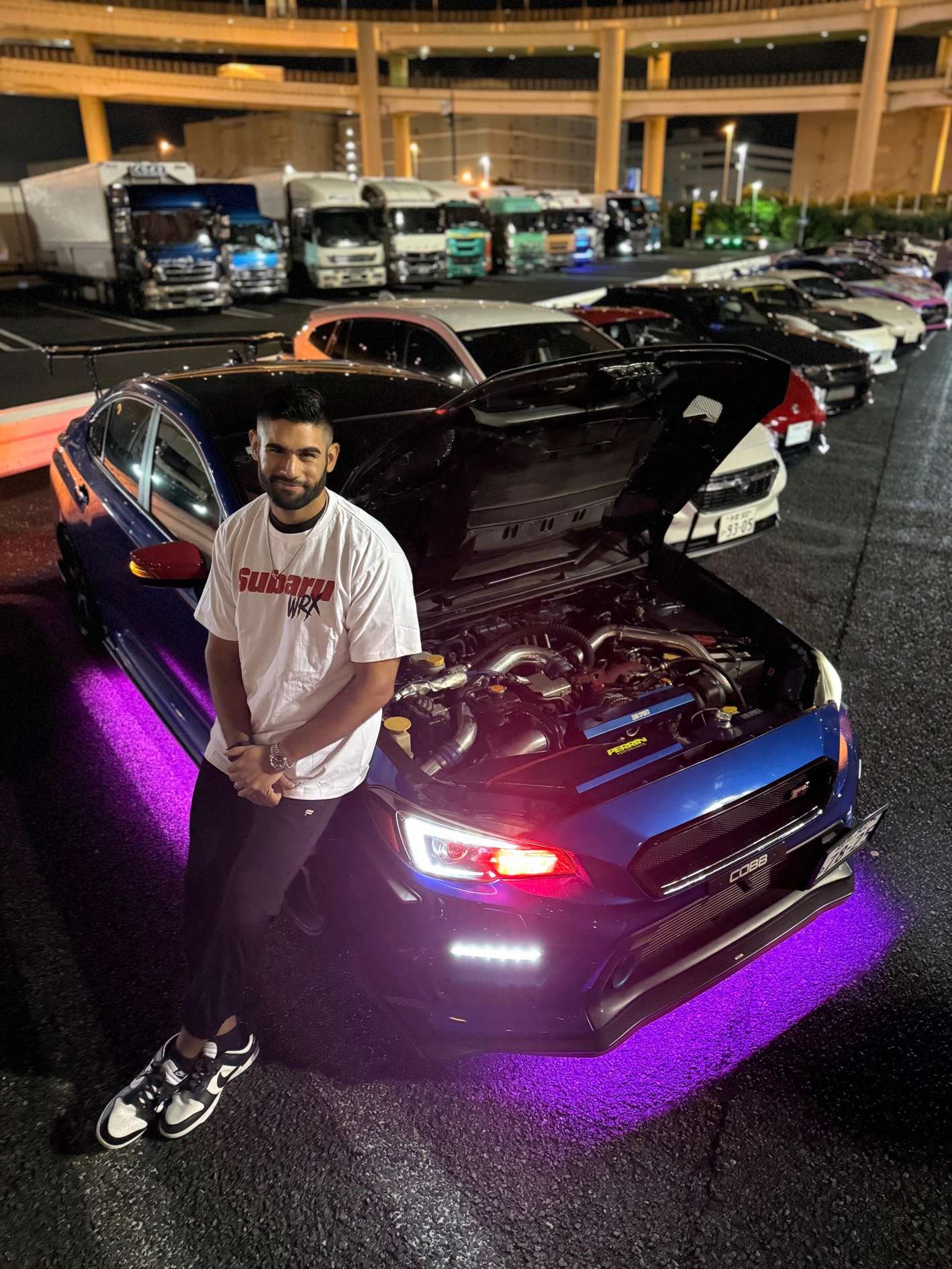
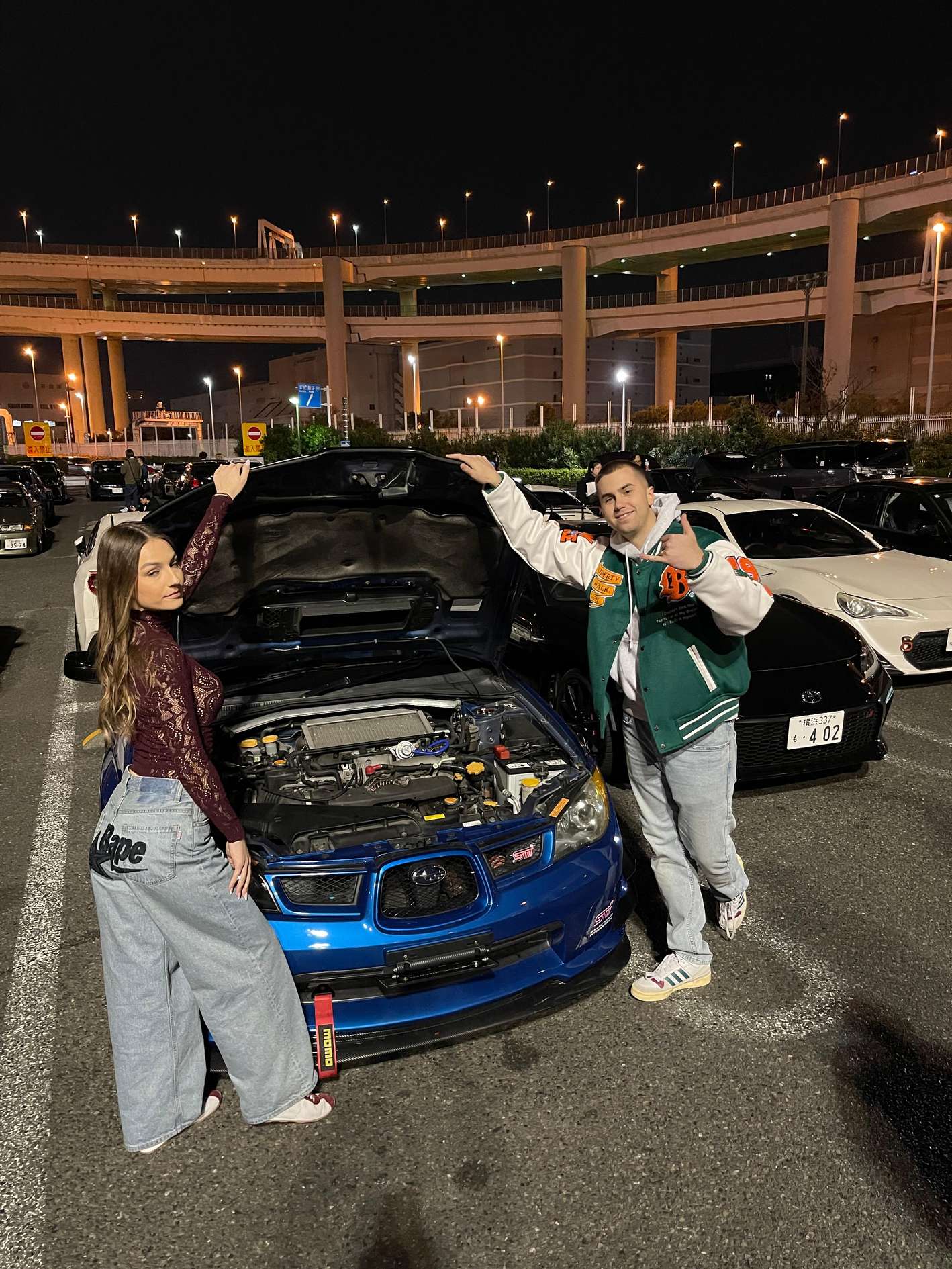
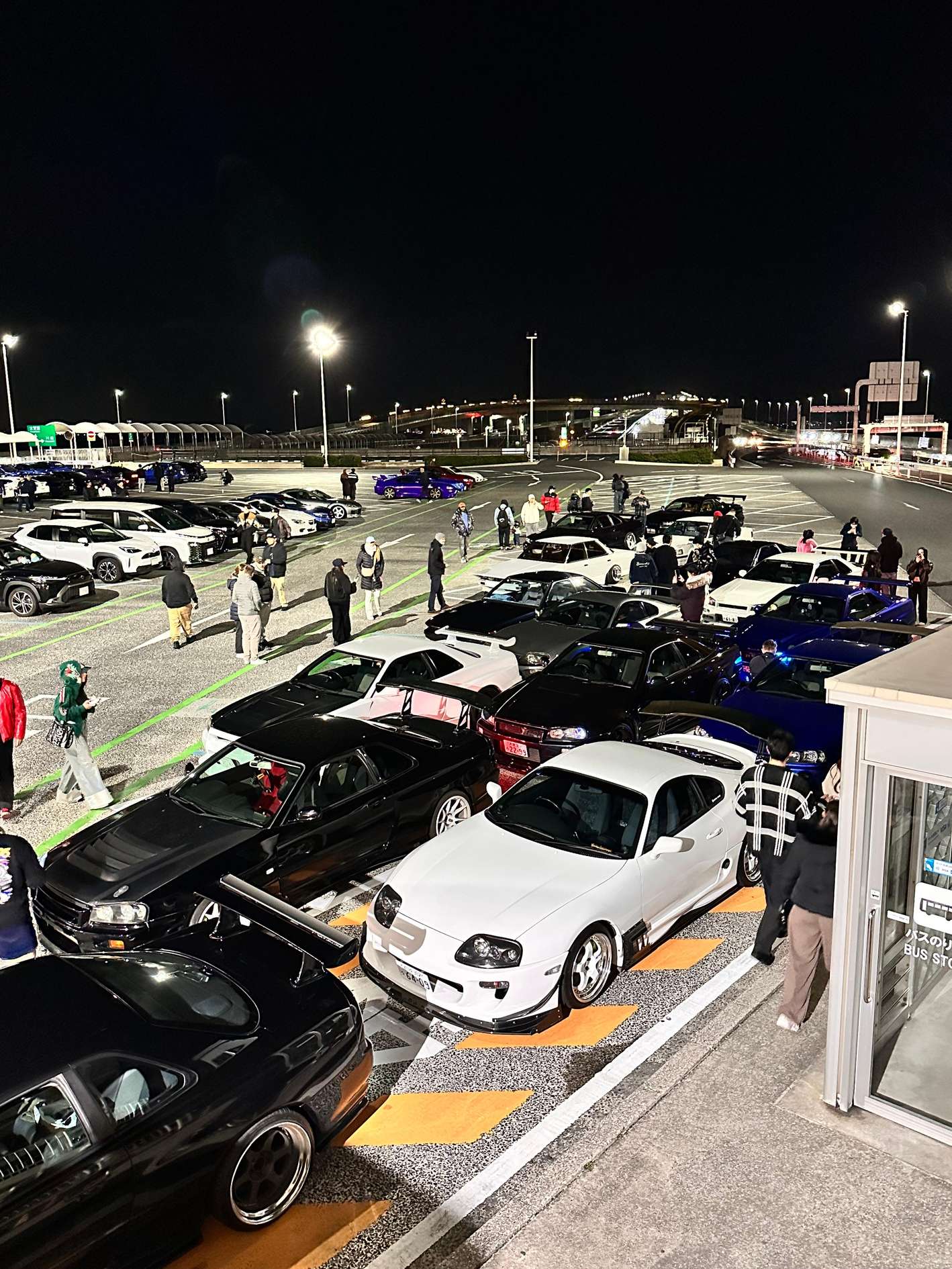
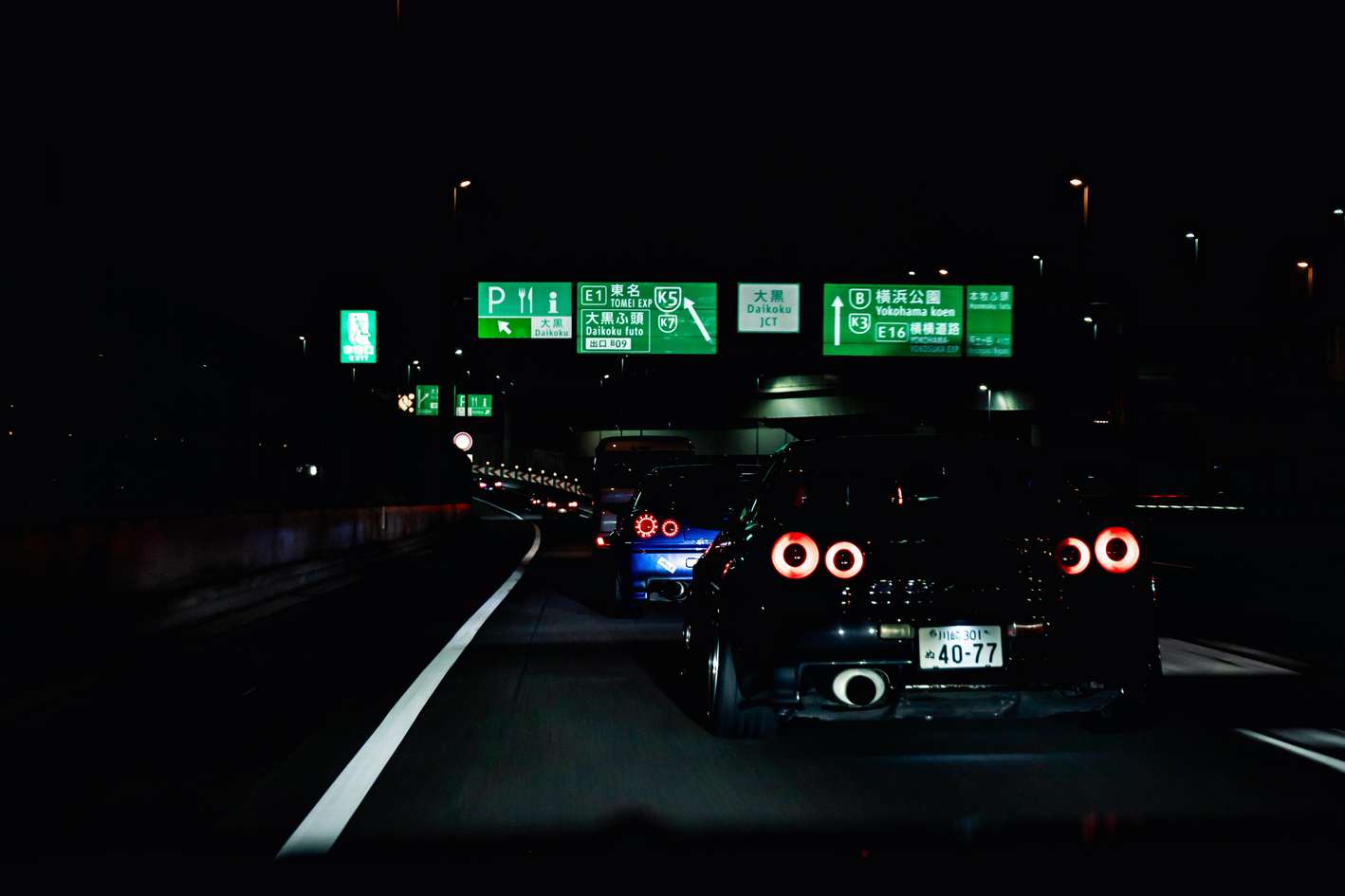
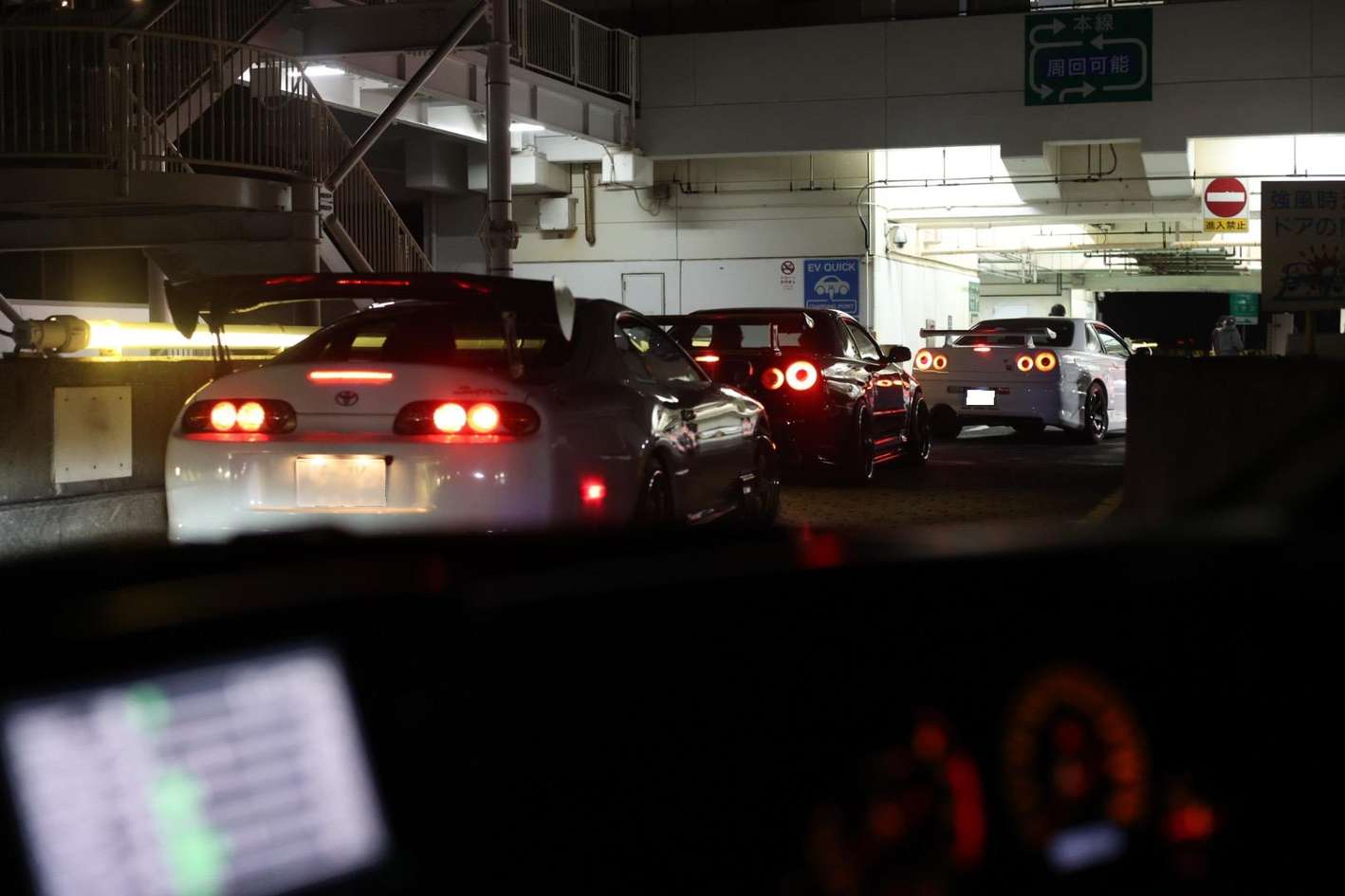
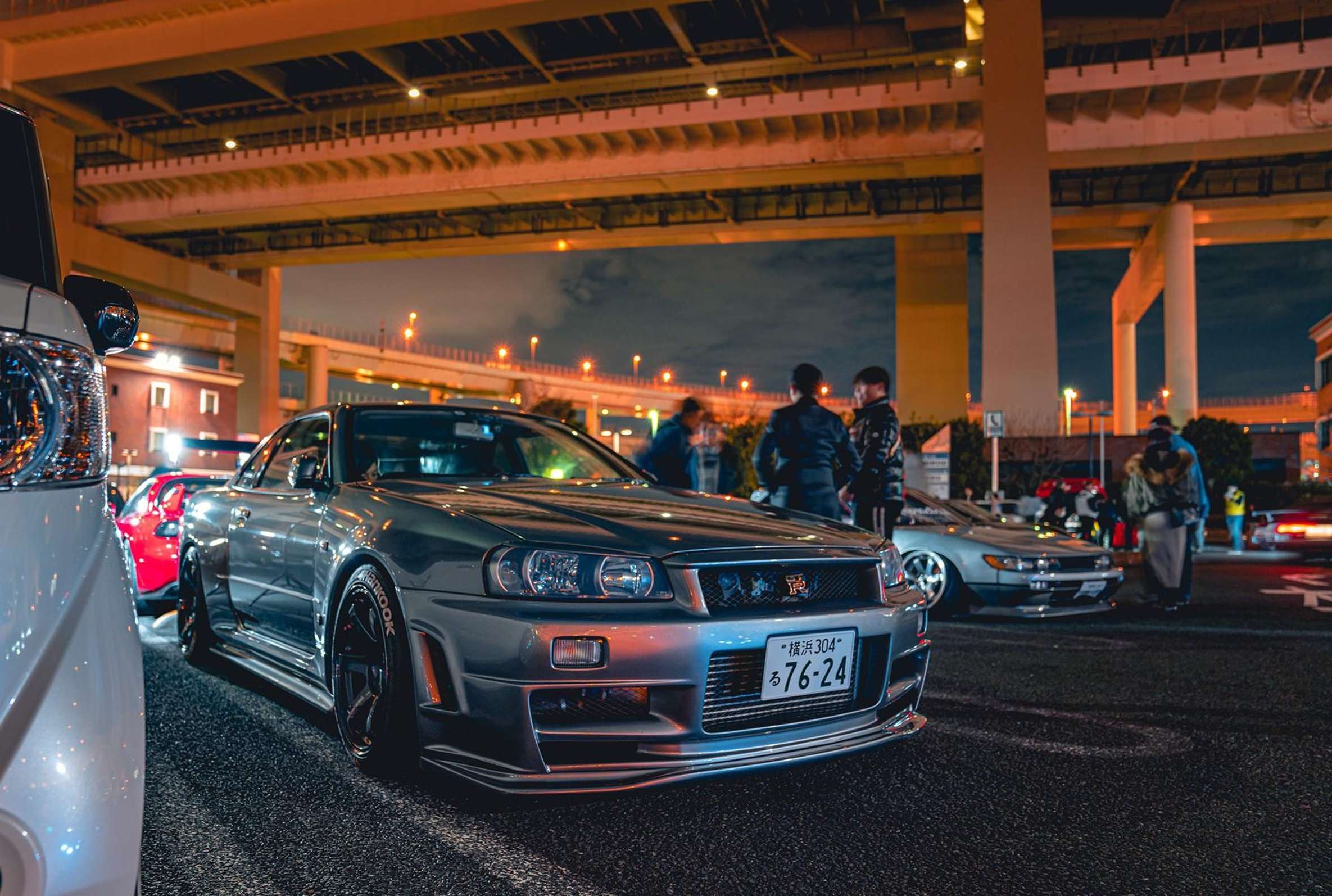
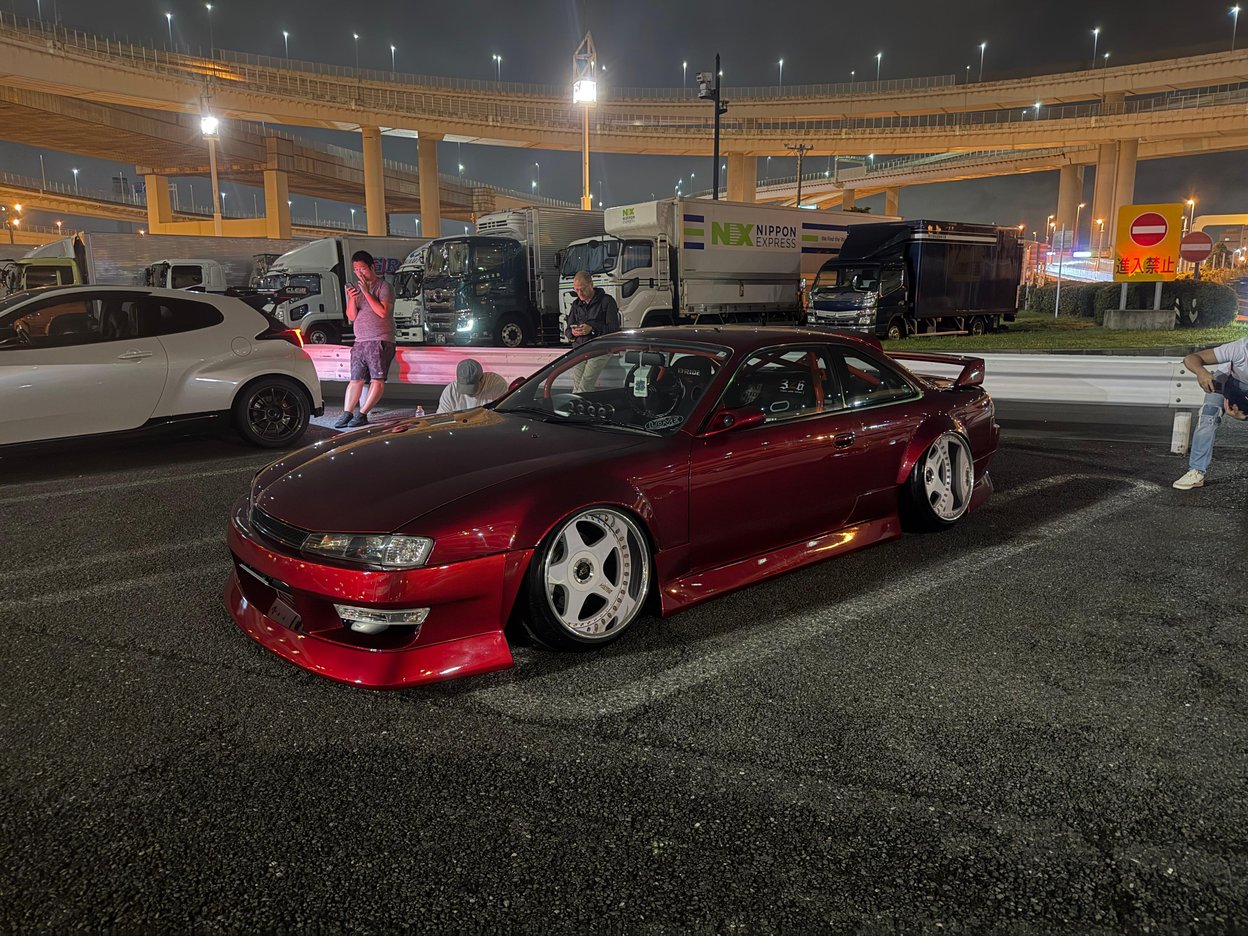
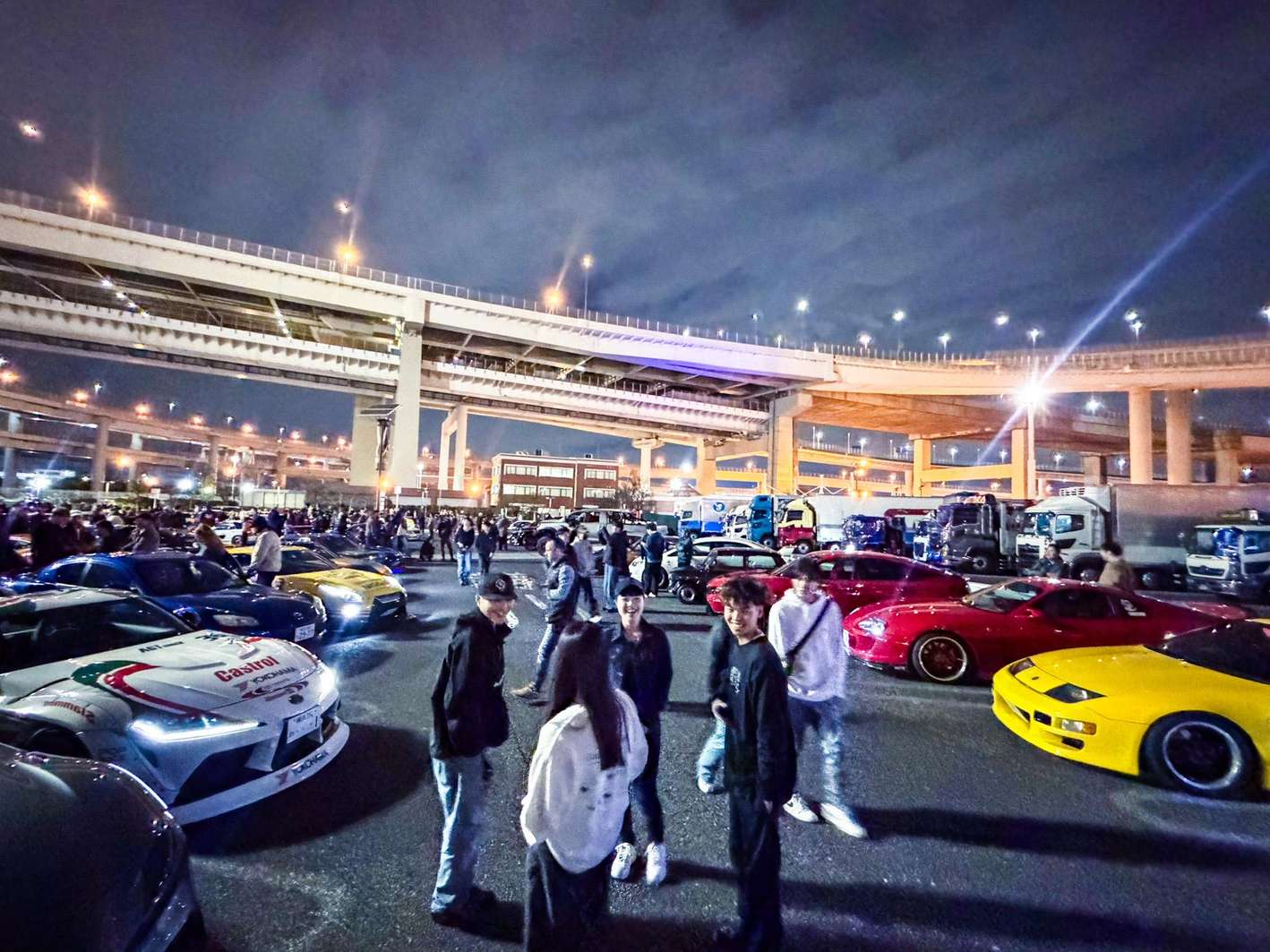
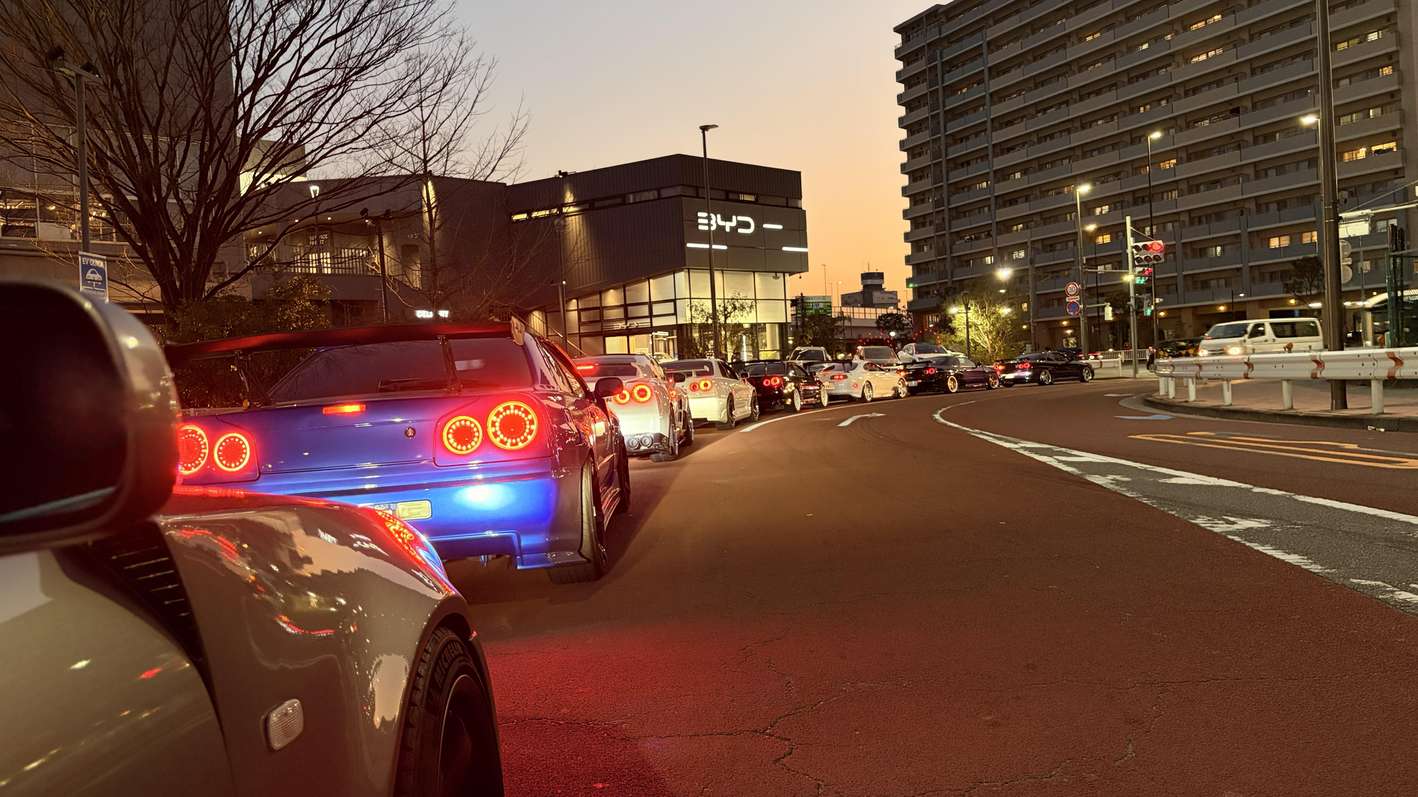
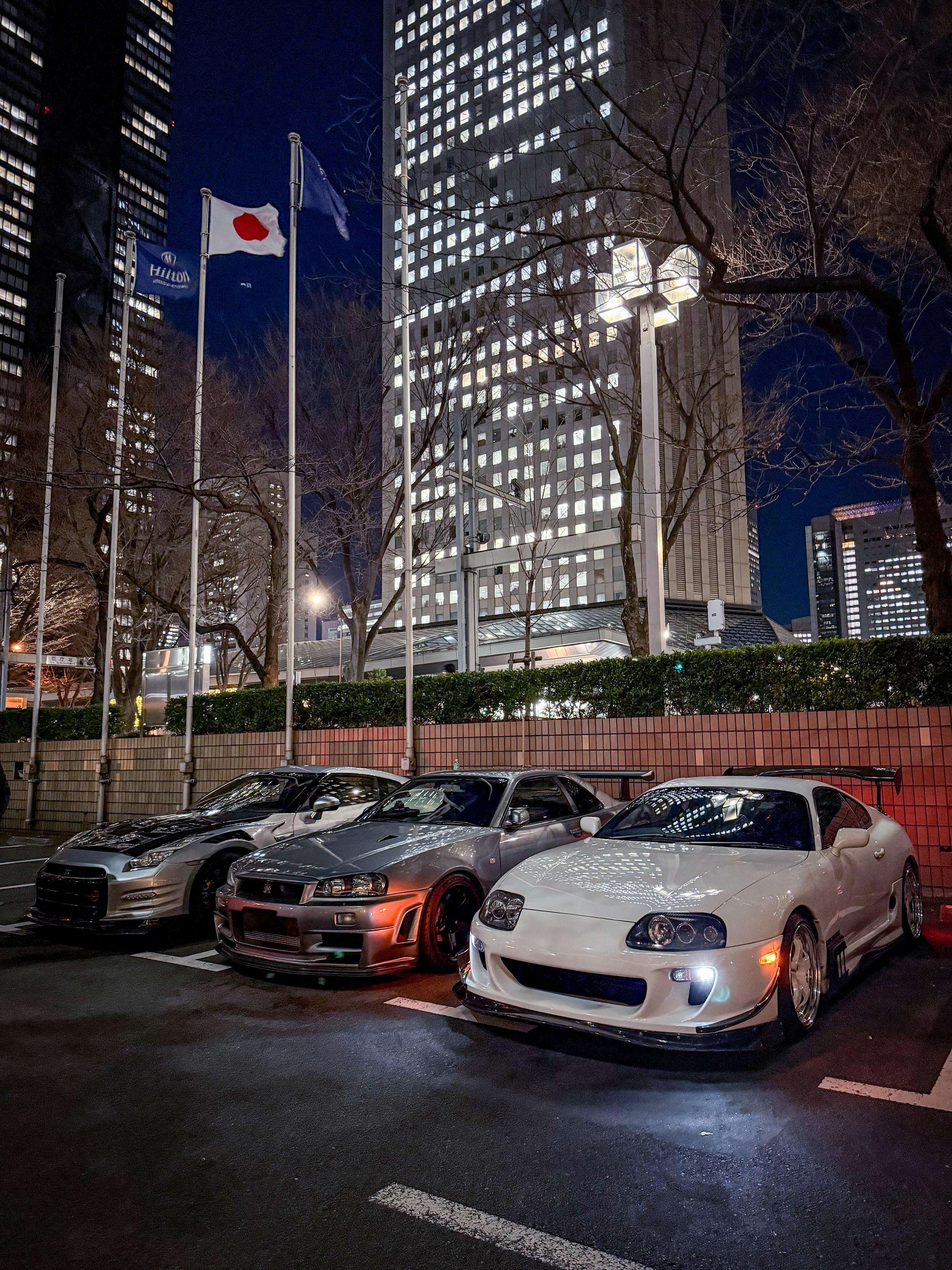
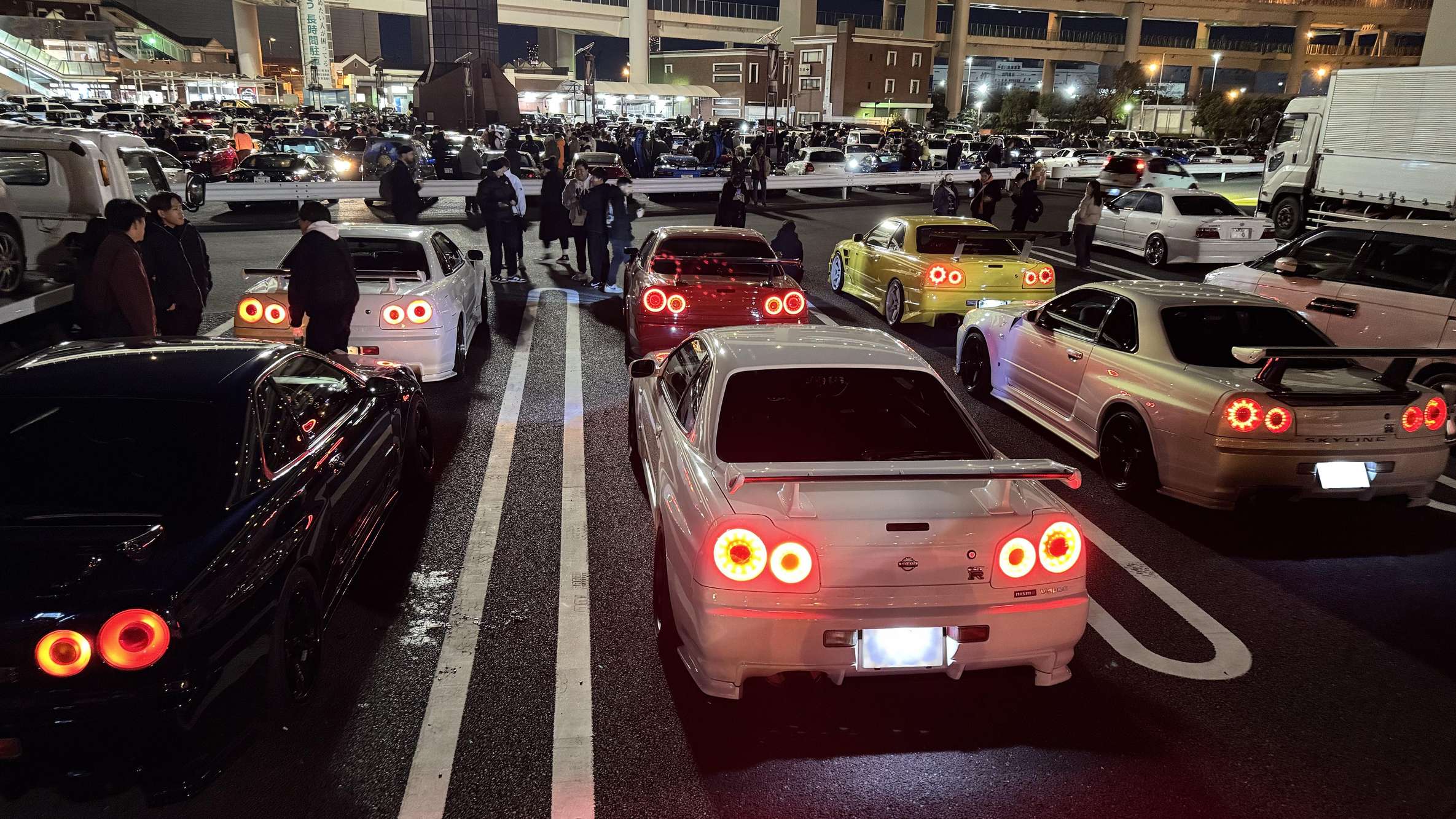
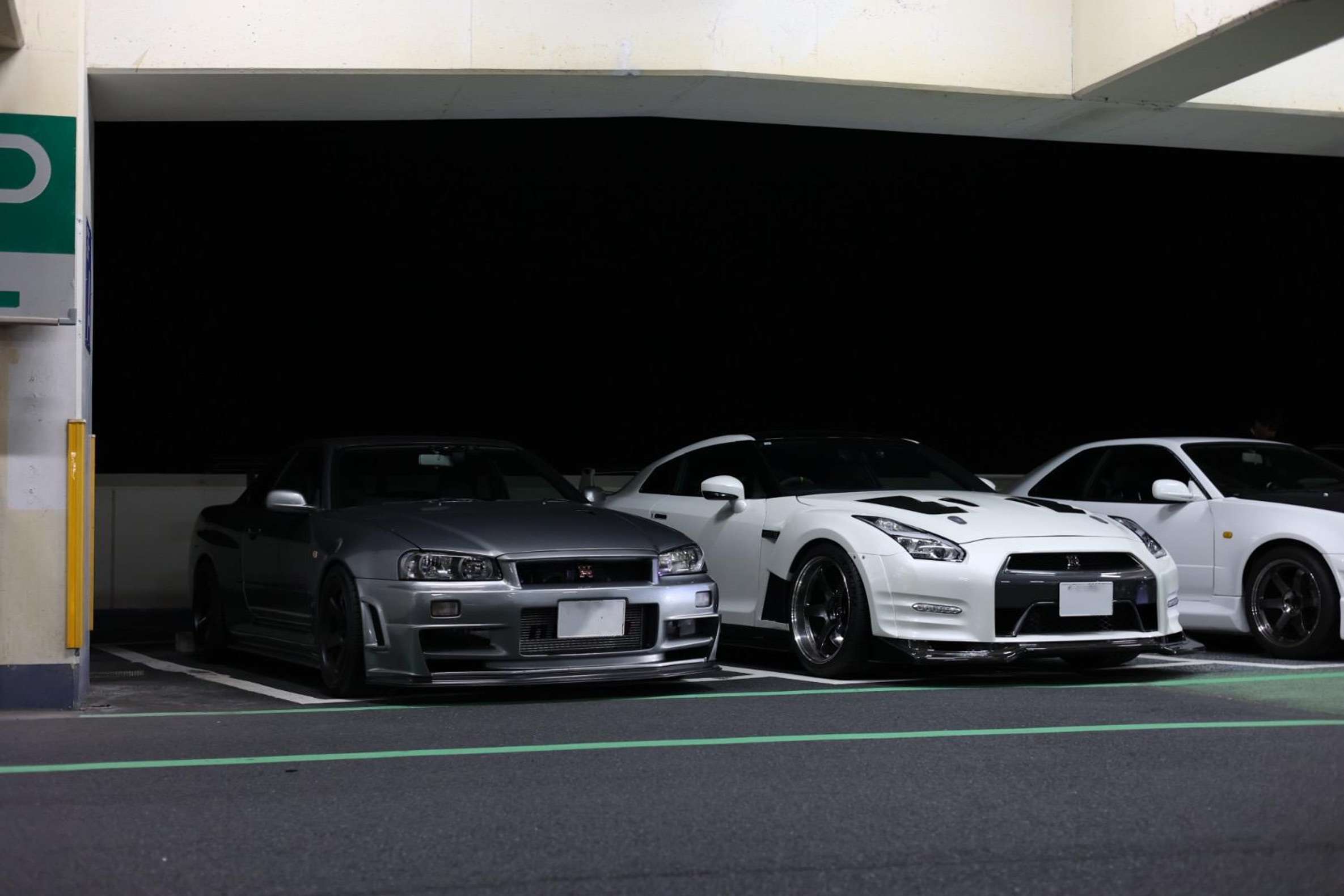
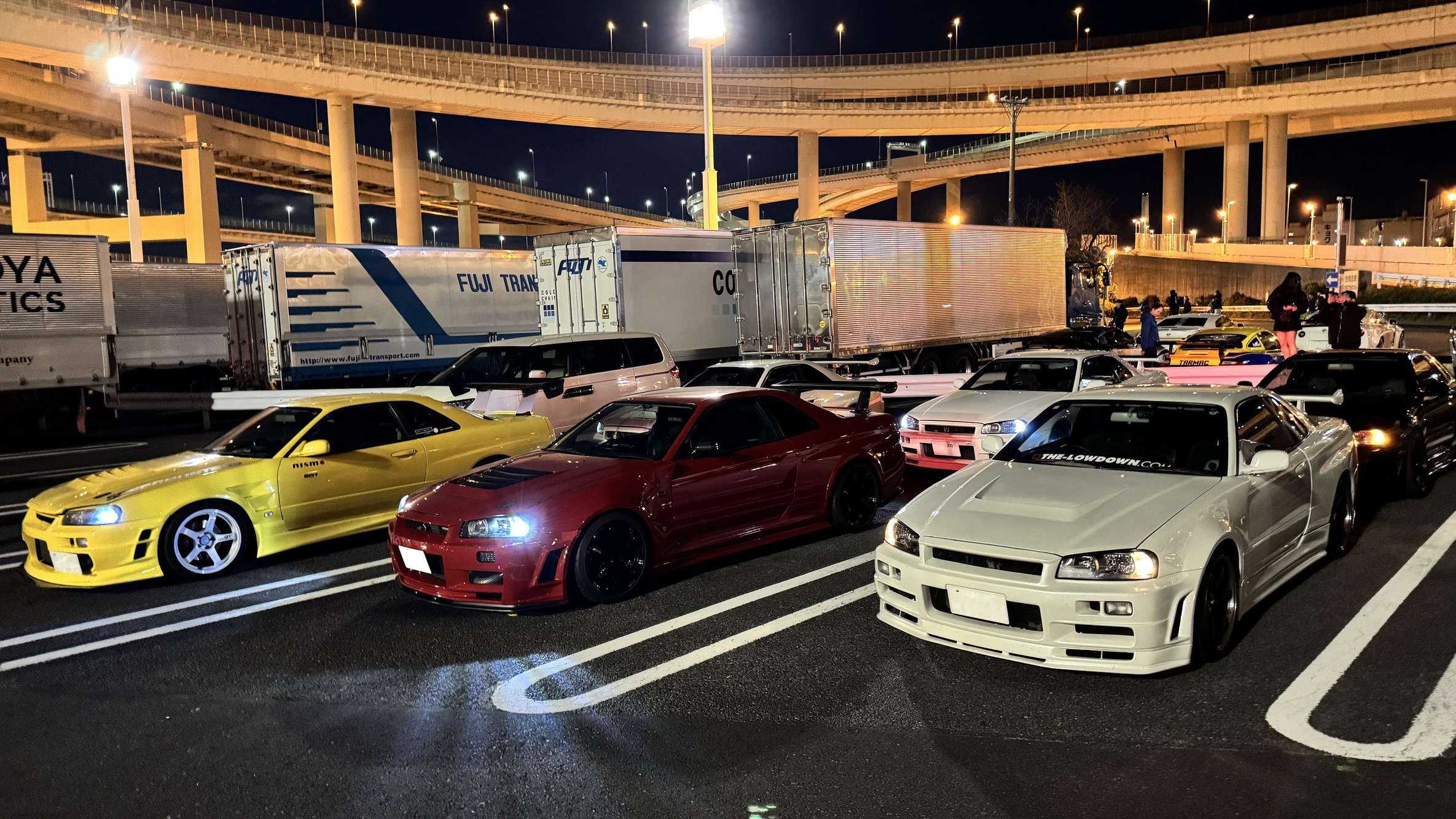
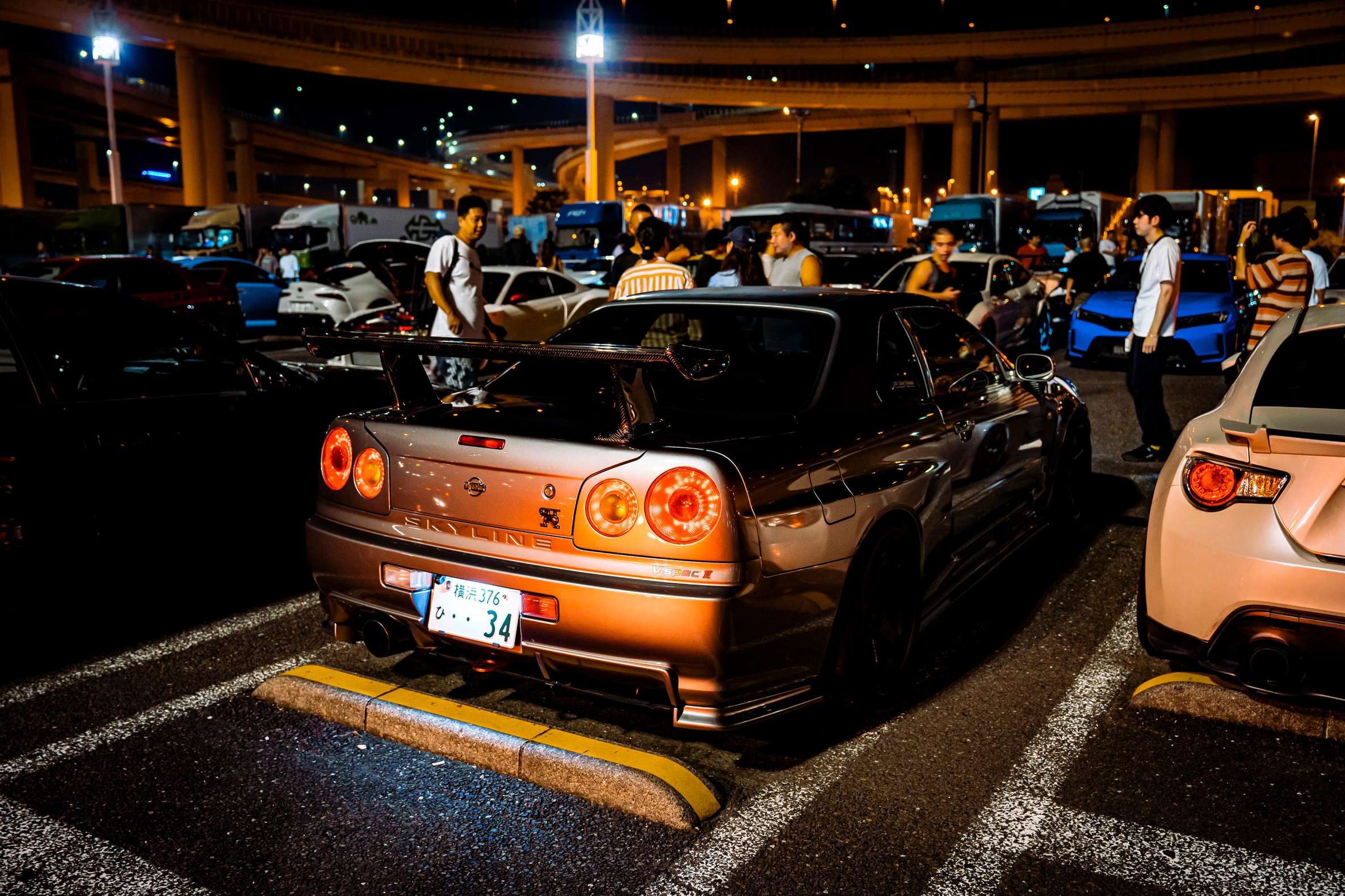
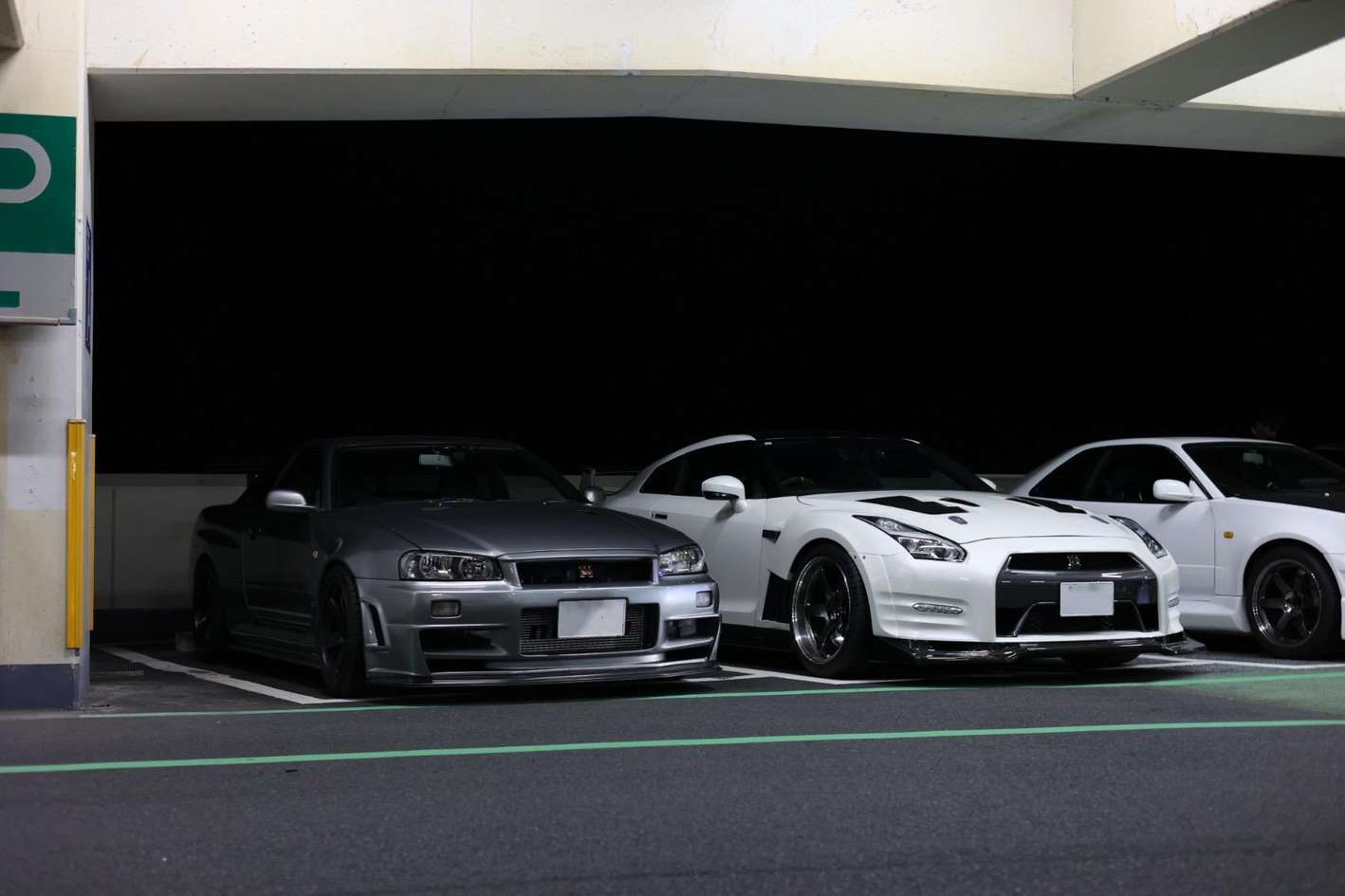
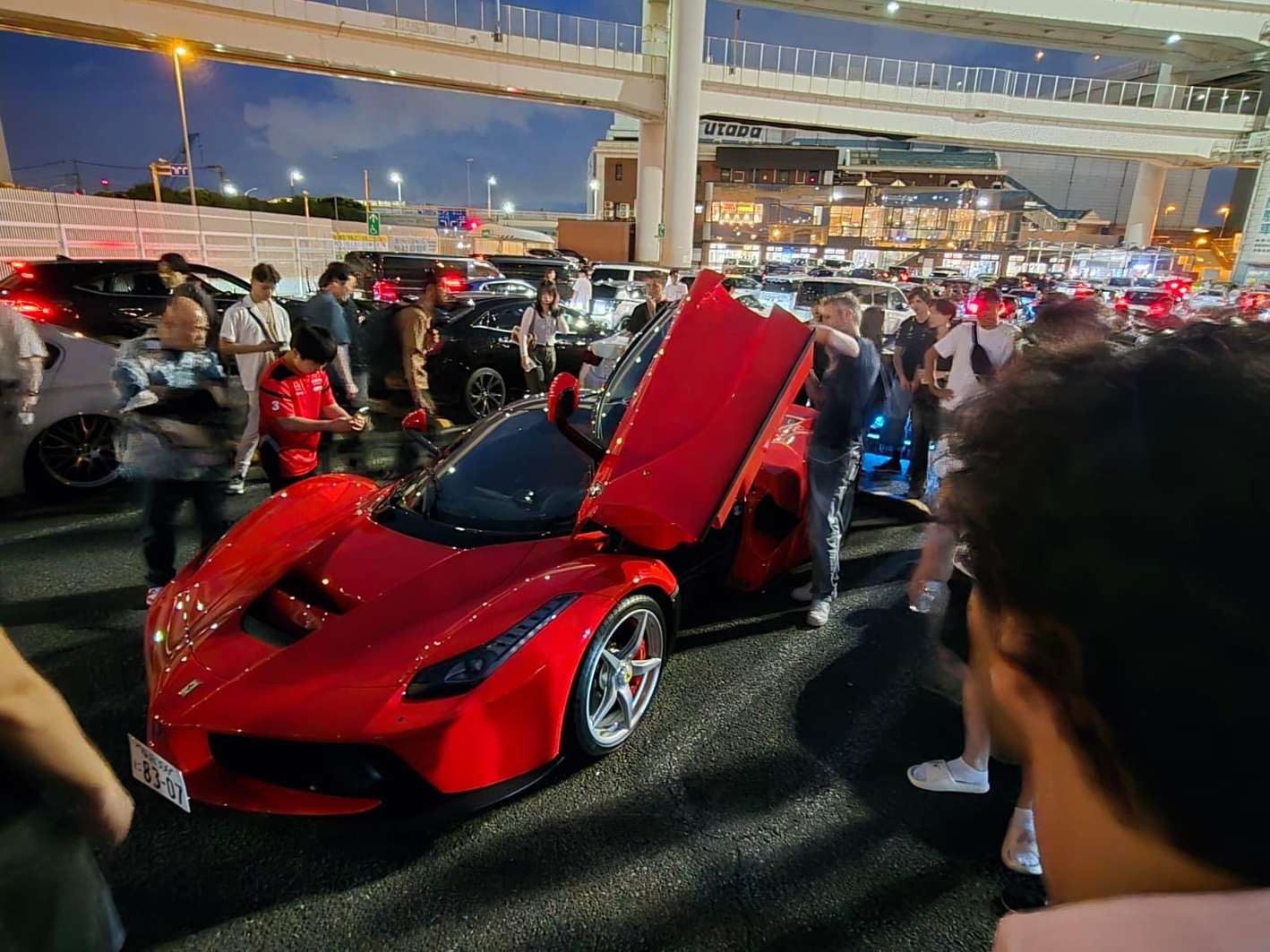
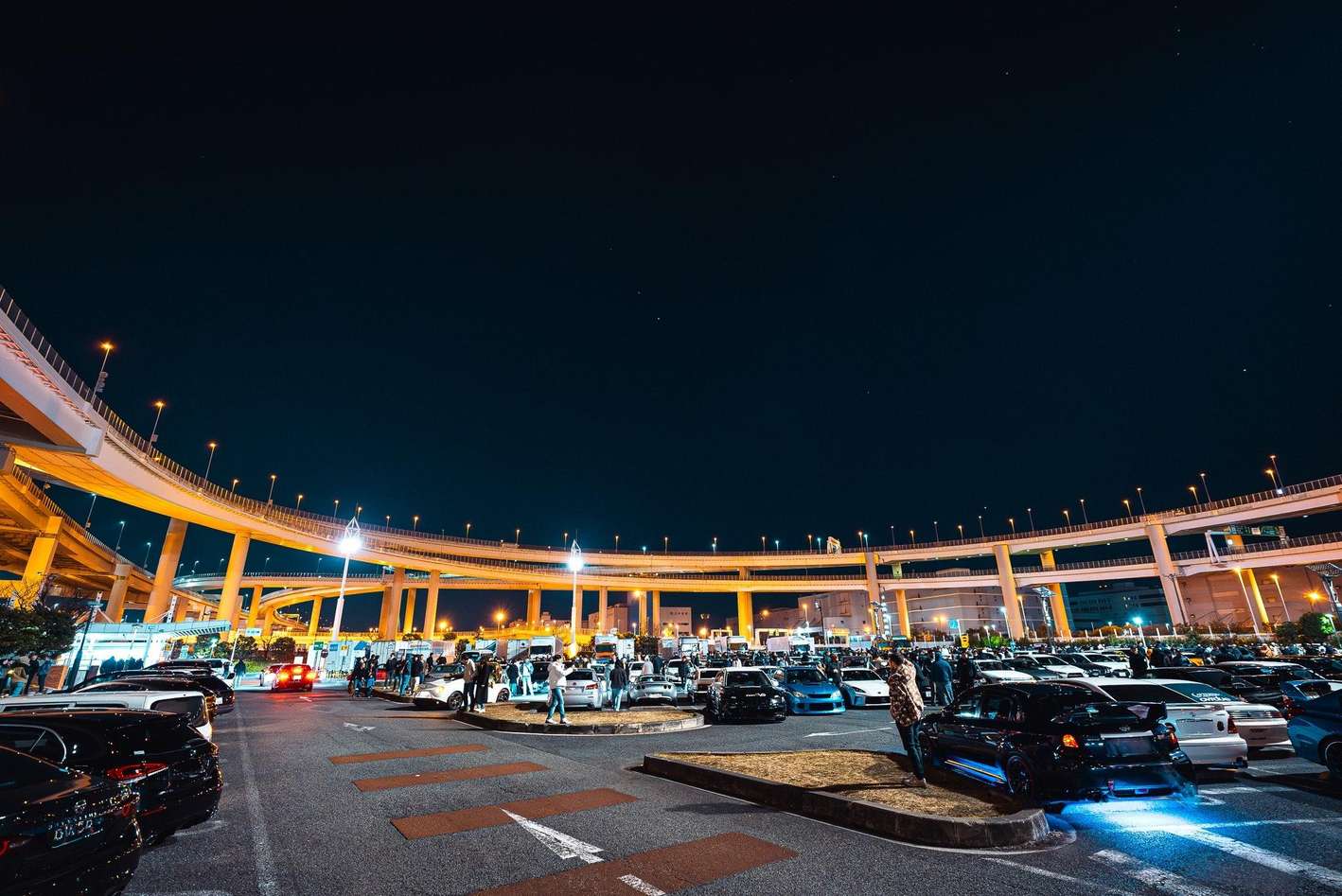
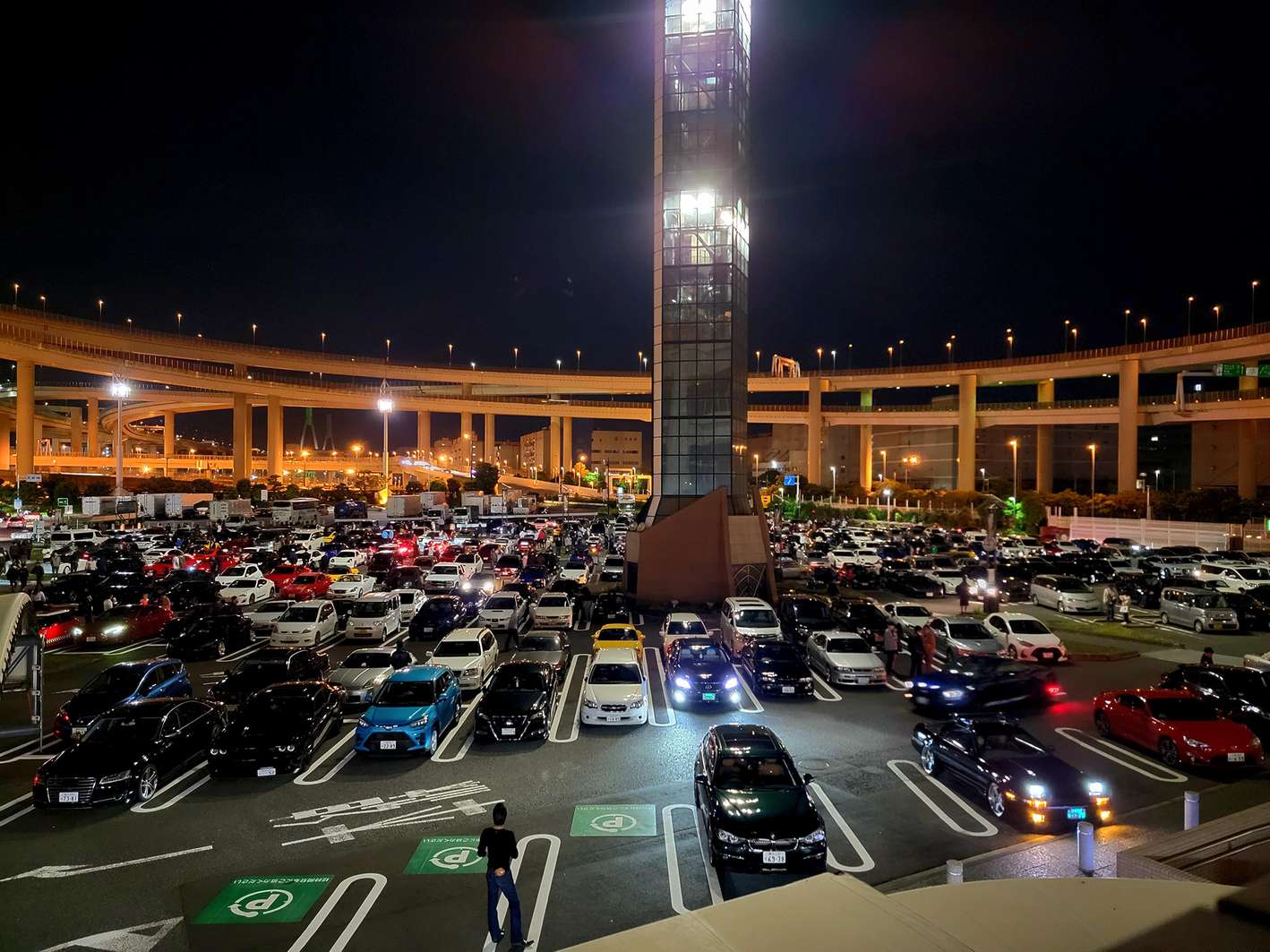
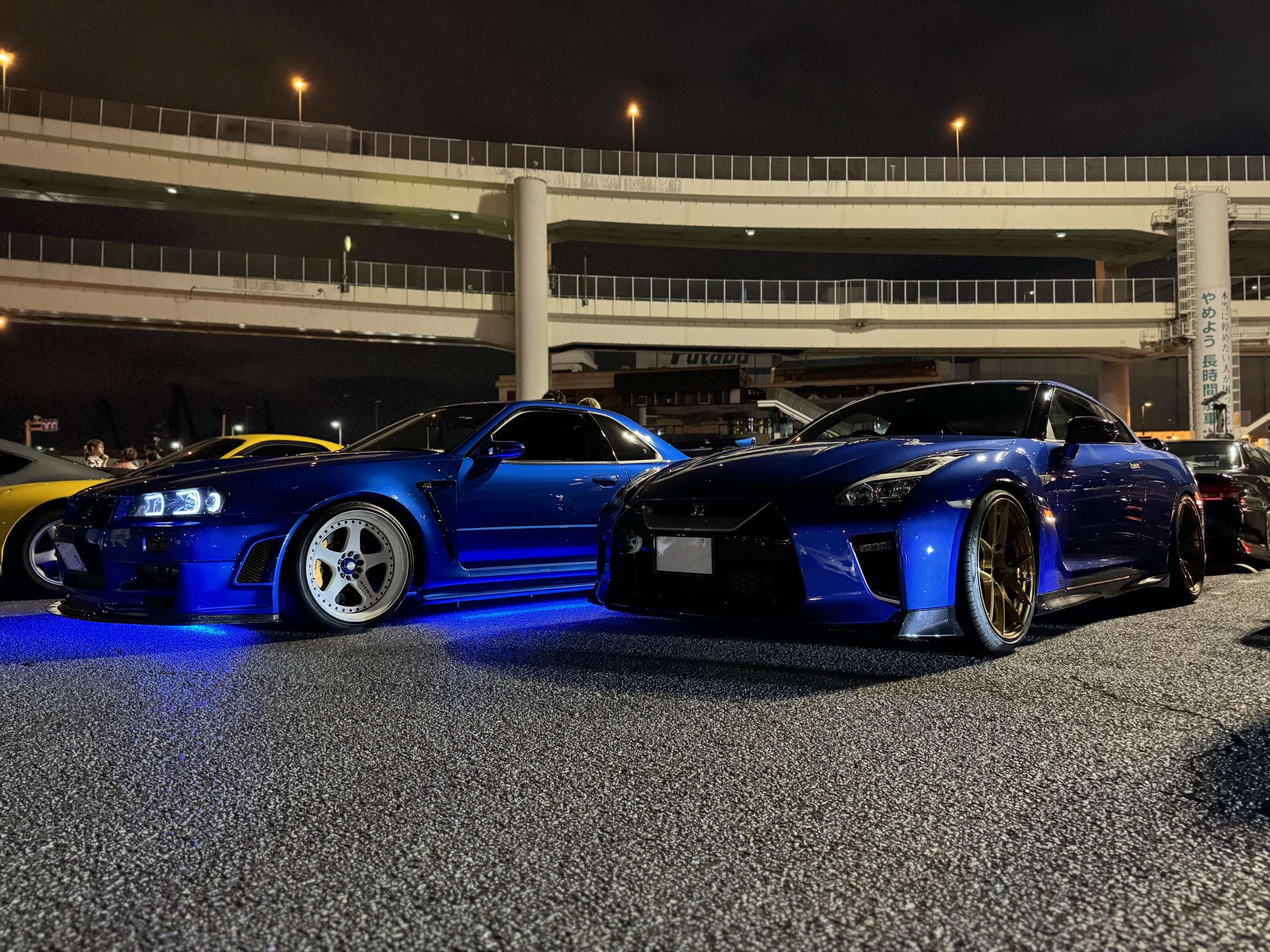
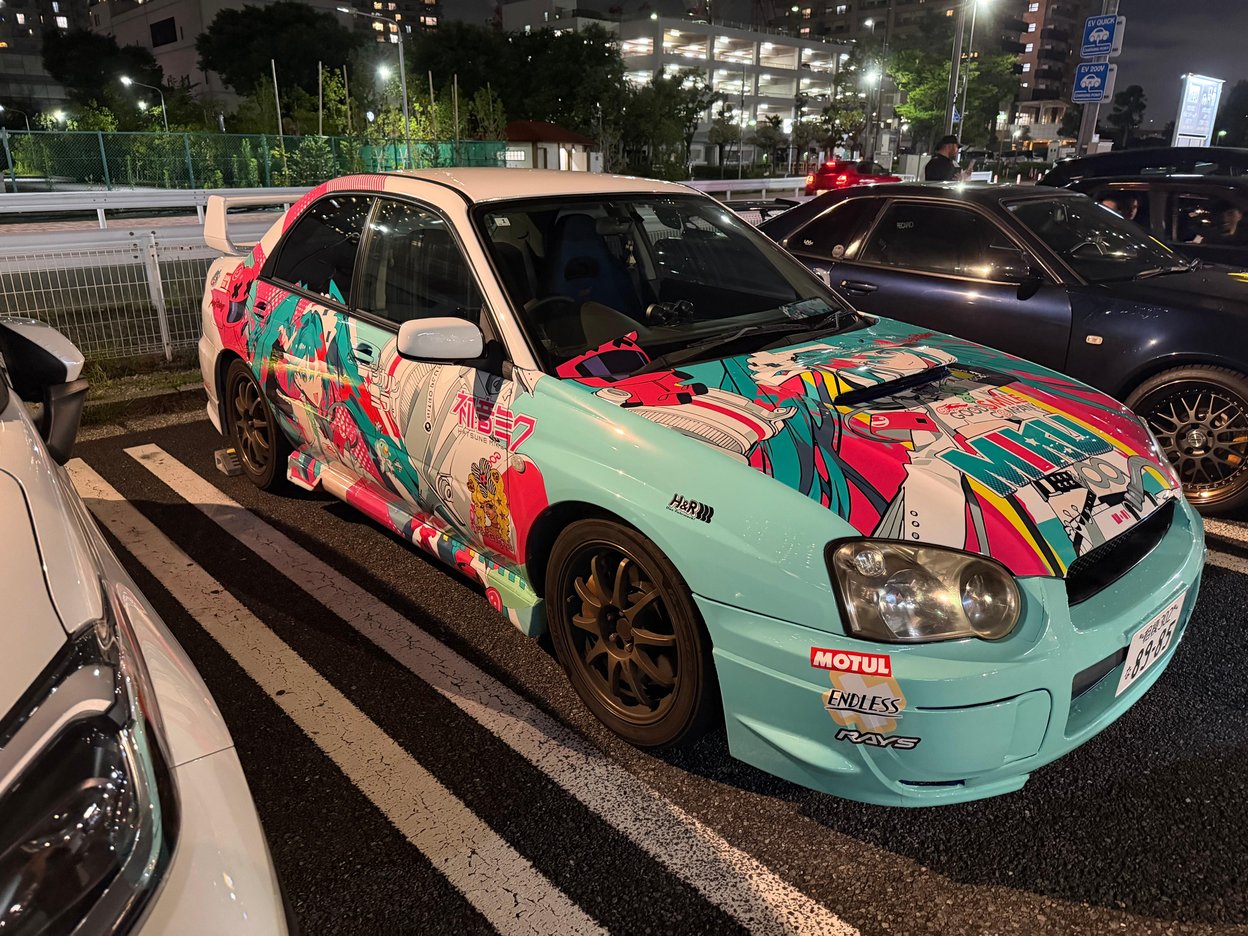
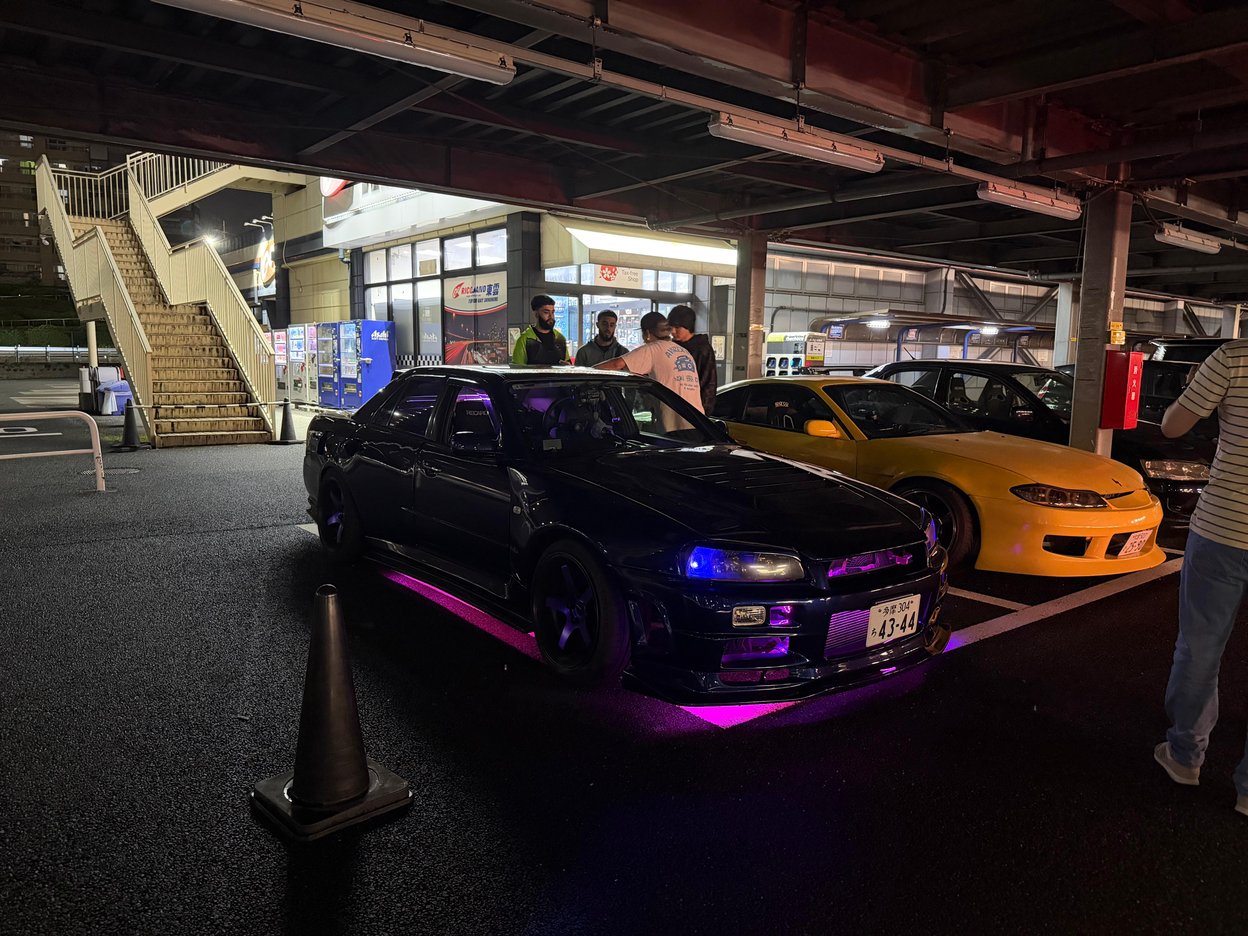
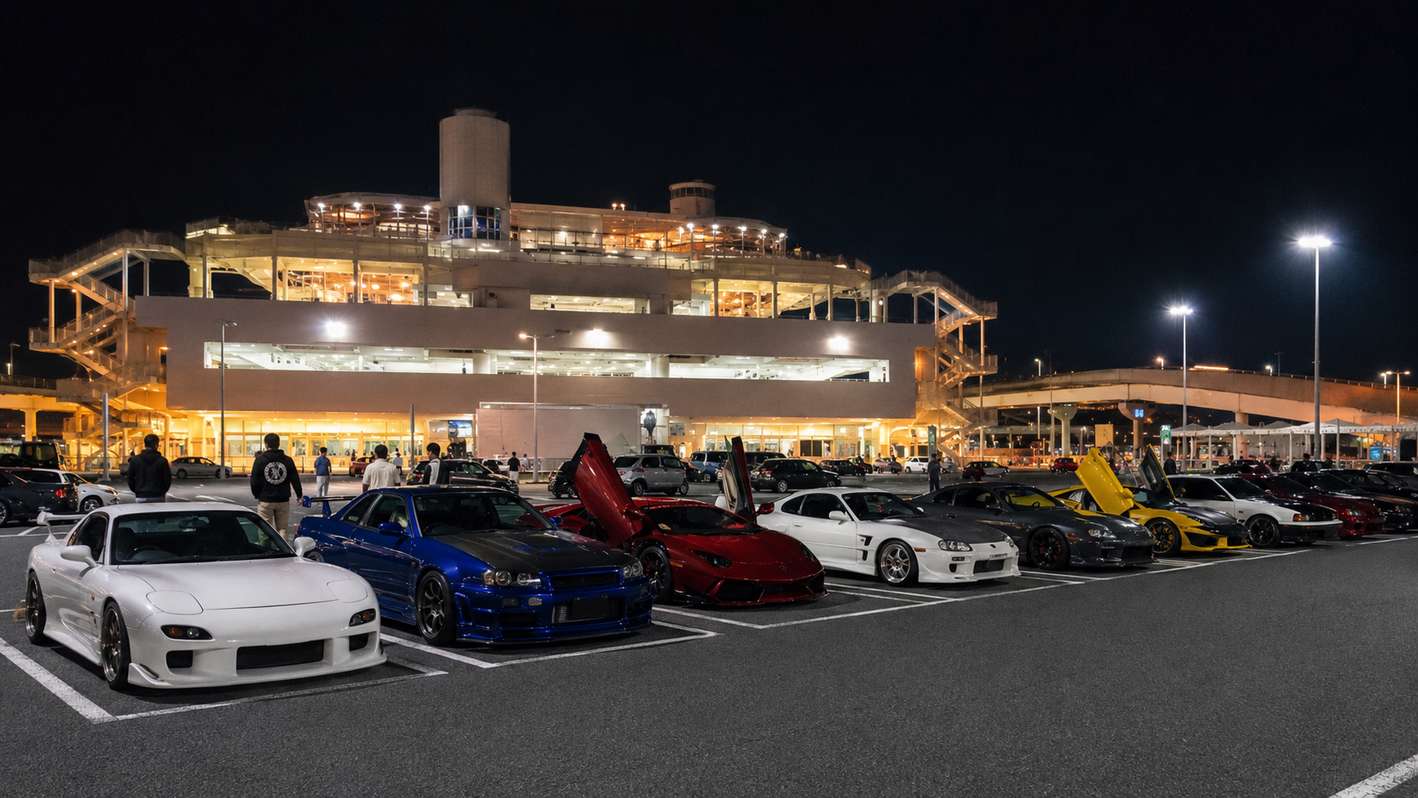
The spiral ramps of the Daikoku Interchange show themselves before the parking deck does, loops of concrete curling overhead. Then your driver parks on the open deck and you step out into a working rest stop where Skylines, Supras and heavy tuner builds sit parked between trucks and day-cab rigs.
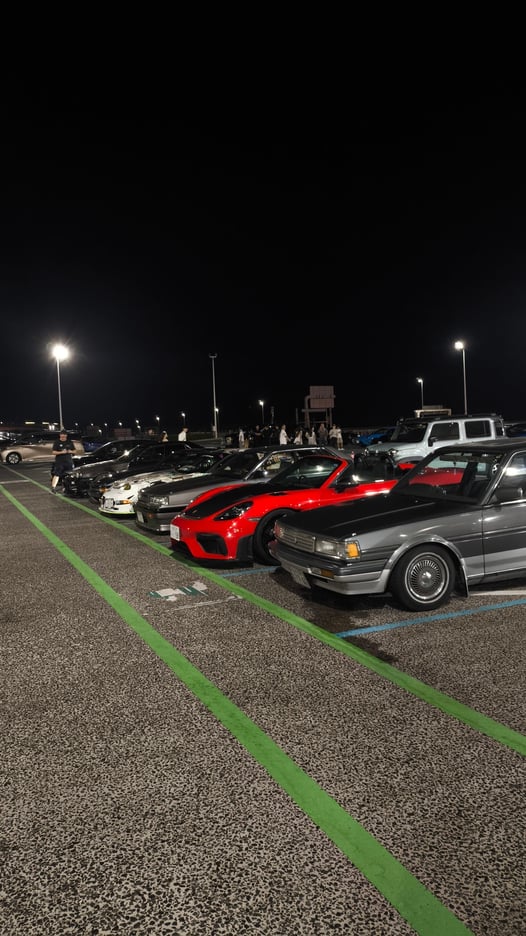
Nobody books these cars in a row. The meet assembles itself night after night, so no two visits look the same.
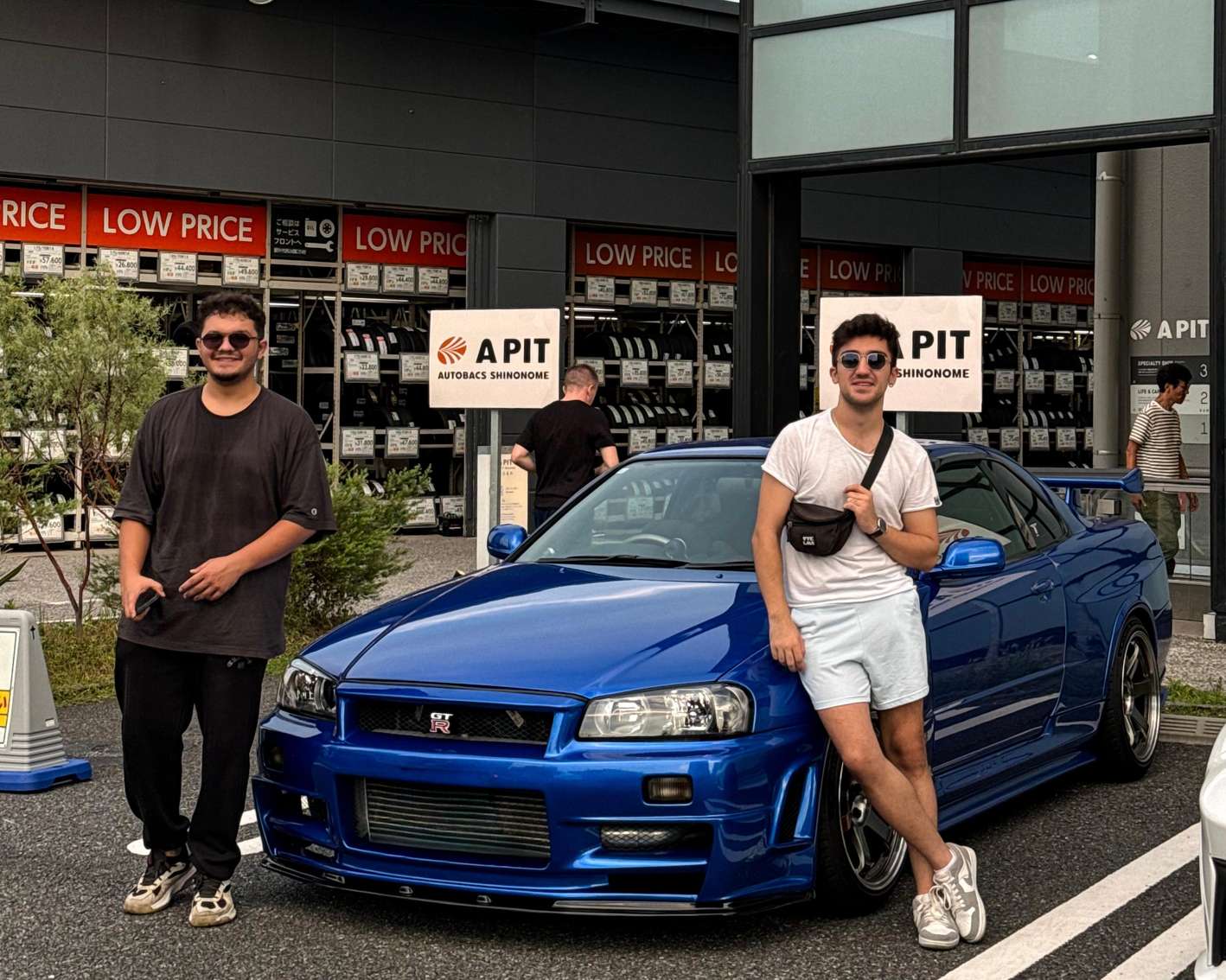
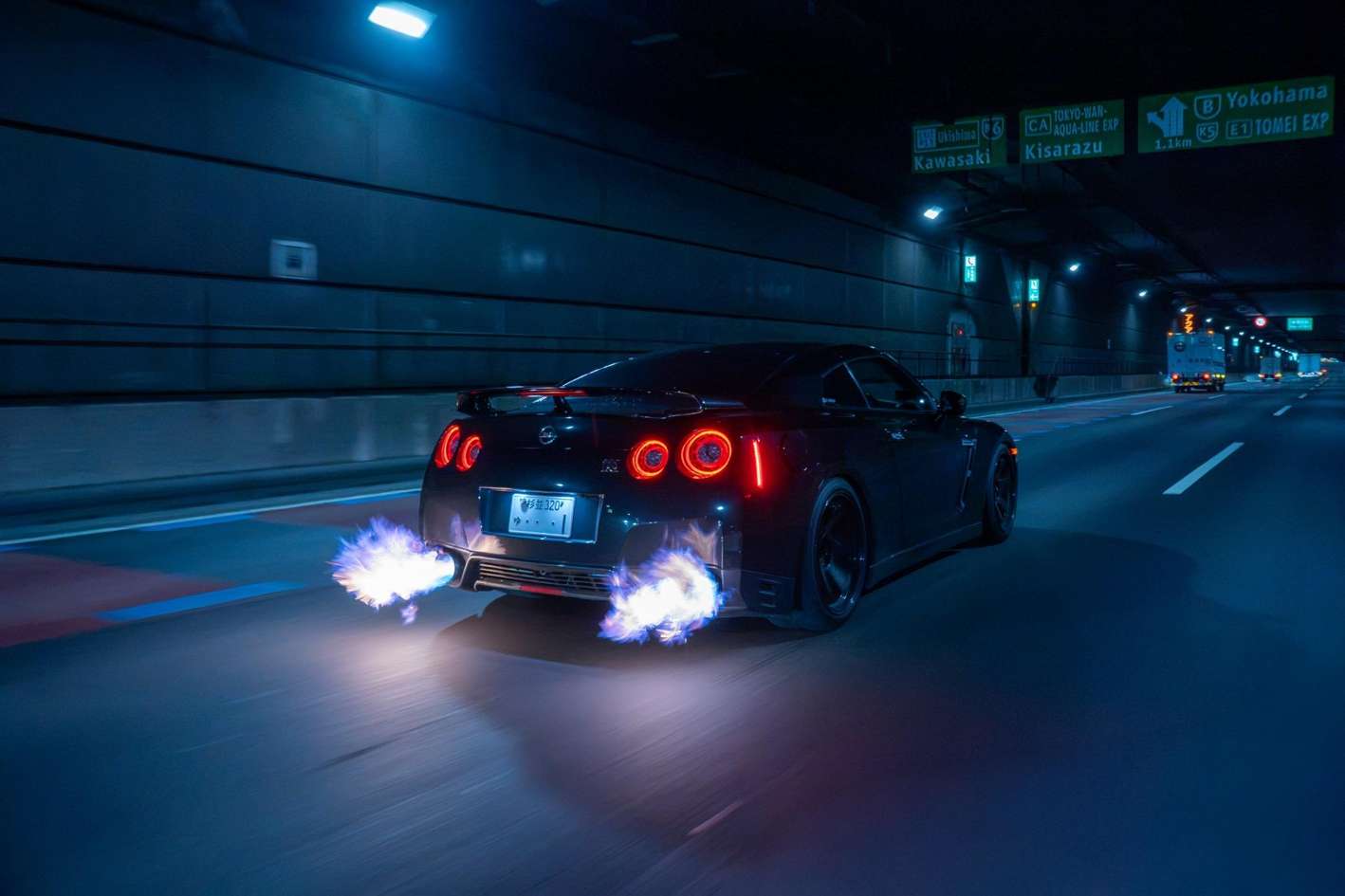
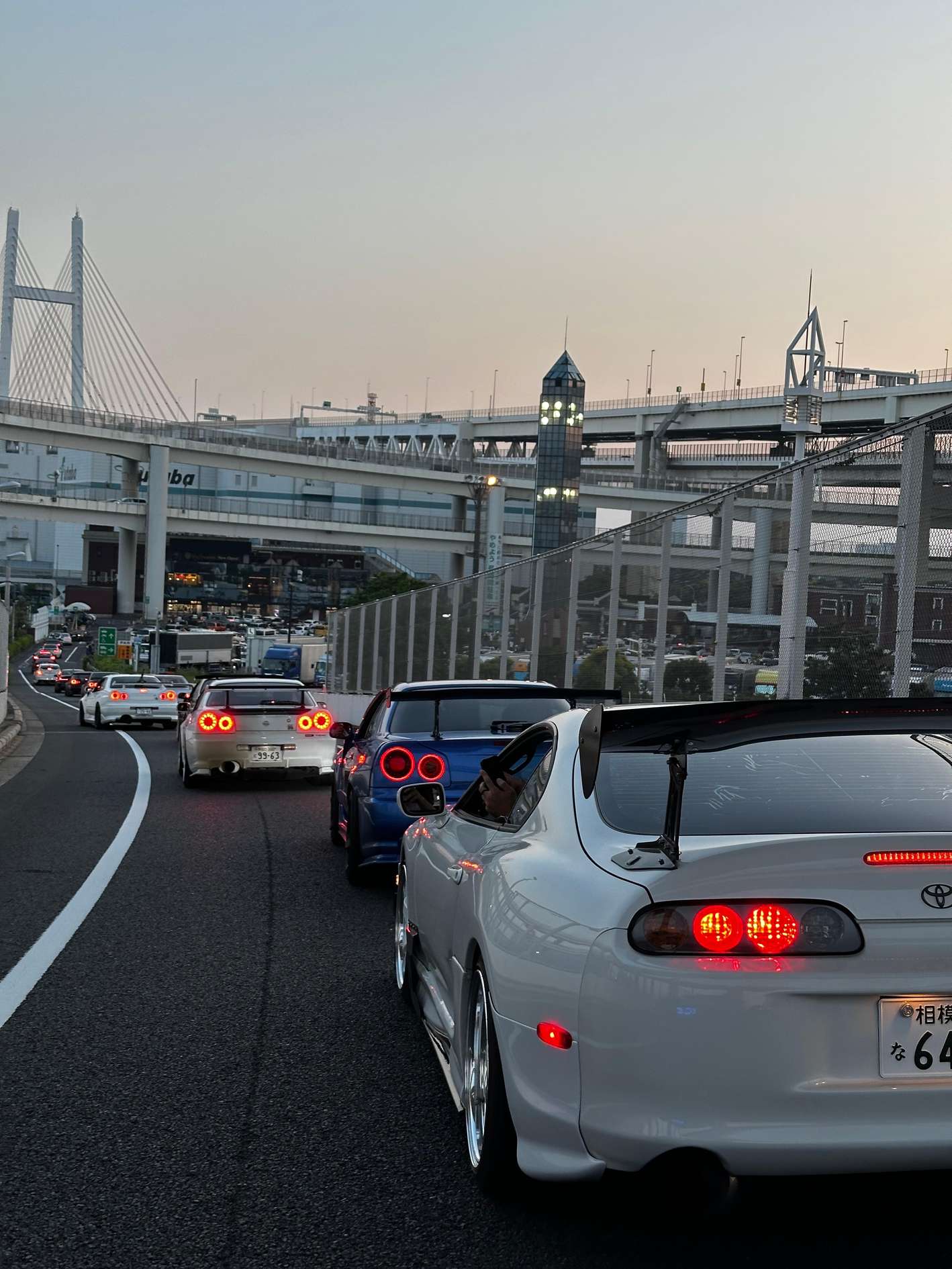
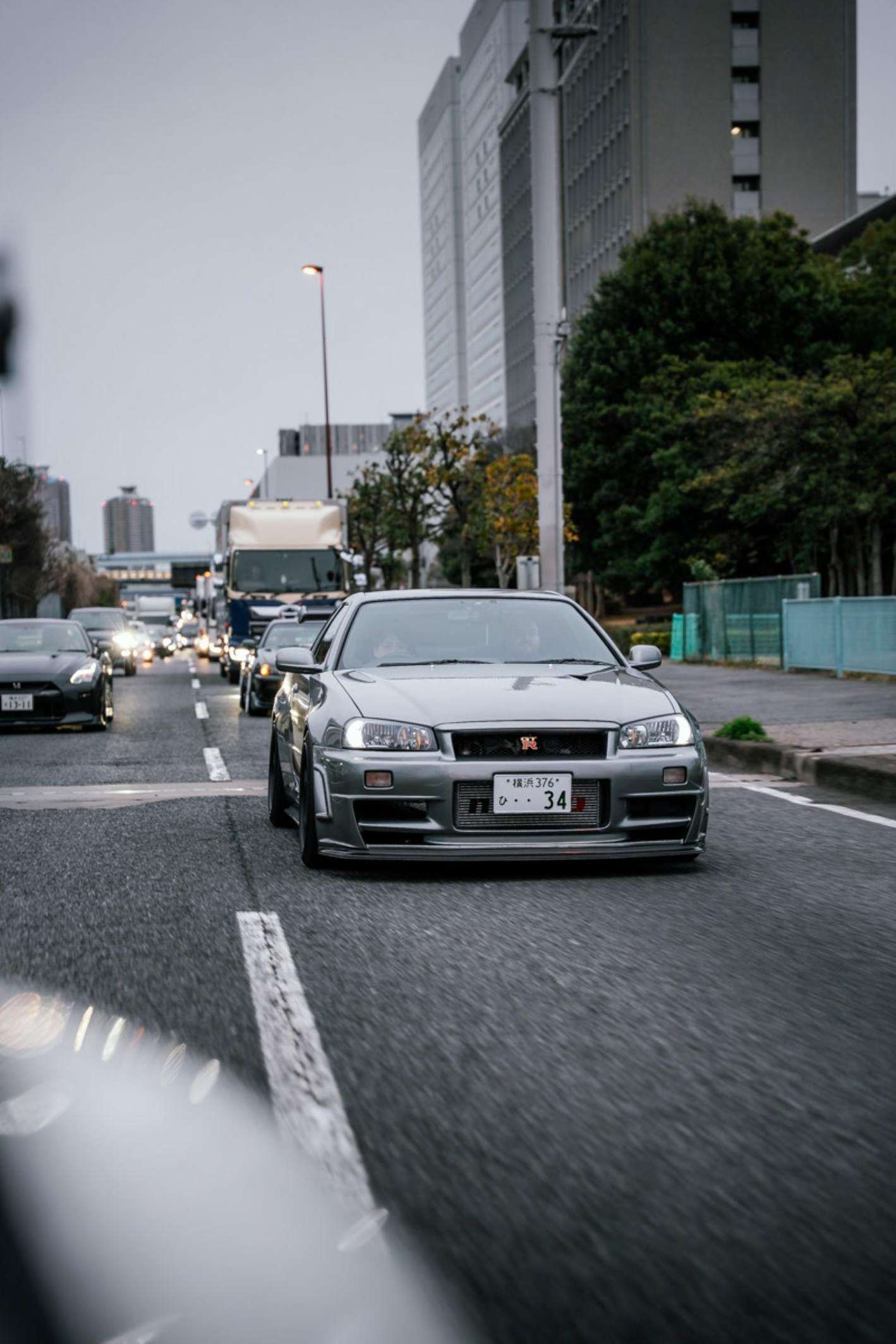
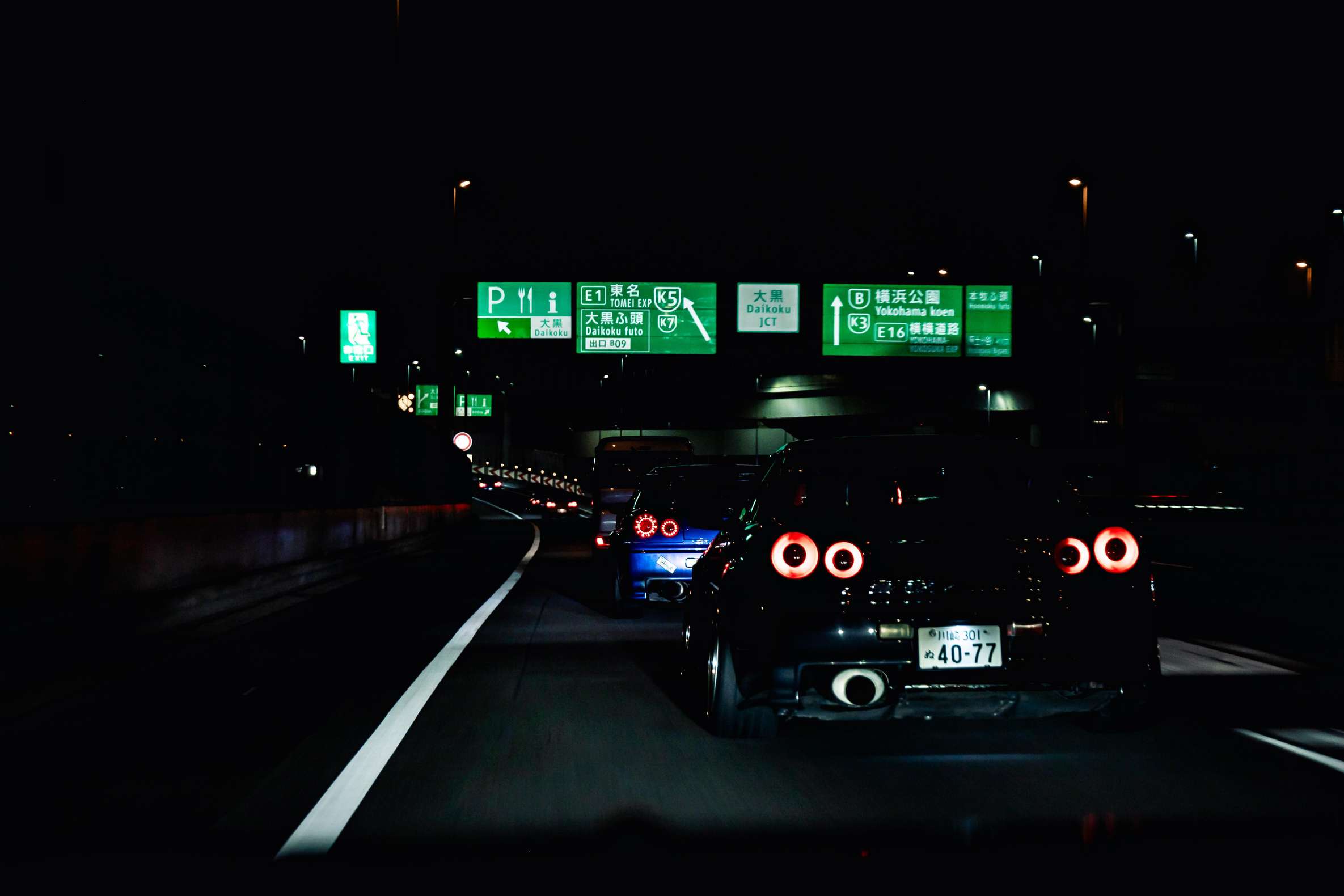
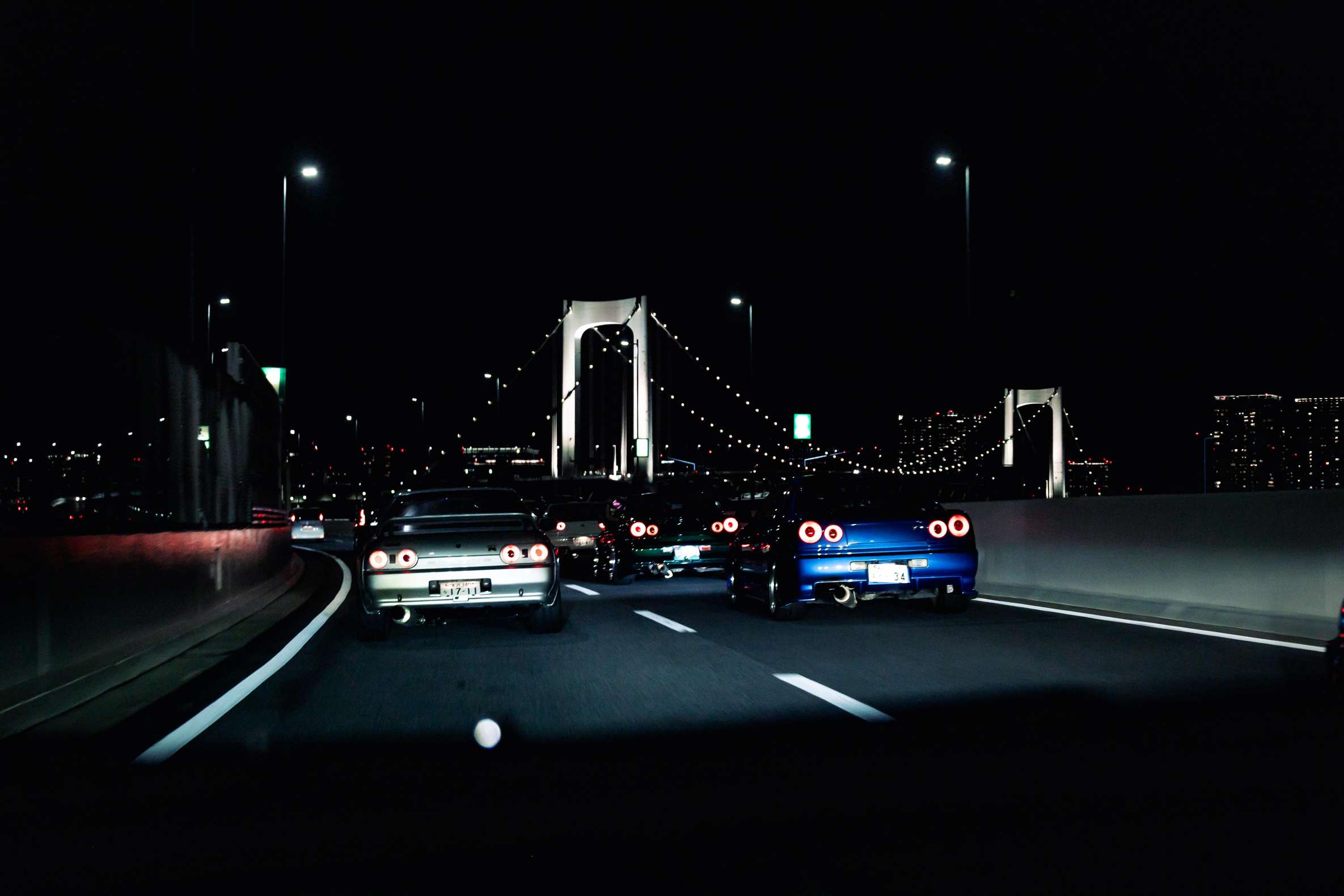
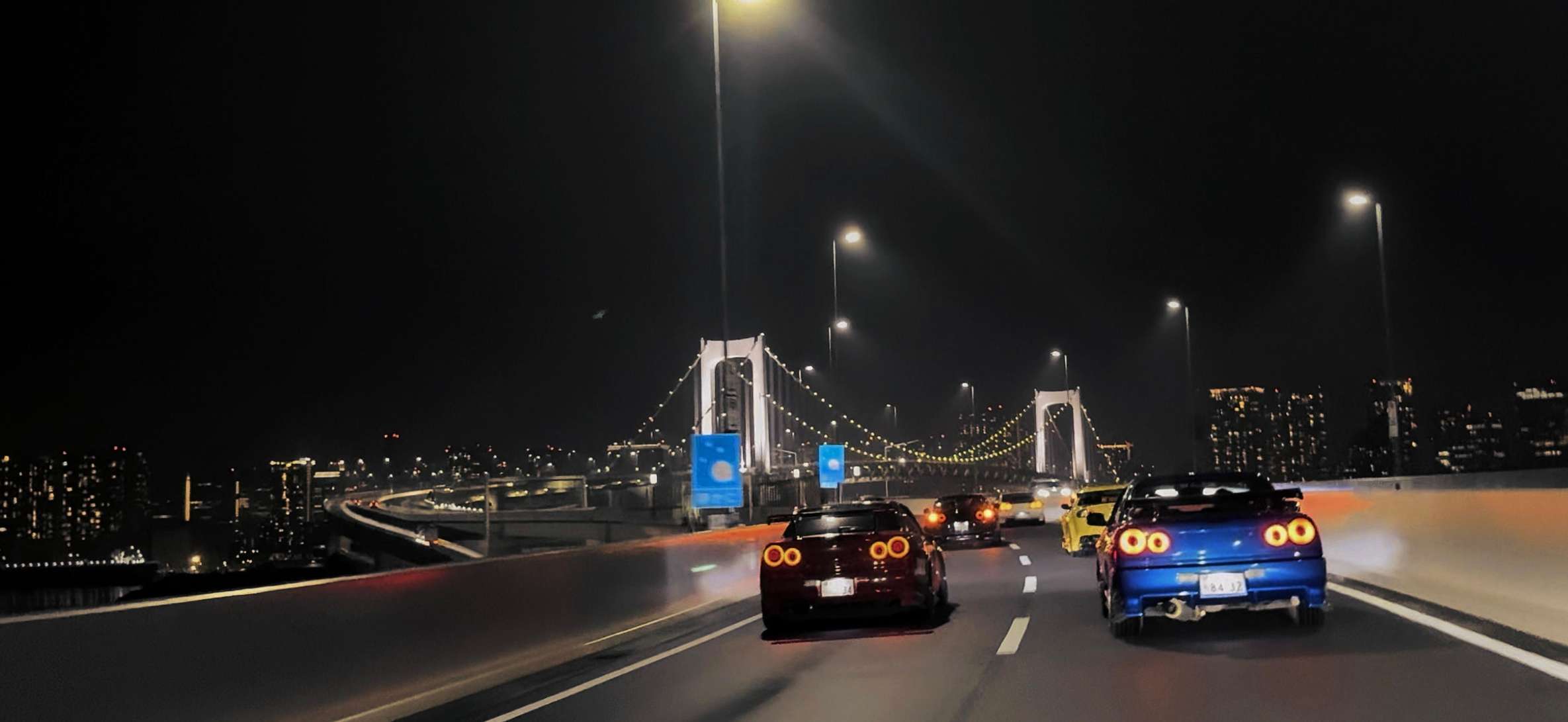
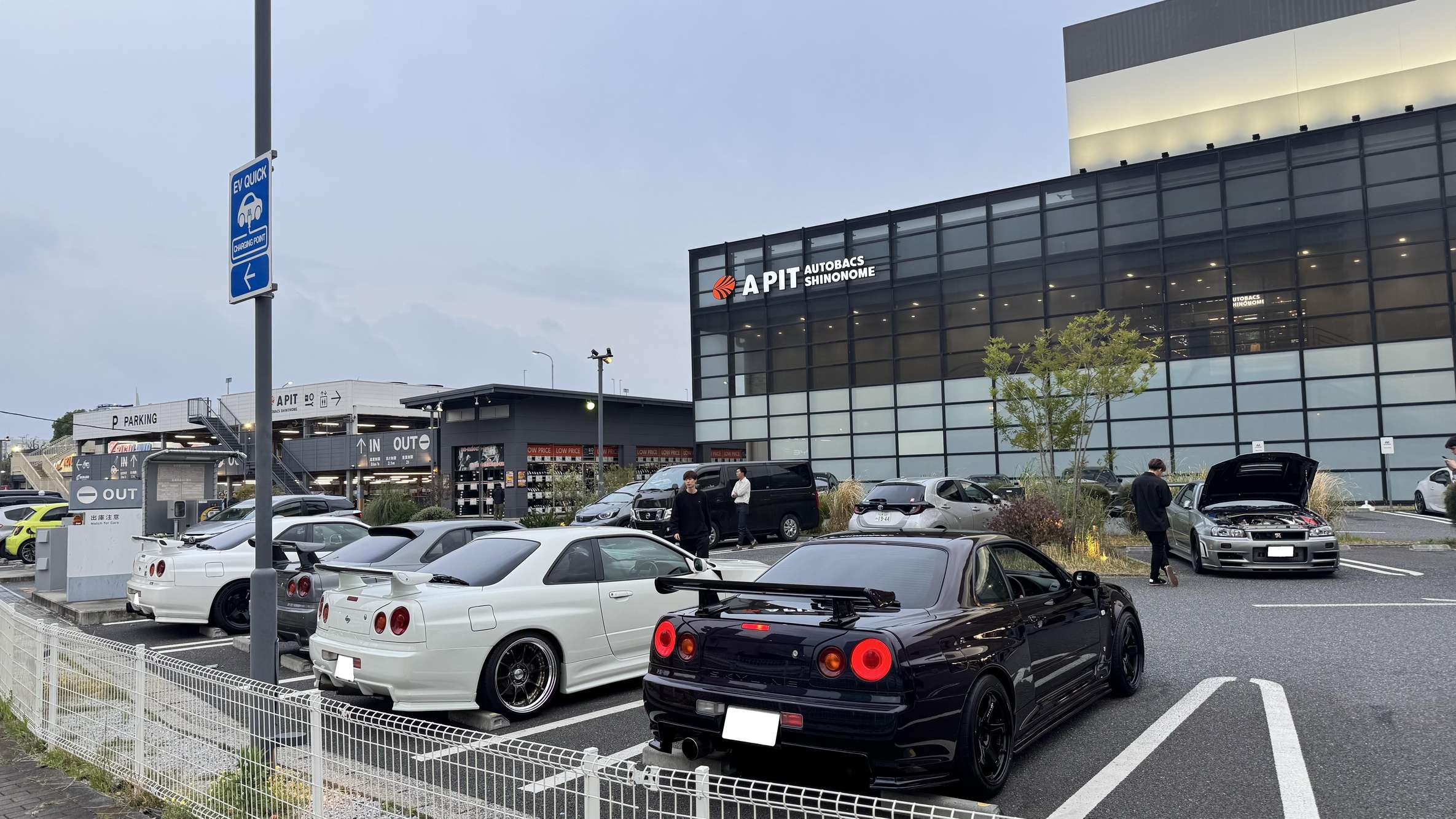
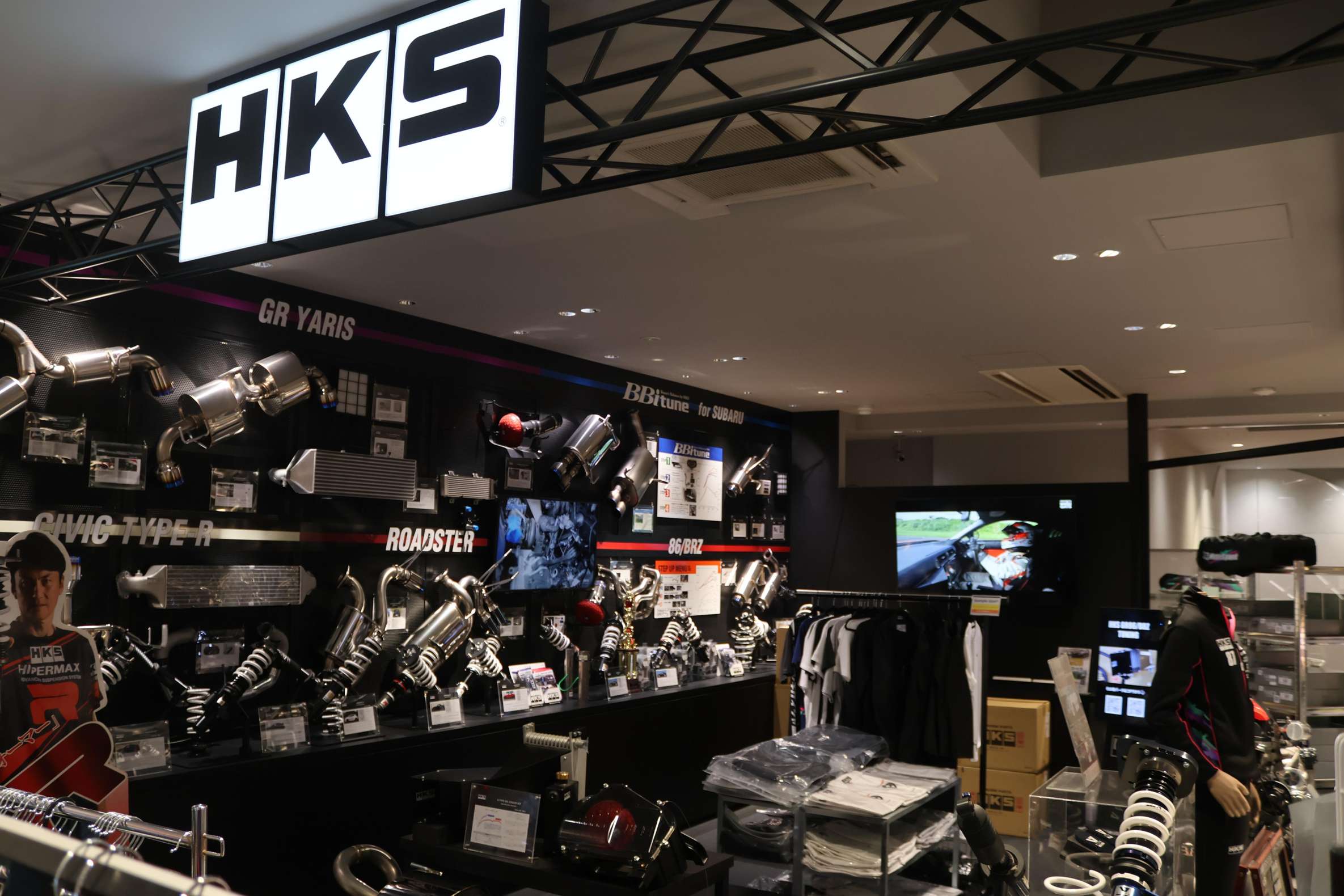
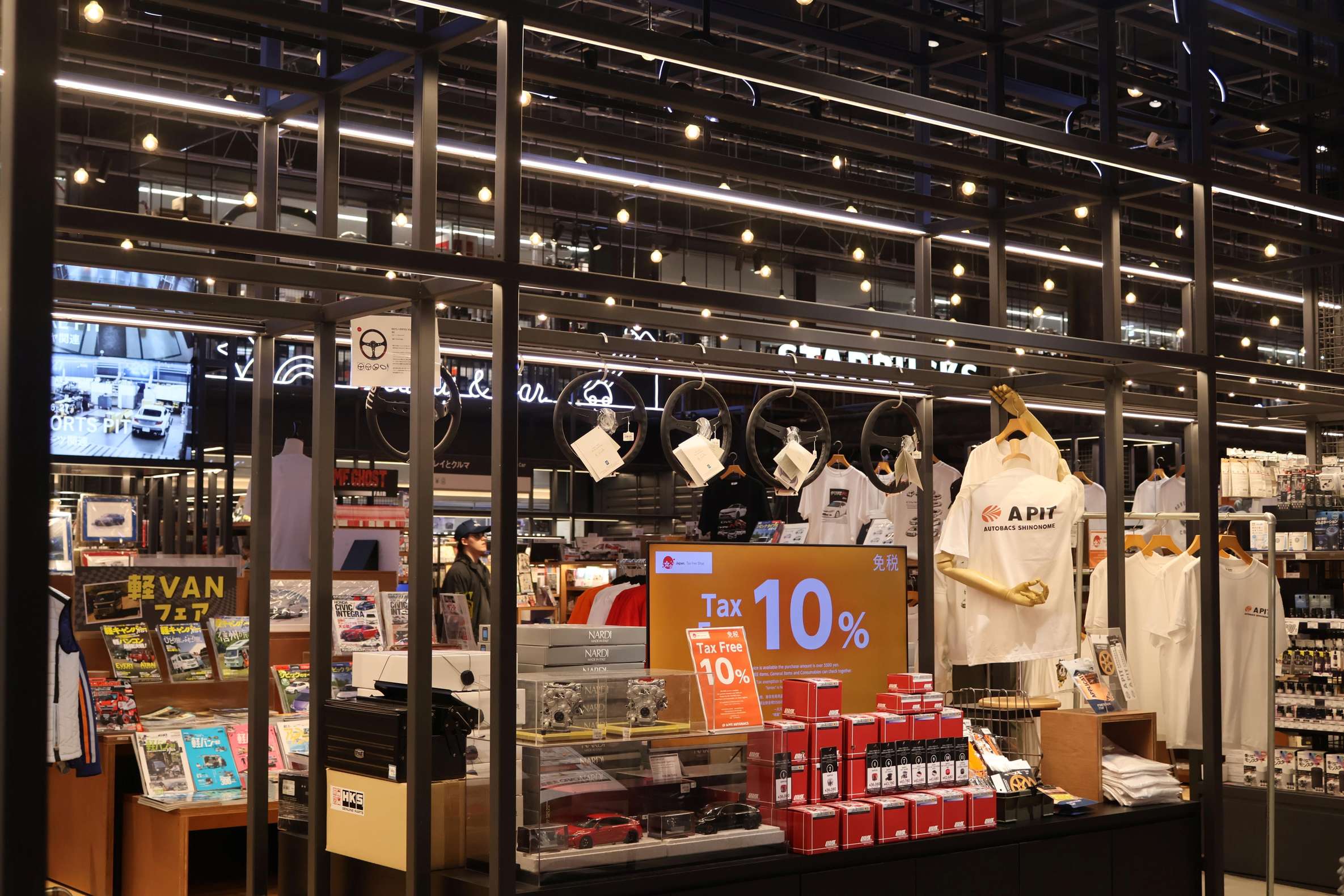
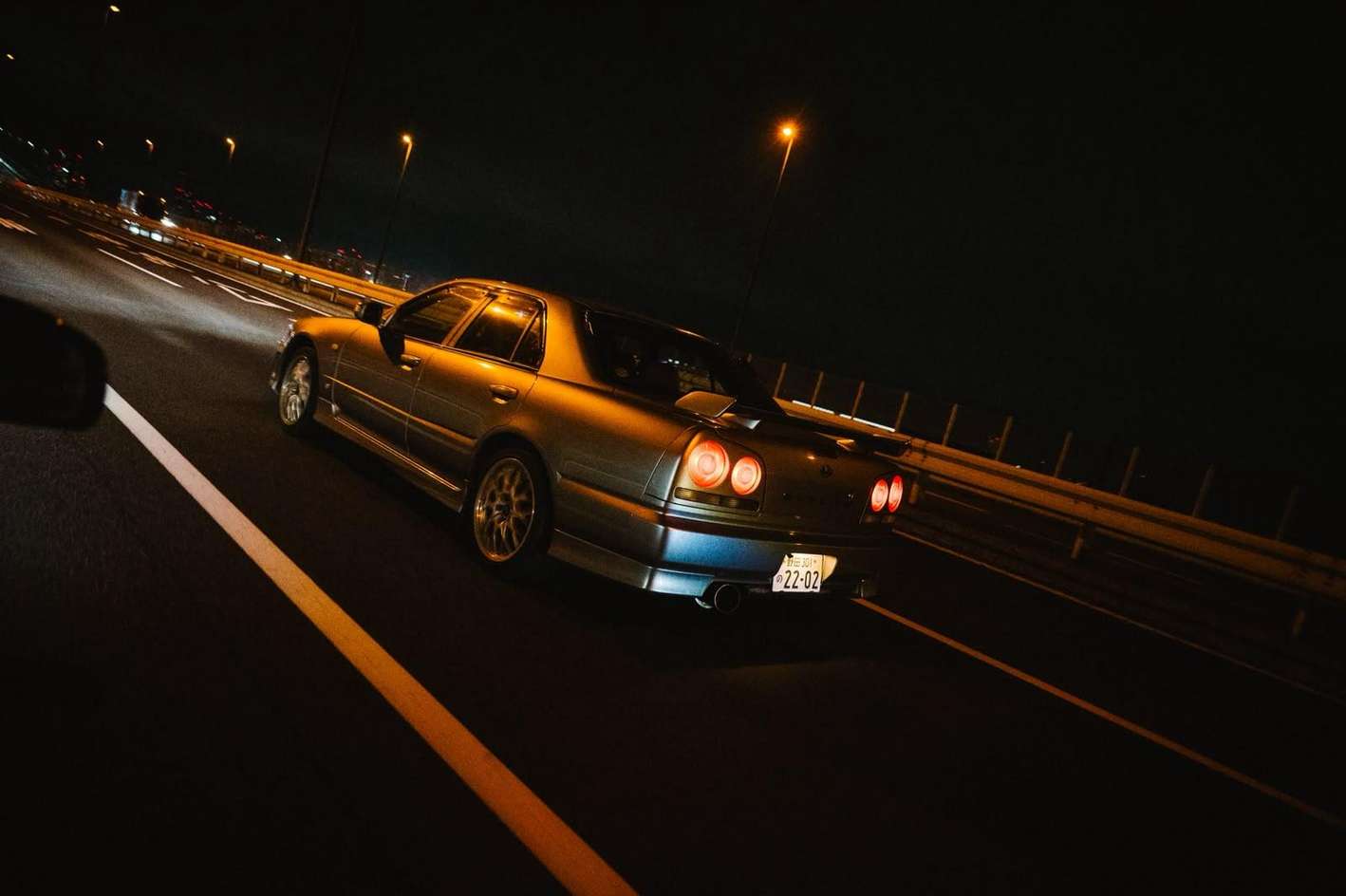
Getting there runs through the city first: hotel pickup anywhere in central Tokyo, a browse at the A-PIT Autobacs parts store, a 700HP R34 GT-R under you on the Bayshore Route, and the ride home across Rainbow Bridge with the water and tower lights below.
Guide commentary, photos, fuel, tolls and parking all sit inside the booking.
PickupTokyoFrom this tour2autobacs Shinonome· 30 minA huge automotive parts store on the waterfront, and a favorite staging spot for car clubs before they head out to the meet. Half an hour to browse tuning parts, JDM merchandise and the customer sports cars parked outside.Street View3Tokyo· 40 minScenic drive (40 minutes)From this tour4Daikoku Parking Area· 60 minThe main event: a free public rest stop inside Daikoku Junction, fenced off from city streets and reachable only by expressway. An hour of free time among parked GT-Rs, Supras and modified street builds, framed by the interchange's spiral ramps.5Rainbow Bridge, Tokyo· 40 minThe crossing back over Tokyo Bay at night, lit cable spans above and city glow on either side. A 40-minute stretch of road built for photos, not a formal stop.Street ViewDrop-offTokyoFrom this tour
Where the other tours go
Daikoku Parking Area
Tokyo: Daikoku or Umihotaru Tour (Silvia S15, GR86, 370Z)
Most reviewers single out their driver by name as a friendly, passionate guide who knows the JDM scene.
Best surprise
Many say the night felt less like a booking and more like hanging out with a new car-mad friend.
Most common wish
Several reviewers wished they had more time browsing parts and souvenirs at the store stop before the meet.
Booking your private JDM Daikoku tour, step by step
01
Pick the night and start time
Choose a date and the start slot that fits it. Private plans run Mon-Thu from 7:30 pm, while Fri-Sun and holidays start at 4:30 pm so you reach Daikoku PA before weekend police closures that can begin as early as 7:30 pm.
Pro tipWeekends bring the biggest meets but the earliest shutdowns; Tuesday and Wednesday give you a calmer lot with almost no closures.
Common mistakeBooking a weekend night expecting hours at the meet; one to two hours before restrictions is the realistic window.
02
Choose your car option
Compare the options on each private tour: some fix the car, like an R34 Skyline or MK4 Supra plan, others assign one on the day. Premium tiers list R35 GT-R, Supra and RX-7 choices, subject to availability.
Pro tipIf the exact model matters, message the operator when you book; one tour confirms a specific car if you ask at least 48 hours ahead.
Common mistakeAssuming an R34 listing means the GT-R version; many are the GT-T or ER34, so read what the plan actually promises.
03
Book and watch your inbox
Pay online and you can cancel up to 24 hours in advance for a full refund. One operator emails within 48 hours and waits for your reply, so check your mailbox and answer to lock in the pickup details.
ImportantReply to that email; several operators also ask for a WhatsApp or Instagram contact to coordinate on the night.
RecommendedBook your weekday early if you want a specific car; assignments depend on maintenance and demand.
04
Sort the pickup point
These private tours collect you at your hotel or a designated Tokyo spot, covering the 23 wards with core zones around Shibuya, Shinjuku, Minato and Tokyo Station. Agree the exact address in advance with your driver.
Pro tipDoor-to-door pickup matters most on midnight runs, which finish between 12:30 am and 2:30 am when the trains have stopped.
Common mistakeAssuming hotels outside central Tokyo are covered; one tour limits free pickup to areas near Shinjuku, Shibuya, Ueno, Odaiba or Ginza.
05
Prepare for the night
Bring your passport, a charged phone for photos, and layers: Daikoku sits on an open coastal deck where winter nights drop to 1-4 degrees C with sea wind. Rain does not cancel; guides hand out umbrellas and cars still show up.
RecommendedWear flat shoes and comfortable clothes, and leave the big suitcase behind since cabin space in a coupe is tight.
Common mistakeDressing for the city in winter; the parking deck is exposed and the ocean wind makes 4 degrees feel much colder.
Know before you book your private JDM tour
Can stop the dayGood to knowGood news
01
ChoosingWhat it is, who it suits, when to go
8
Private cabin
A private booking reserves the whole car for your group, so no strangers share the cabin and no other tourists decide the pace. Most cars seat up to three guests, so a group of four travels in two cars.
Your car
Some private plans let you pick the model: R34 Skyline, R35 GT-R, Supra, Silvia, RX-7. Others assign a car on the night based on availability. When a car is guaranteed in writing, take it, because a listed model is usually only a hope.
Route changes
A private driver can stretch the Daikoku stop when the lot is buzzing, add a detour like Tatsumi PA, or skip a stop you do not care about. Tell your guide what you want from the night and the route bends around it.
ClosuresCan stop the day
Police sometimes close the Daikoku entrance on weekend nights when the lot gets too full or too loud, sometimes before 8 pm. Operators handle it well: you divert to Umihotaru PA or another spot, and on several plans you can take a full refund instead if Daikoku never opens to you.
Timing
Cars start arriving at Daikoku from 4:30 pm on weekends, and police can move in as early as 7:30 pm on the busiest nights. Tour operators who know this schedule weekend departures between 4:30 pm and 5 pm, which buys an hour or two at the lot.
Health limits
Modified coupes sit low with tight bucket seats, and several tours state plainly that wheelchair users cannot ride. Passengers need to get in, sit, and get out unaided. Tall or broad travelers should flag their height and weight when booking, because rear seats in cars like the GT-R are genuinely cramped.
What's included
Private packages cover the driving: fuel, expressway tolls, parking fees, your guide, and pickup. Photos and video support at the stops come standard with most private guides, a bonus worth more than it sounds after dark.
Extra costs
Food, drinks, and souvenirs are yours to pay. The Lawson at Daikoku stays open around the clock and the diner serves until 9 pm, so snacks and a wander are easy without planning ahead.
02
Before you goPapers, health, what to bring
2
DocumentsCan stop the day
You ride as a passenger with a professional driver, so no license or international driving permit is needed. Bring your passport, since some operators ask for ID at pickup.
Age limits
Each operator sets its own floor, and they range from under 1 year banned to under 10 or under 12 turned away. Children under six need a child seat under Japanese law, and not every sports car can take one, so mention any child before you book.
03
On the dayWhere to be, when, and how you get there
1
Pickup
Most private JDM tours collect you at your hotel and drop you back afterward, so there is no late-night hunt for trains. Pickup covers Tokyo's 23 special wards, with Shinjuku, Shibuya, Roppongi, and Tokyo Station at the center of the zones.
04
During the tourWhat is expected of you
1
Etiquette
The cars belong to owners who parked them to be admired. Look, photograph, and chat freely, but never sit on a hood or lean against paint, and keep watch straps off bodywork. Seatbelts stay on for the whole drive; that is the law in Japan.
Daikoku JDM private tour - the night, from hotel door to car meet
A private Daikoku JDM car meet night tour puts you inside a real JDM car with a driver who reads the scene, and the meet itself costs nothing to enter. Which night to pick, which car to request and what happens when police close the lot are the calls this guide settles.
Tokyo· 35.68° N, 139.65° E
If you only remember three things
1
Depart central Tokyo between 4:30 pm and 5 pm on weekends, because police can clear the lot from 7:30 pm.
2
Book any R34 plan at least 48 hours ahead if you want a say in the car.
3
Nobody can walk in or out of Daikoku PA, so your ride home is your driver.
Is a private JDM night tour to Daikoku worth it
Dusk on Tokyo Bay, and the spiral ramps of the Daikoku Interchange rise over the parking deck like poured concrete ribbon. Down below, engines idle, shutters click, and a crowd of builds claims the best spots before the lot fills. Getting into that picture is the whole argument for a private JDM night tour.
The meet itself is free. Daikoku is a public highway rest stop, no tickets, no gate fee, and visiting it legally is straightforward.
What a private charter buys is everything around that: a guaranteed round trip from a place you physically cannot be stranded in, an enthusiast driver narrating the builds, and photos of your night taken by someone who knows where the light falls.
Weigh it against the alternatives. A taxi out runs meter plus tolls, and the meter keeps running while you look at cars. Driving yourself means expressway interchanges, an ETC card and a rental booking made months out.
People who go often say one thing plainly: paying extra for a highly rated operator buys noticeably better cars and sharper drivers. A shared ride through mass-market platforms costs a fraction of a private night, but you share the cabin.
A traveler's note
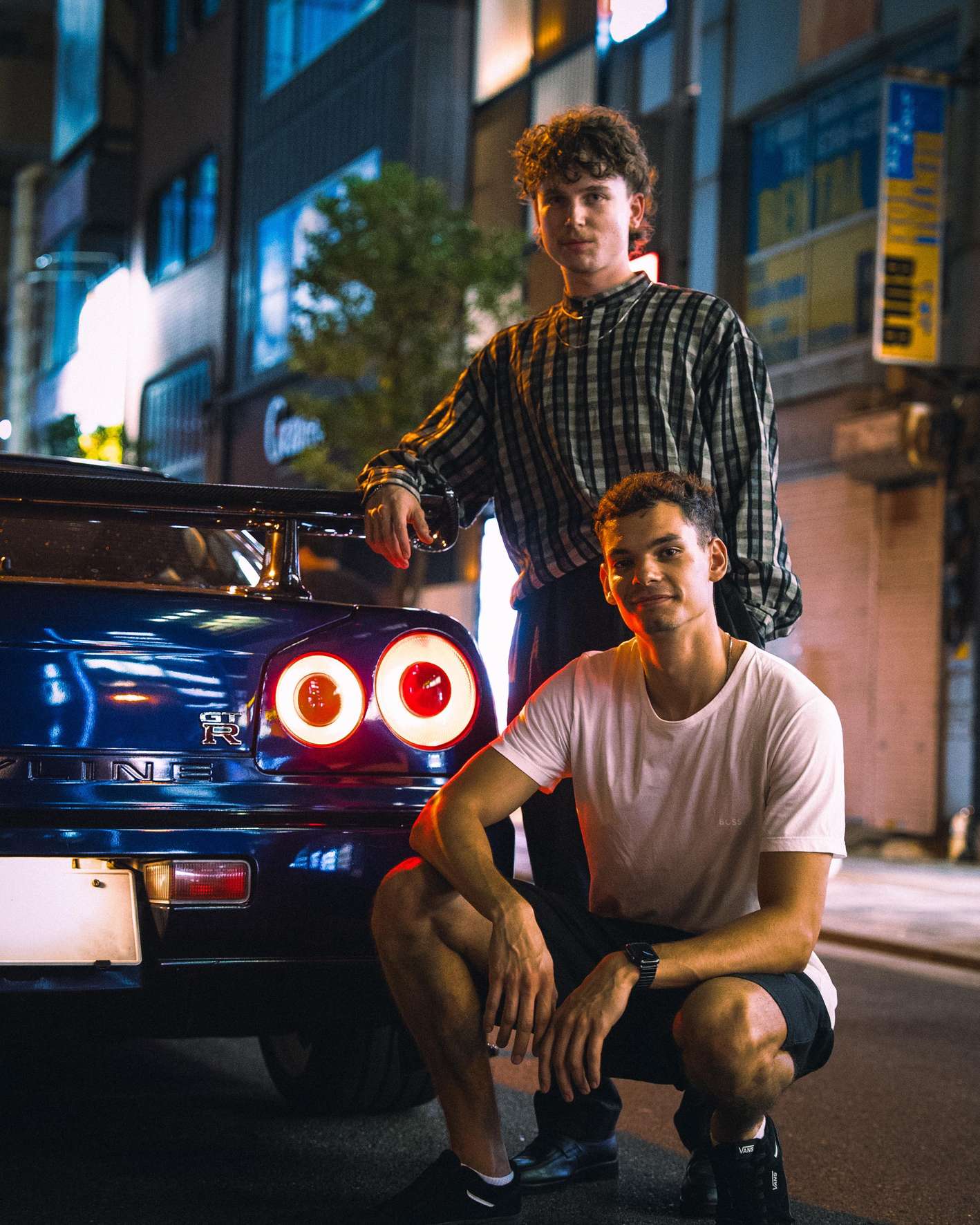
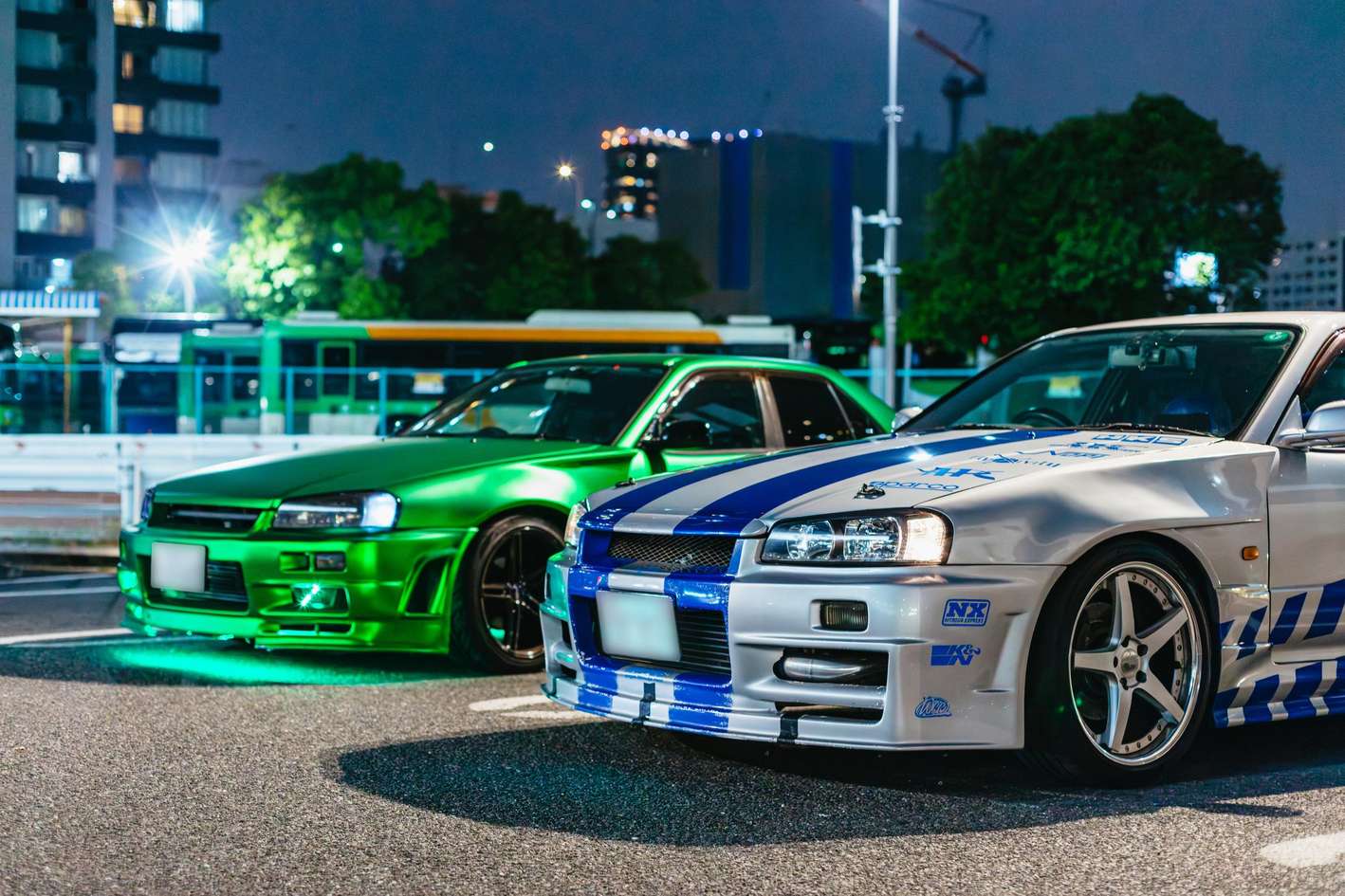
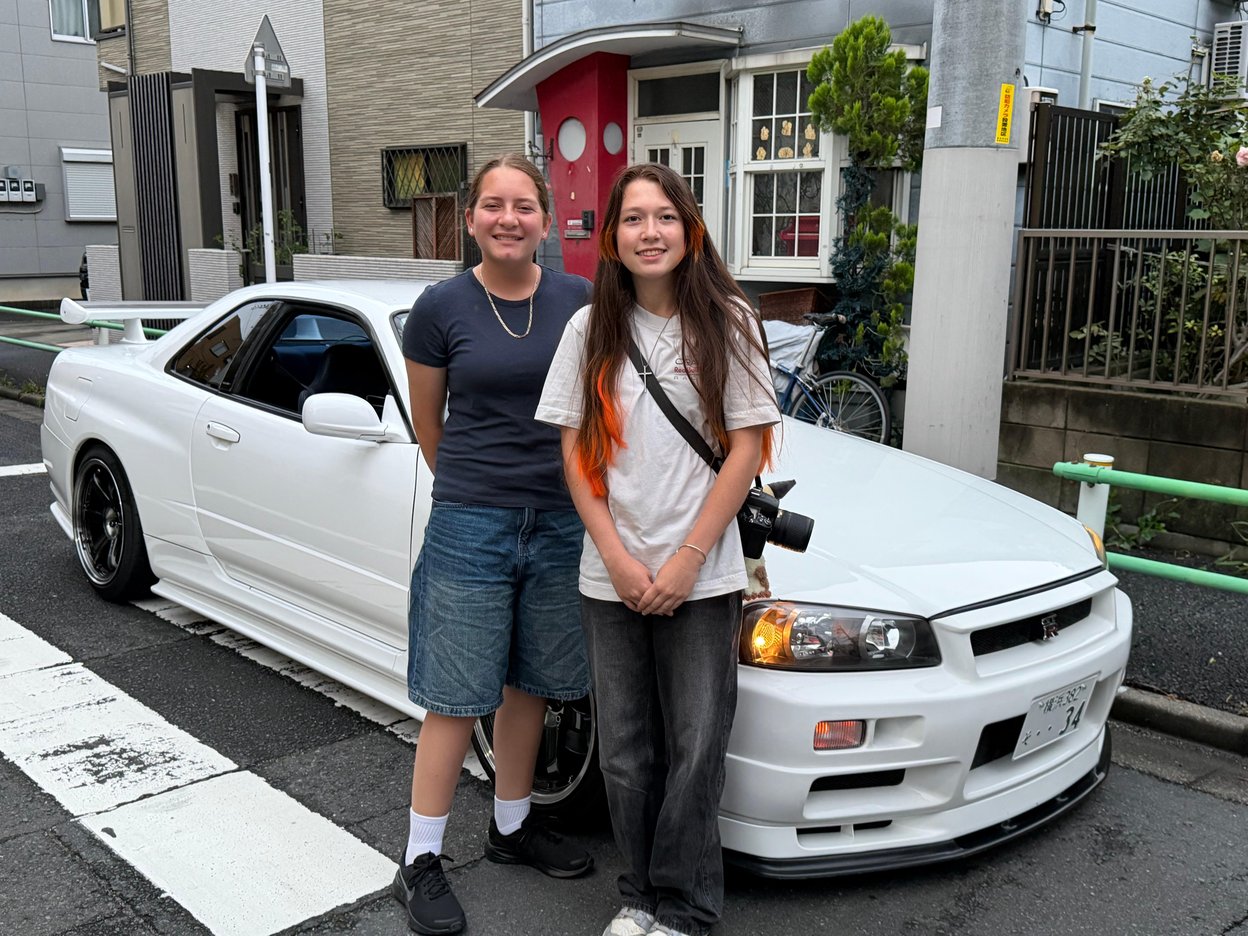
On May 25, 2026, my family had an unforgettable ride with Dai in his stunning Skyline GTR R34, gliding through corners effortlessly. Arriving at Daikoku PA was exhilarating, surrounded by Fast and Furious-style cars!
What a private JDM tour to the Daikoku car meet actually gives you
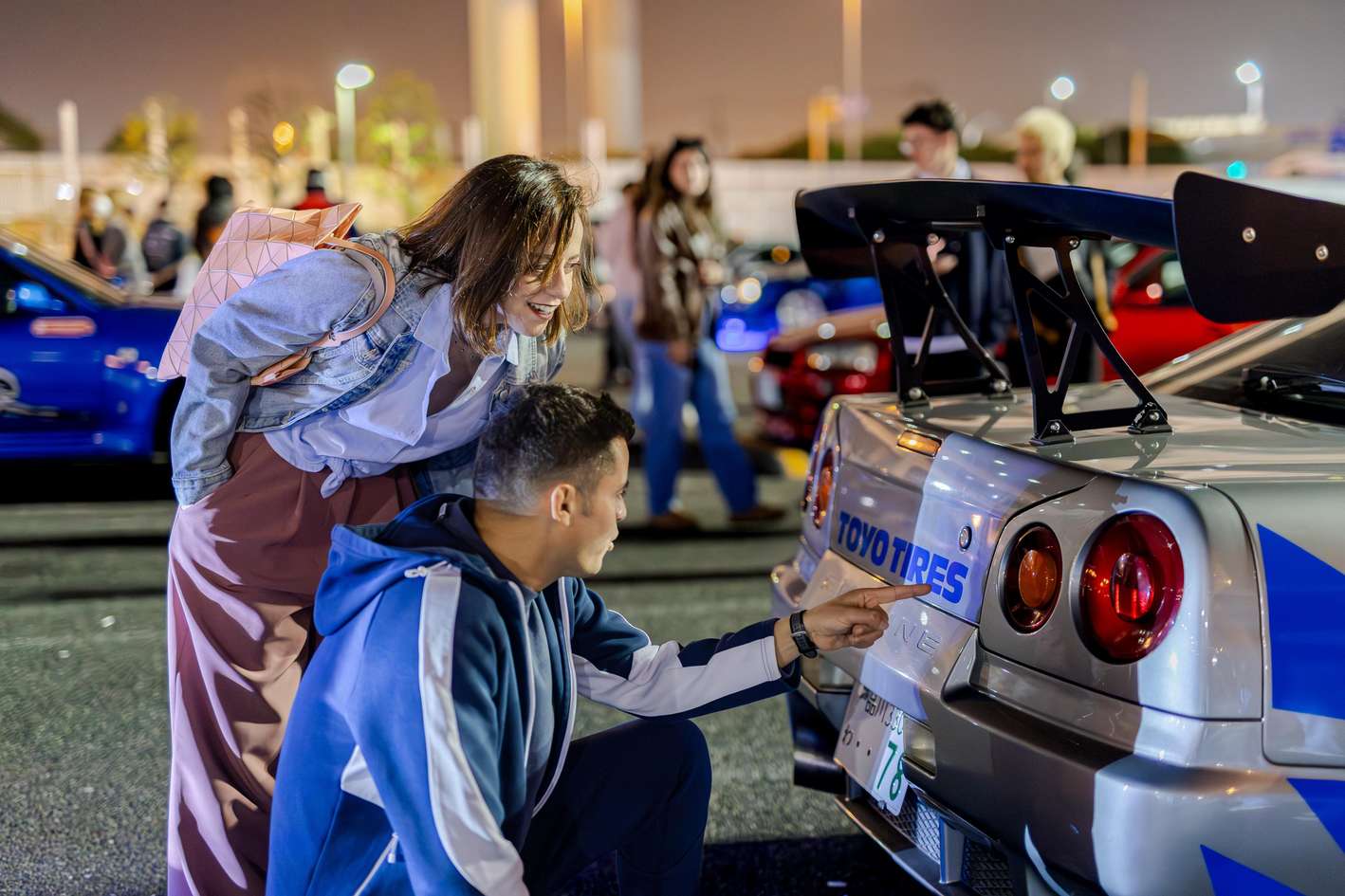
First correction of the mental image. Daikoku PA is a working expressway rest area where car people gather spontaneously. There is no organizer, no schedule, no stage. The lot changes every single night, and nobody can promise which cars turn up.
Second correction: nobody drifts here. This is a stationary meet where owners park and show. Drifting on public roads is illegal in Japan and no legitimate tour touches it.
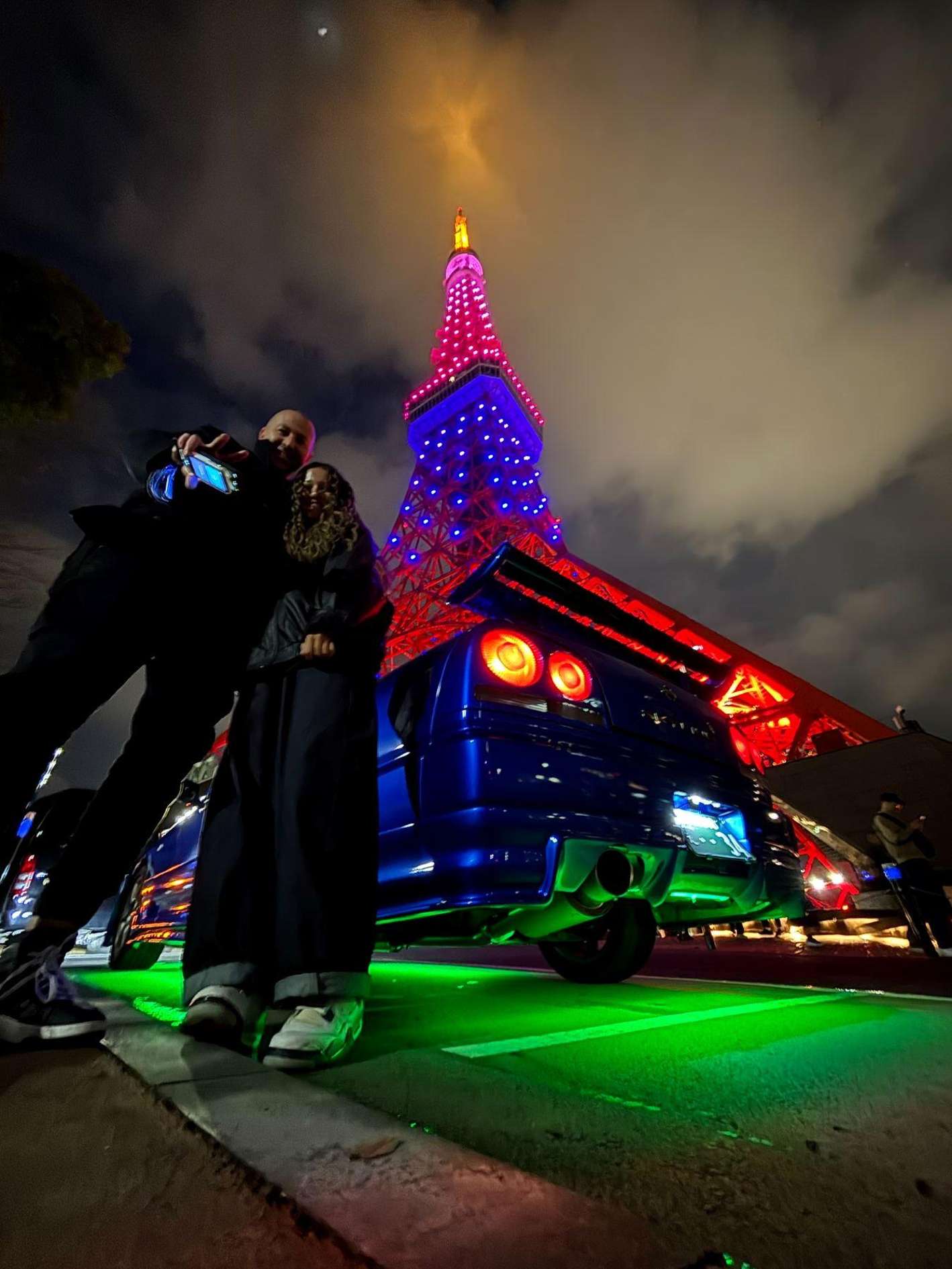
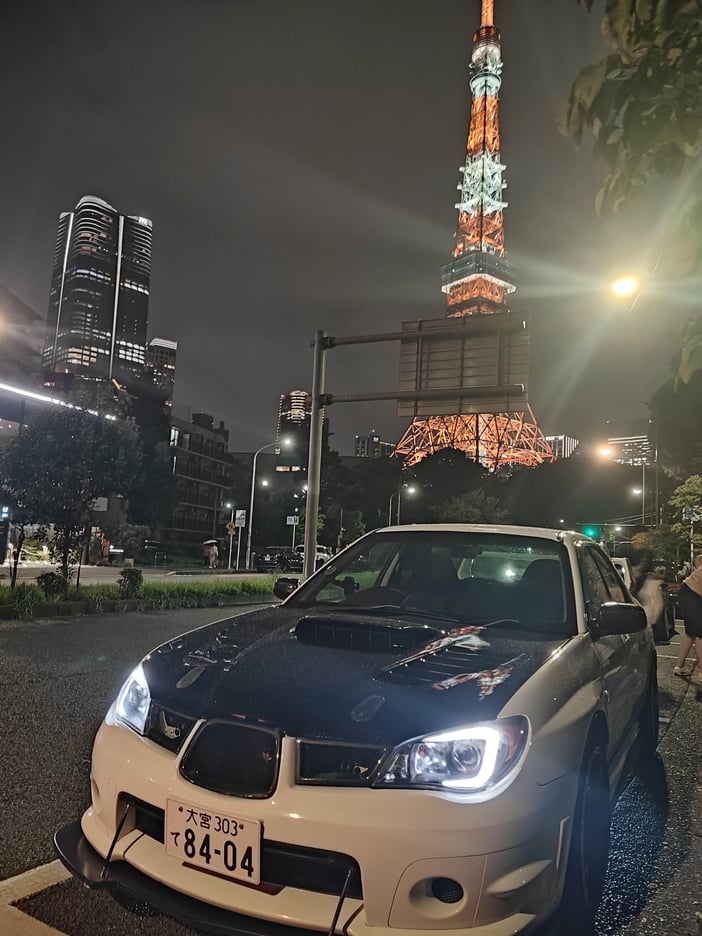
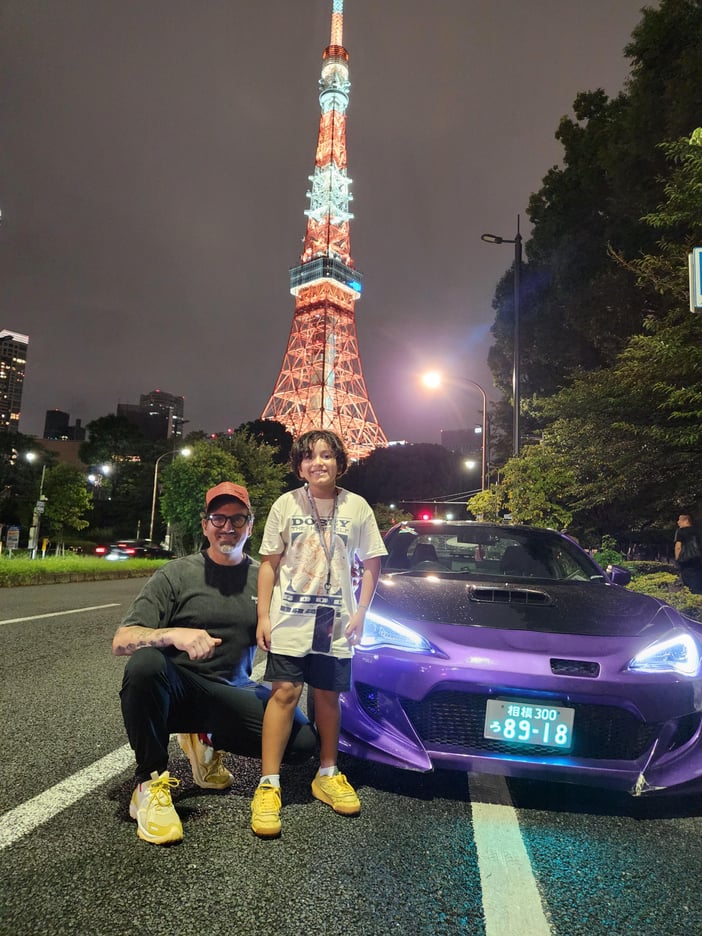
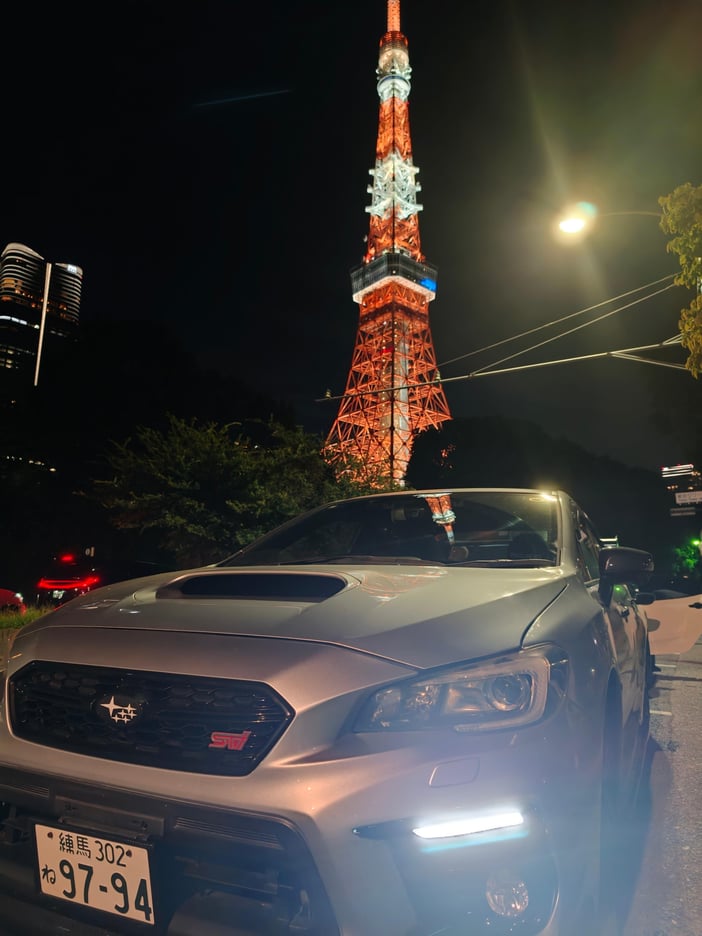
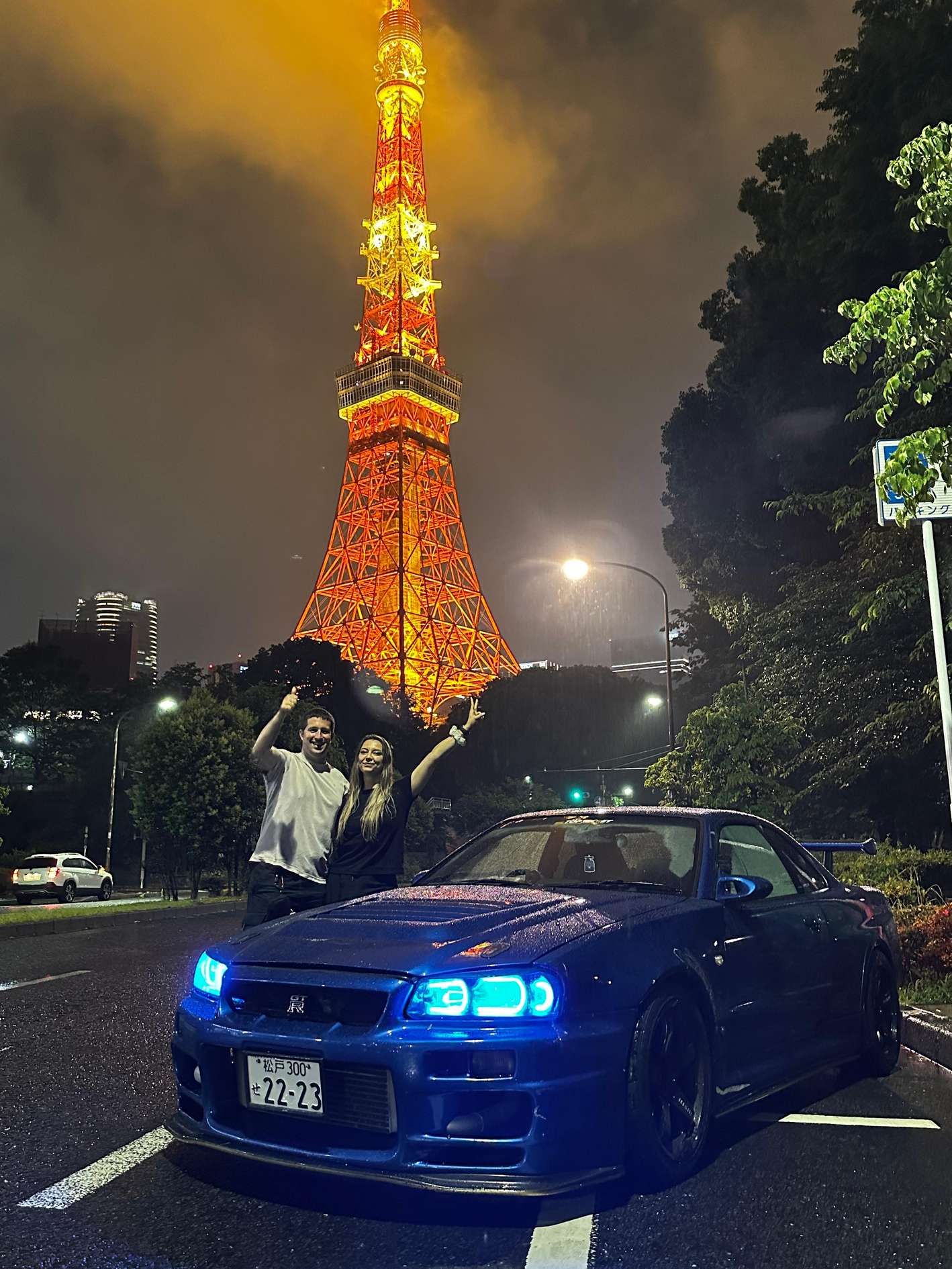
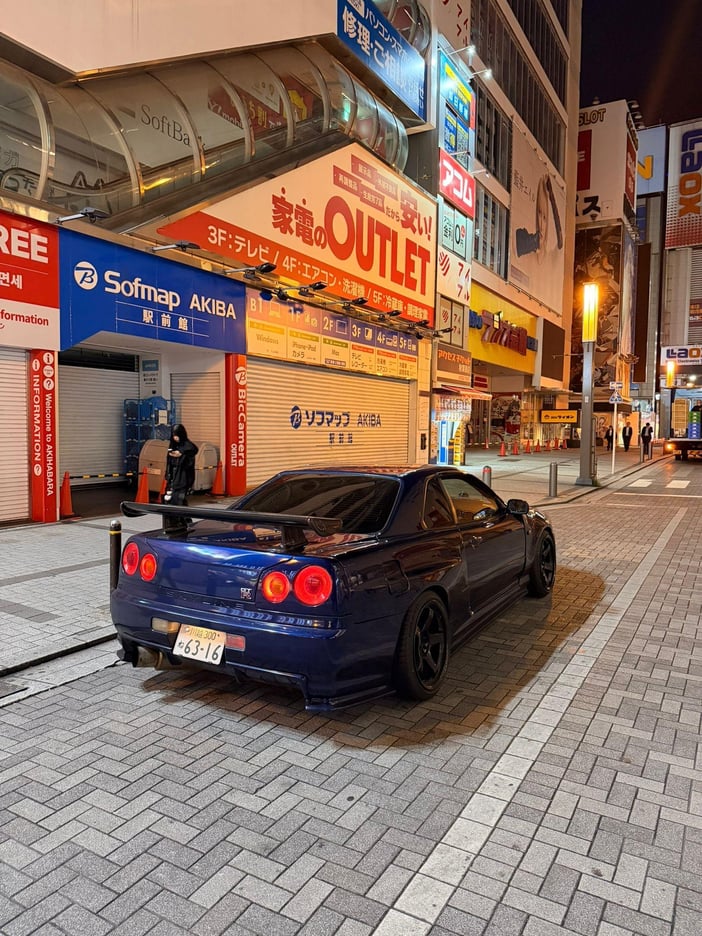
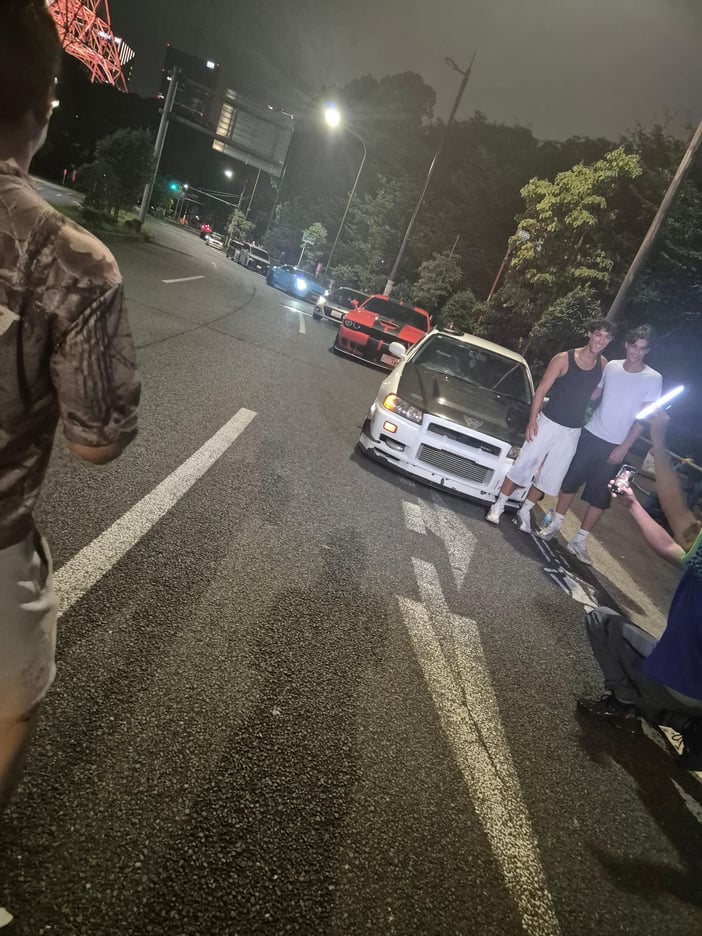
What you actually do is cruise the expressways, cross Rainbow Bridge, stop for photos at Tokyo Tower, often browse Autobacs Shinonome, then spend a relaxed stretch among the parked cars.
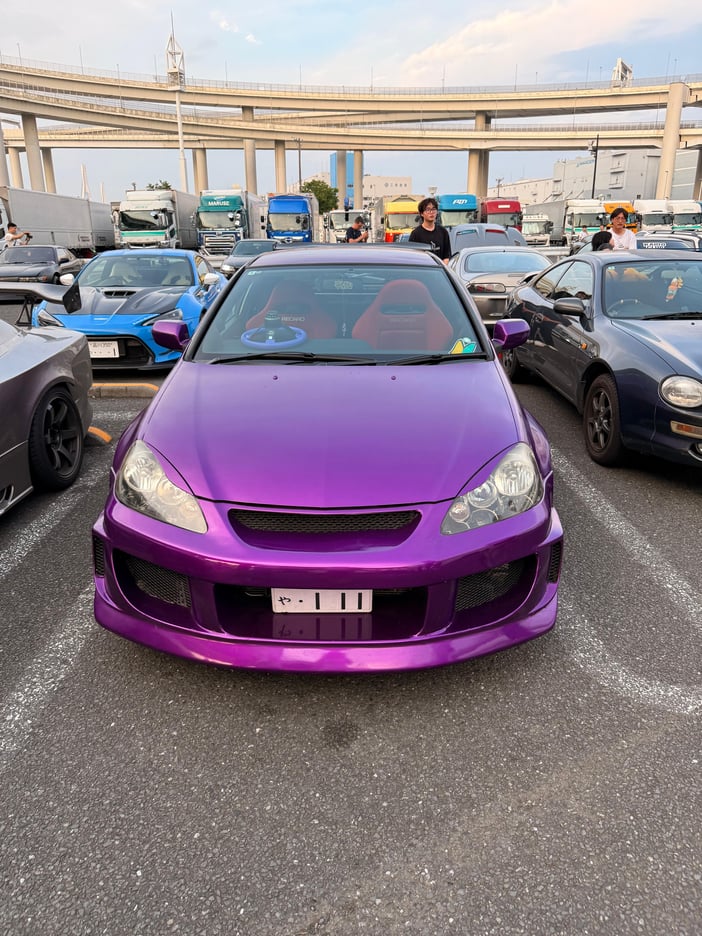
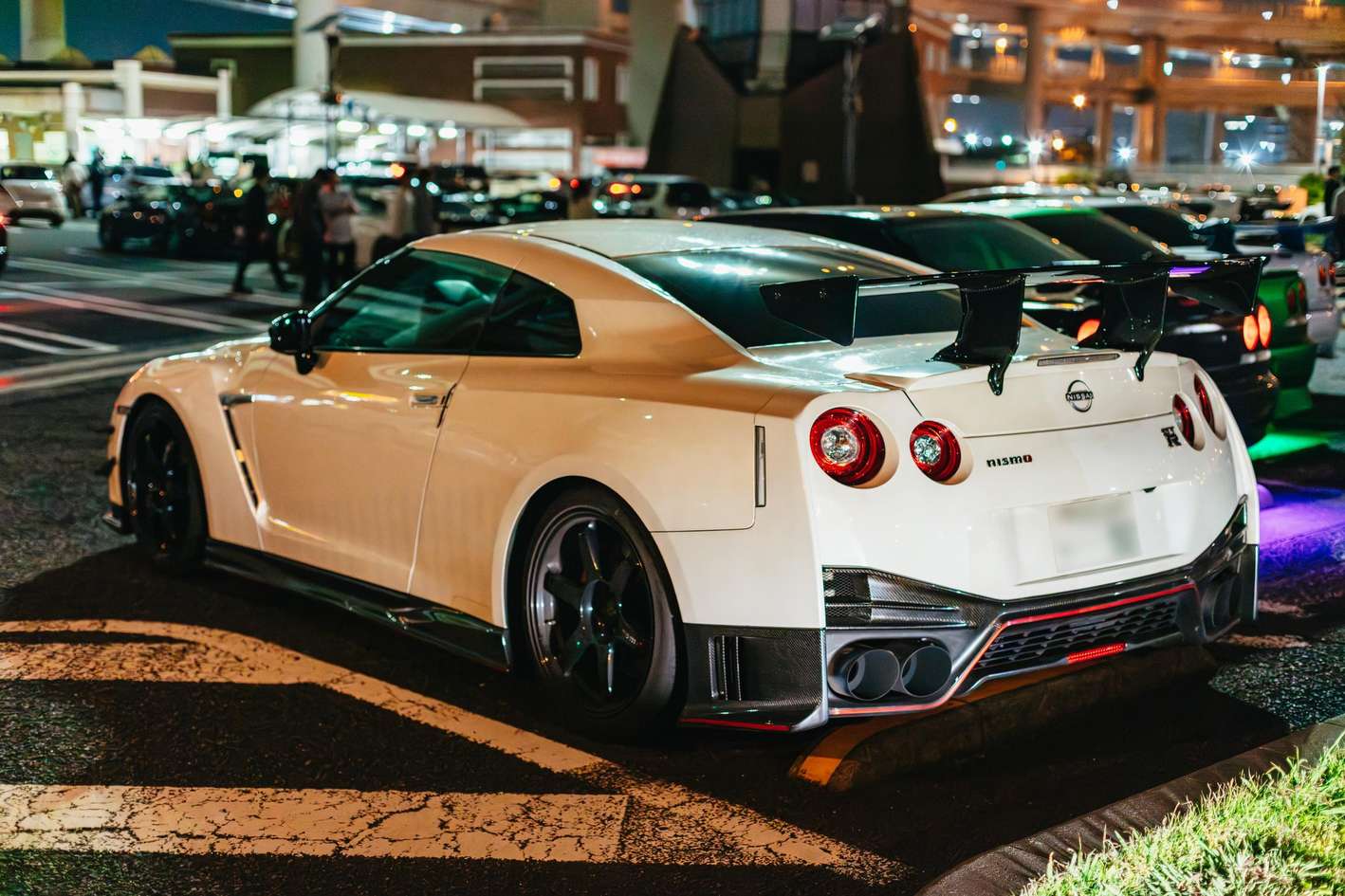
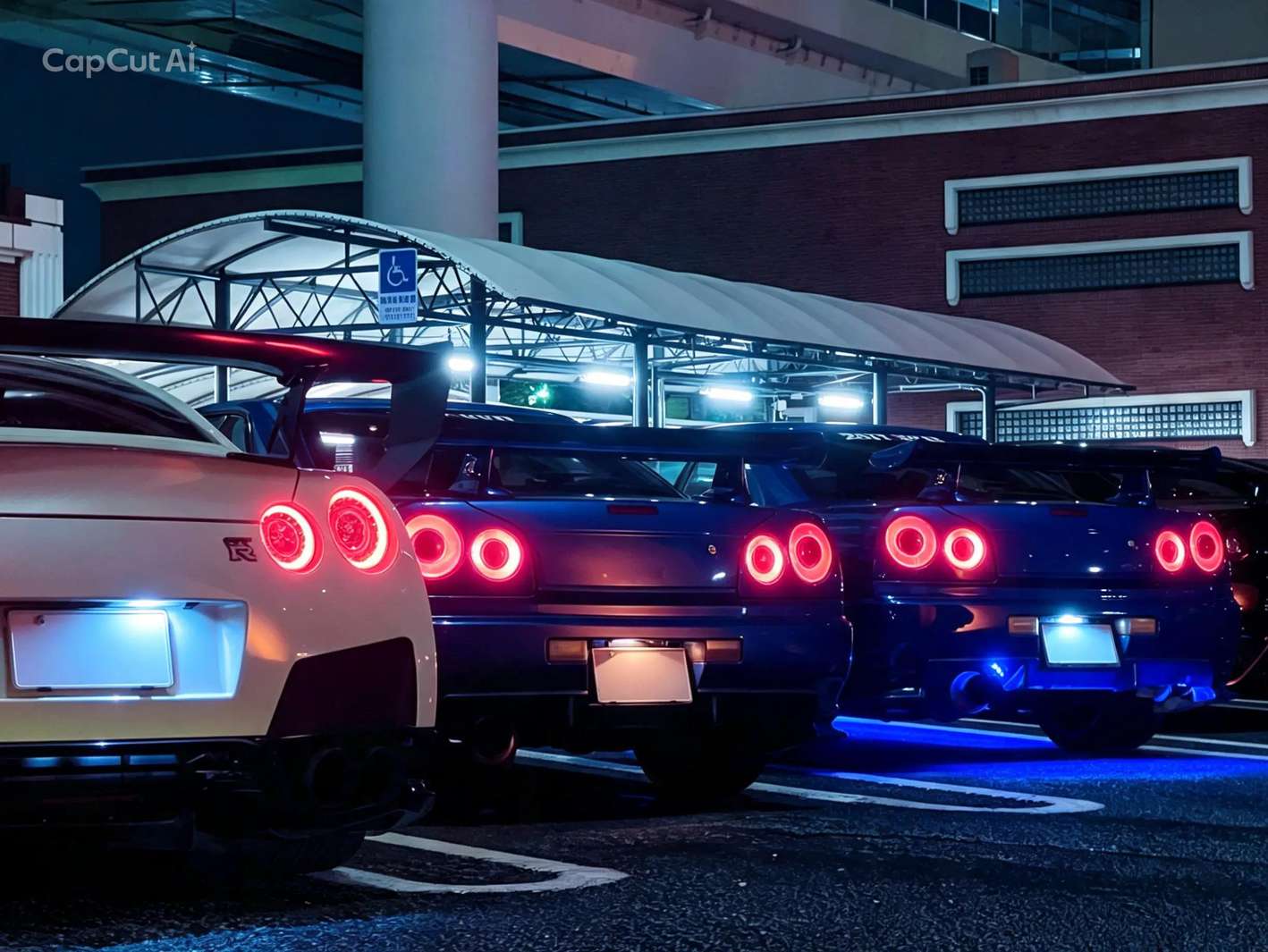
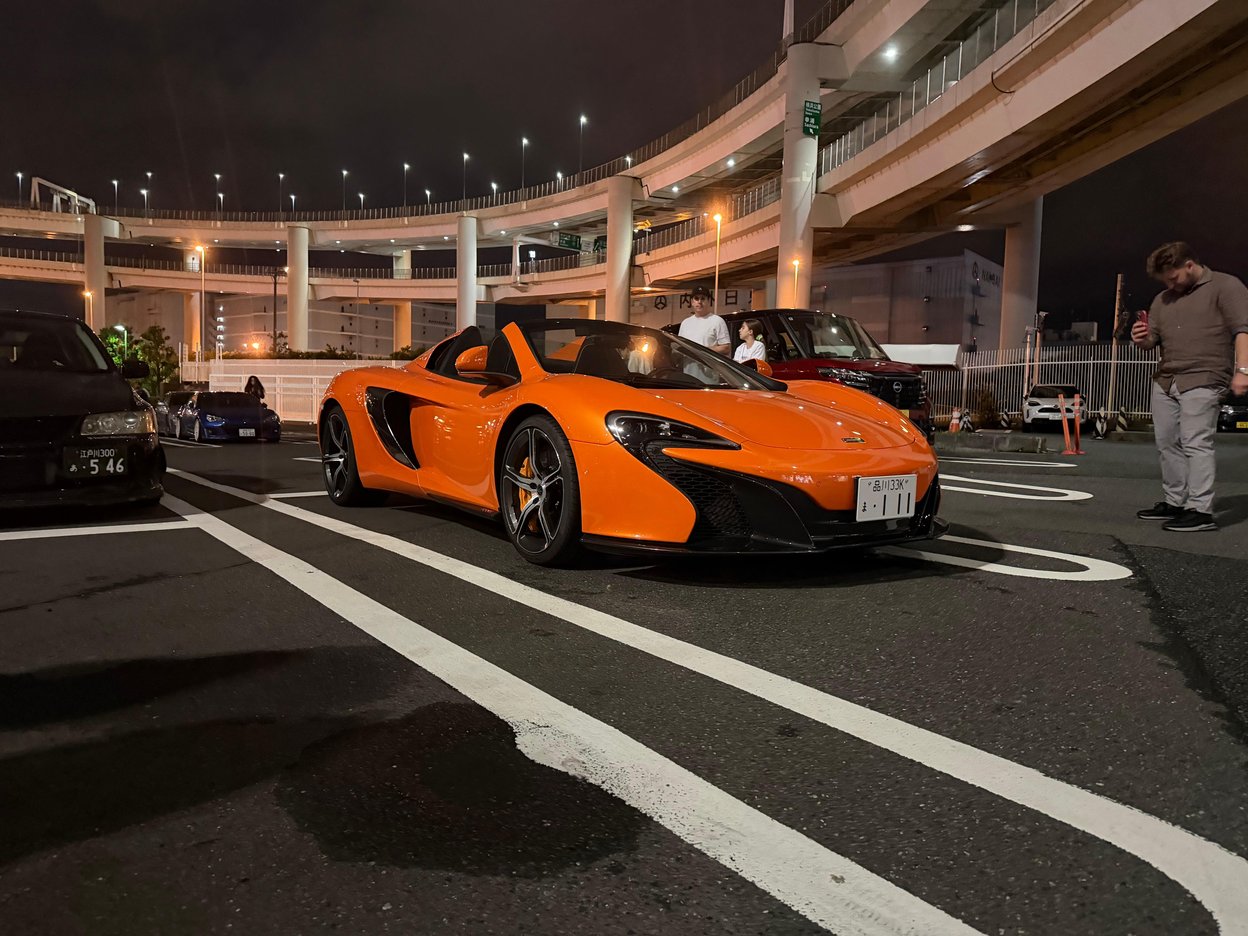
On the lot, temper the expectations social media sets. Alongside the 1990s legends you will find modern modified cars, custom builds and, on good nights, European exotics.
That mix is the real scene, and the part people remember is the conversation: a driver who can explain the build in front of you, or the winding spiral ramps behind it, designed with compound curves that look abstract from the air and unmistakable from the deck.
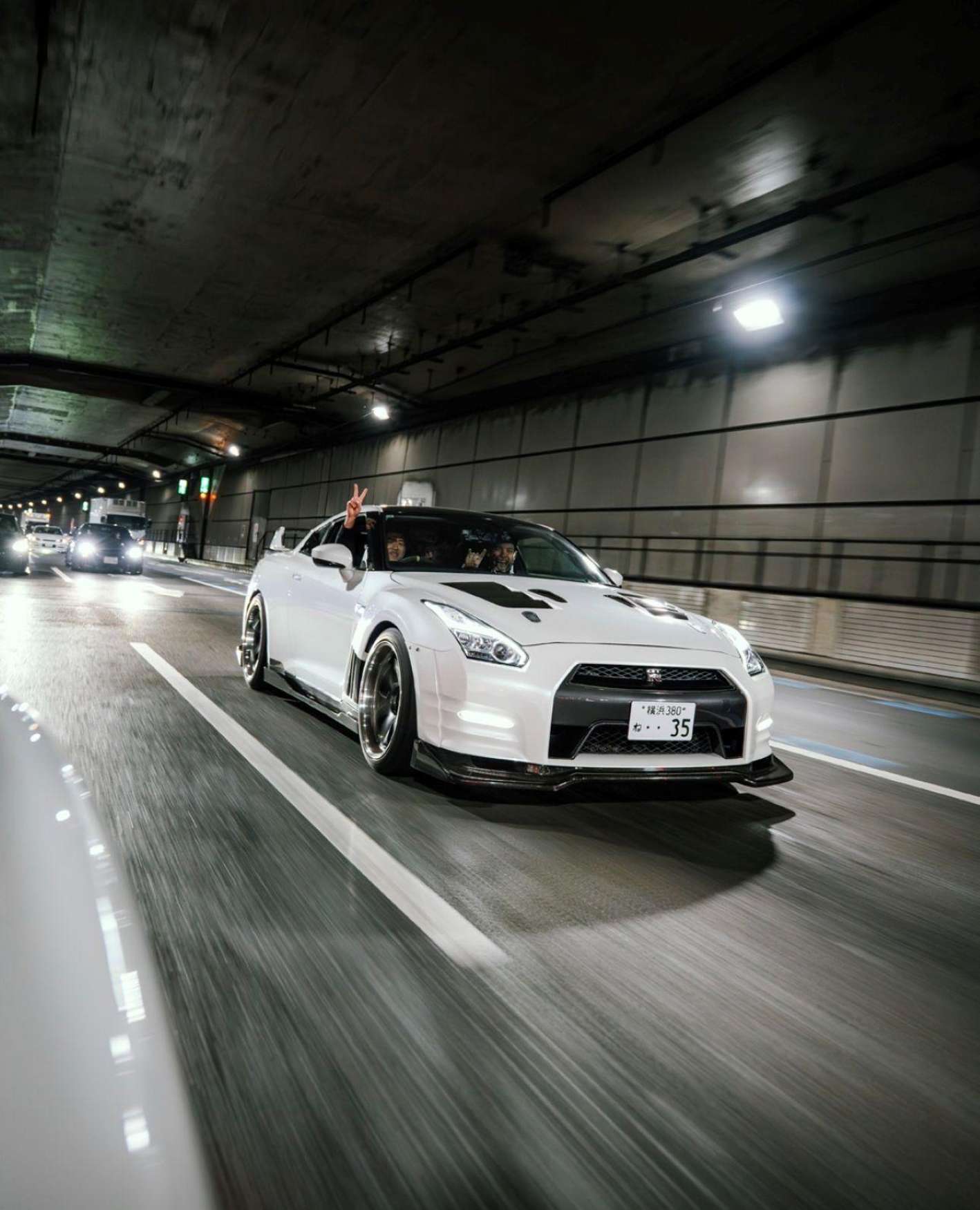
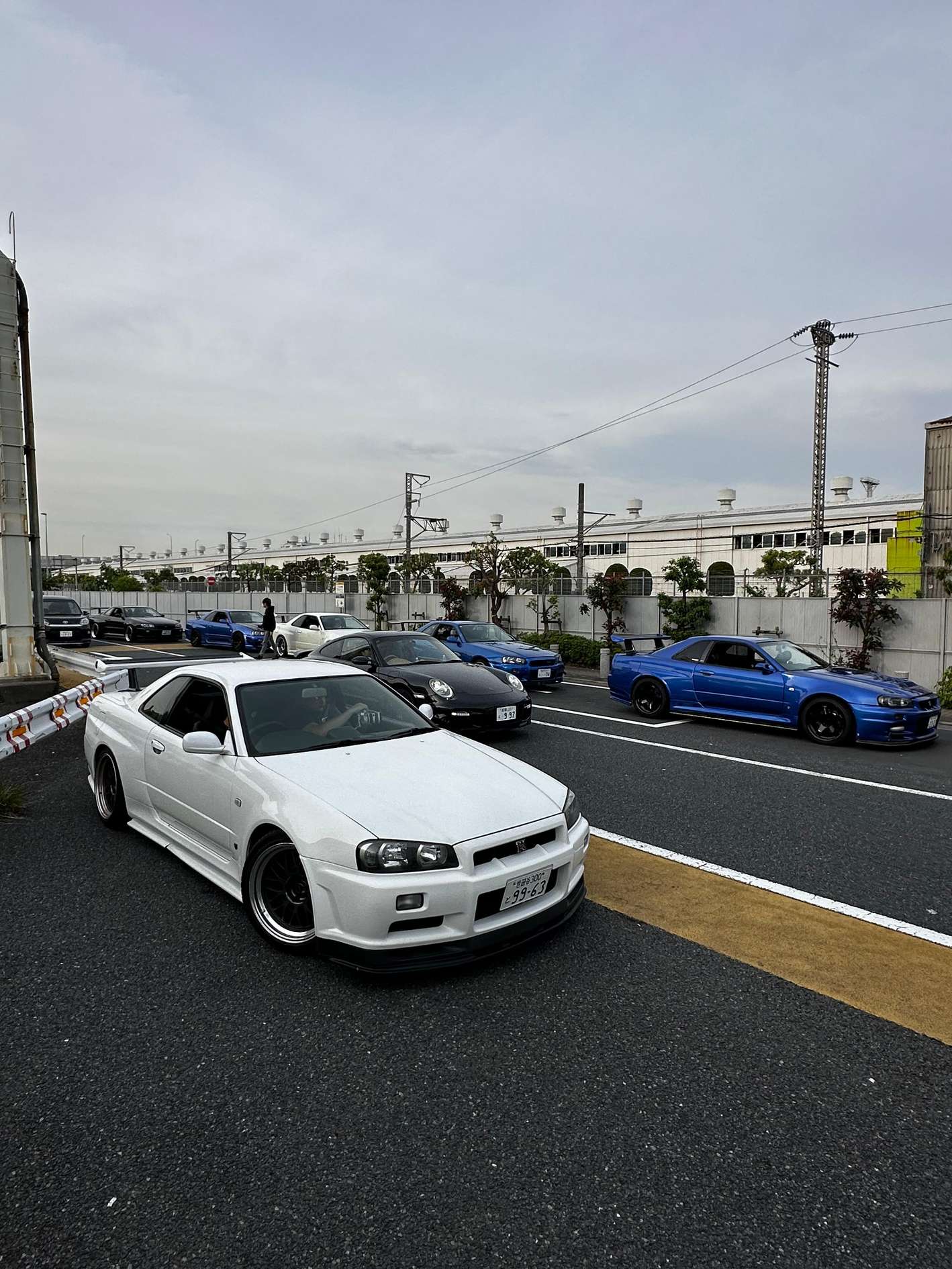
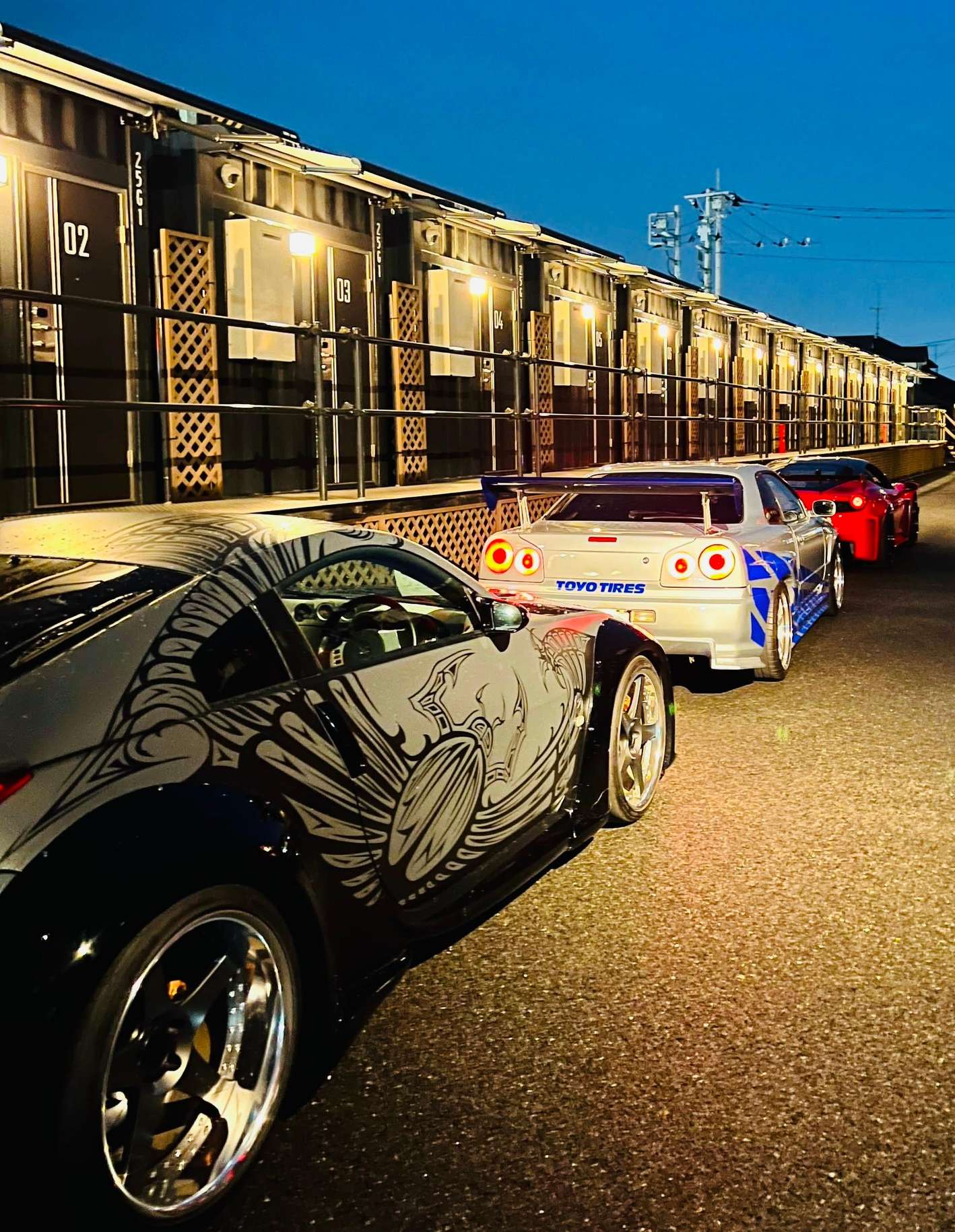
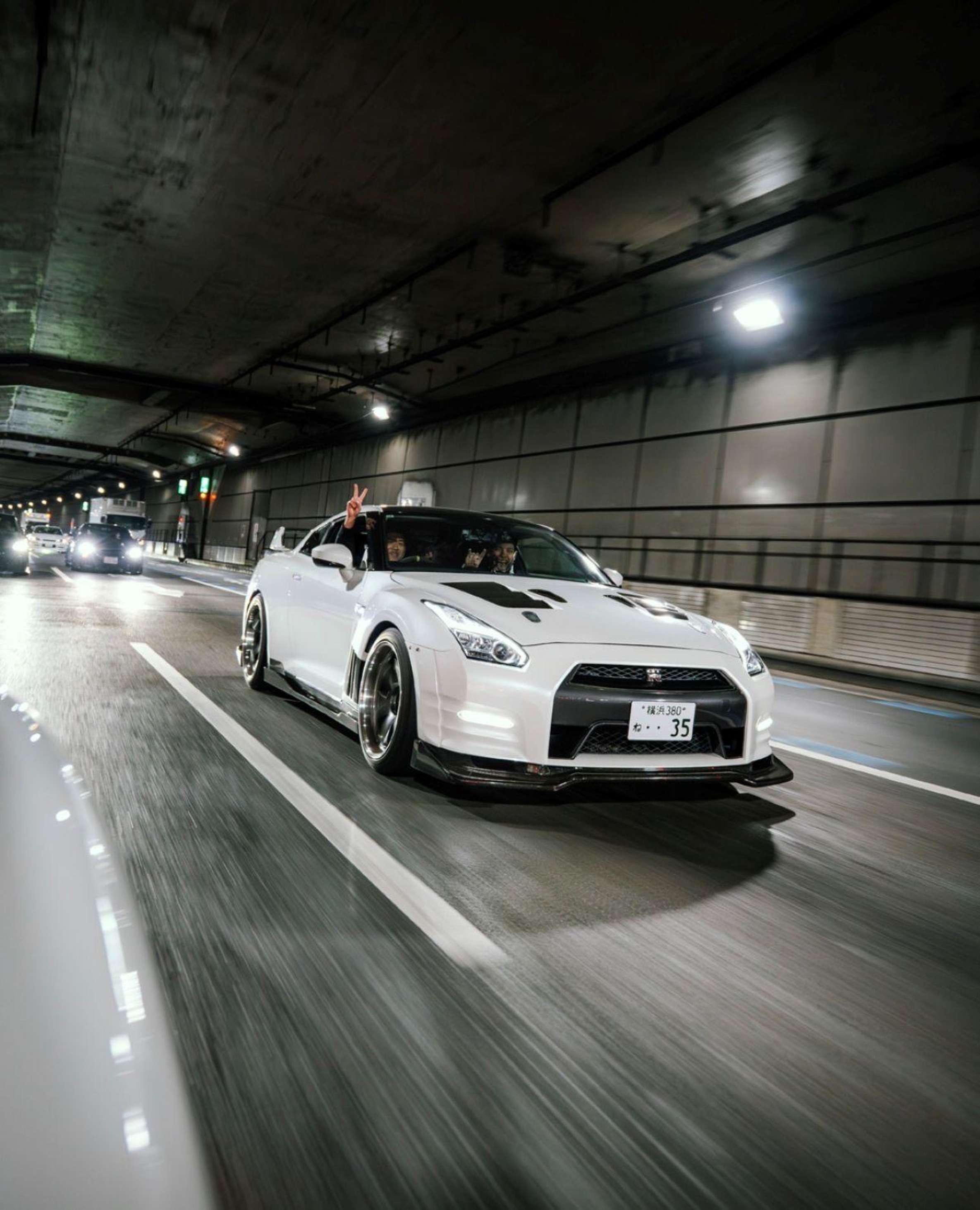
A private format stretches all of it. The Daikoku & Tokyo Private JDM Tour in 700HP R34 GT-R, for instance, runs three to four hours, picks you up at your hotel, and pairs the meet with rolling shots of a whole R34 convoy, which is the footage nearly impossible to get standing still.
Tour for this
Tokyo: JDM Night Run in EVO, WRX & Skyline to Daikoku4.9★ (1,056) · 3 - 4 hours · Hotel pickup · Free cancellation
Choosing the best date for your private JDM night at Daikoku
Every night has cars at Daikoku. The question is what kind of night you want.
Friday belongs to the tuner builds: Japanese sports cars fill the lot from 5 pm, and police frequently clear it between 7:30 pm and 8:30 pm Saturday draws the biggest, wildest mix, JDM icons next to supercars and customs, with the highest closure risk of the week.
Sunday mornings run the opposite way, daylight, vintage classics and European supercars, and barely any police attention.
Then there is the quieter case people under-rate. Tuesday and Wednesday nights gather local sports cars every evening, the crowd is small enough to actually talk to owners, and shutdown risk sits close to zero. Some visitors prefer it outright.
Two timing facts shape the choice. On weekend evenings cars start arriving from 4:30 pm to 5 pm, when the lot is only a fifth full. On weeknights things form later, from about 7:30 pm.
And one warning travels with the calendar: Saturday nights in Golden Week or Obon draw the year's biggest crowds, and police have kept the lot shut until 2 am. Regulars book those dates early or steer clear.
Turnout and conditions across the week at Daikoku PA
Sat: the busiest. Peak weekly night turnout with wild custom builds and supercars, alongside the highest risk of early closure.
Bar height: how busy each day is, from very quiet to the busiestThe busiest: Sat
Tap a day to read it.
Read the middle columns as a trade: the louder the turnout, the shorter the guaranteed window before police move in.
Tour for this
Tokyo Drift JDM Daikoku Car Meet Tour: GT-R, Silvia & Chaser4.9★ (171) · 3 hours · Hotel pickup · Free cancellation
The shape of the evening starts with the pickup. On Friday through Sunday, private tours leave central Tokyo between 4:30 pm and 5 pm, beat the expressway rush, and roll into Daikoku around 5:30 pm or 6 pm. That buys one to two hours among the cars before access tightens.
From Tokyo Station or Shibuya the drive runs 40 to 43 minutes without traffic. Most groups then spend roughly an hour parked at the PA itself, walking the rows, talking to owners, shooting the spiral ramps behind the cars.
The full round trip from hotel door to hotel door runs three to four hours, with extended multi-stop versions stretching toward five.
Weeknights flip the clock. Departures around 7:30 pm skip the evening jam and arrive as the gathering forms, and police closures on Monday through Thursday are far less frequent.
The return leg matters more than it sounds, and the two numbers describe two different kinds of run. Standard evening tours leave early enough to get you back between 10 pm and 11:30 pm, inside the rail timetable, since Tokyo Metro quits around midnight and JR shortly after.
Dedicated midnight runs leave between 10 pm and 11:30 pm and finish between 12:30 am and 2:30 am, which works because the driver drops you at your hotel door, sparing you a night with the trains stopped.
Central Tokyo departure windows and Daikoku PA closures
Weekend early departure Peak4:30 pm to 6 pm
Recommended weekend departure window to beat expressway traffic and secure parking before lots fill up.
Weekday evening departure6 pm to 7:30 pm
Standard departure window for quieter weeknights, arriving around 8 pm as gatherings form.
Police dispersal window7:30 pm to 9 pm
Police frequently disperse crowds and restrict access between 7:30 pm and 8:30 pm on weekends.
Late-night shut downs9 pm to midnight
Weekend access is routinely blocked, with tours diverted to secondary spots like Umihotaru.
QuietBusyThe busiest
Pick your window against the middle rows: anything pushed past 7:30 pm on a weekend plays the closure lottery.
Tour for this
Tokyo: JDM Performance Car Tour with Planned Daikoku Stop5.0★ (659) · 3 hours · Free cancellation
The first fork is car certainty. Special plans let you request the model, an R34, R35, RX-7, R32 or Supra, typically capped at three guests per car. Cheaper random-car plans assign whatever the night brings.
Nothing is ironclad on either side: exact colors and grades cannot be guaranteed, RX-7 rides are assigned on the night, and some listings sold as an R34 turn out to be an ER34 or an R34 GT-T, which is not the all-wheel-drive GT-R.
One operator confirms a specific car if you message at least 48 hours ahead, which is why the R34 plans reward early booking. Solo travelers have it easy, with a private single-passenger S660 night run; groups of four or more simply split across two cars.
Then the practical fit check, which first-timers skip. Vintage coupes have brutal rear seats: the GT-R is officially a 2+2 whose back row suits children, and the GT86's rear is effectively storage.
One tour declines riders over 200 cm or 100 kg, another asks anyone over 1.90 m or 90 kg to confirm seating first. Wheelchair users are excluded on several cars, since getting in and out unassisted is required.
Children under six need a child seat by law, and not every seat fits every car, so raise it before booking. Passengers need no license at all, only the driver does.
How to choose your private JDM car plan
Specific-car private plan
Random JDM car plan
Car choice
You request the model, R34, R35, Supra, RX-7, subject to availability on the day
Car assigned on the night, model and color unknown until pickup
Booking lead time
Message at least 48 hours ahead to confirm the car
Book late, often works same day
Capacity
Usually up to three guests per car; bigger groups split across two cars
Priced per group of one to three
If the car is unavailable
Operator offers an alternative model or a new date
No substitution dispute, the mystery is the plan
Specific-car private plan
Car choice
You request the model, R34, R35, Supra, RX-7, subject to availability on the day
Booking lead time
Message at least 48 hours ahead to confirm the car
Capacity
Usually up to three guests per car; bigger groups split across two cars
If the car is unavailable
Operator offers an alternative model or a new date
Random JDM car plan
Car choice
Car assigned on the night, model and color unknown until pickup
Booking lead time
Book late, often works same day
Capacity
Priced per group of one to three
If the car is unavailable
No substitution dispute, the mystery is the plan
The Tokyo Private JDM Tour: R34, R35, Supra, Silvia & RX-7 sits on the specific-car side: fully private, hotel pickup, a choice of tuned cars, plus a briefing at Autobacs before the convoy run.
Tour for this
Tokyo Private JDM Tour: R34, R35, Supra, Silvia & RX-75.0★ (76) · 3 hours · Hotel pickup · Free cancellation
Why a private JDM tour beats doing Daikoku yourself
Daikoku PA sits inside a fenced expressway junction on an artificial wharf in Yokohama Bay. No train, no bus, no sidewalk reaches it. Pedestrian entry onto the Metropolitan Expressway is illegal, fenced shut, and carries fines and imprisonment, and no taxi rank exists inside the lot.
Ride-hailing apps rarely accept pickups from highway service areas and cannot reach in during a police shutdown. The nearest fallback is the 24-hour Lawson, which some visitors use as a pickup pin while hoping a dropping-off cab will oblige.
A metered taxi does work, with arithmetic attached. From Tokyo Station expect roughly 45 minutes without traffic, a large meter fare and expressway tolls each way.
Ask the driver to wait for a couple of hours and the meter runs continuously, tolls pile on both ways, and after 10 pm a late-night surcharge applies, pushing a central Tokyo round trip to several times the price of a tour seat.
Driving yourself trades money for hassle. The Shuto Expressway is narrow, exits appear on both the left and the right, navigation apps lose track where the road runs above streets or dips into tunnels, and the Daikoku approach is a long circular off-ramp descending to the deck.
Miss it and the loop back costs real time. Guided tours make the run in about 30 to 45 minutes each way and never worry about the exit.
Getting there and back
Private guided tourDoor-to-door pickup, driver handles tolls and the interchange
Easy
Taxi with waiting feesMetered fare plus tolls each way, waiting time billed, late-night surcharge
Moderate
Rideshare appsPickups from service areas rarely accepted, impossible during shutdowns
Difficult
Train or busNo transit reaches the expressway junction
No access
Walking in or outFenced off, illegal, monitored by police
No access
Tour for this
Daikoku: Private Night JDM Tour with R34 Skyline Ride4.8★ (99) · 4 hours · Hotel pickup · Free cancellation
Getting picked up for your private JDM tour, and what to bring
Door-to-door pickup on private Daikoku tours covers Tokyo's 23 special wards, with the core zones around Shibuya, Shinjuku, Roppongi and Tokyo Station. Hotels near Shinjuku, Shibuya, Ueno, Odaiba or Ginza sit safely inside. Outside that ring, pickup is arranged case by case, so name your neighborhood when booking.
Pack for an open-air coastal deck, because that is what the meet is: a parking lot in Yokohama Bay with the wind that implies. Winter nights run near freezing and demand a heavy coat, layers and gloves.
Spring and autumn sit between cool and mild, a windbreaker earns its place. Summer stays warm and humid, light clothes are right, though flat walking shoes matter every season because you spend most of your Daikoku hour on foot.
On the road, three rules shape the cabin. Seatbelts go on every passenger, back seats included, on every road in Japan. Suitcases stay behind; sports coupes have nowhere for oversize bags. Alcohol is banned in the vehicle, and Japan's drink-drive law is zero tolerance, any alcohol in the system is illegal for the driver.
One legitimacy check closes the loop: licensed passenger vehicles in Japan carry green license plates, the mark that a tour carries proper commercial insurance. Several operators list exactly that compliance up front.
What to bring and wear for Daikoku PA night tours
Dec to FebNight temperatures drop to 1-4°C on the open parking deck. Wear a heavy insulated winter coat, warm layers, and gloves.
Mar to MayNights range from 6°C to 15°C with ocean breezes across Yokohama Bay. Dress in comfortable layers and bring a medium jacket or fleece.
Jun to AugWarm and humid with nighttime lows of 20-25°C. Wear light, breathable clothes and comfortable walking shoes for the outdoor parking bays.
Sep to NovEvening temperatures drop from 22°C down to 10°C by late autumn. Bring a windbreaker or light jacket as the open bay lot gets breezy.
Cash in Japanese yen
PassportNo driver's license is needed for passenger ride-alongs, but foreign visitors in Japan must carry their original passport as photo ID.
Comfortable walking shoesTour operators require flat walking shoes as you spend 45 to 60 minutes on foot exploring the expansive tarmac lots and car meet rows.
The winter and autumn rows carry the real weight; summer nights only need shoes you can walk the tarmac in.
Tour for this
Tokyo: Daikoku or Umihotaru Tour (Silvia S15, GR86, 370Z)4.6★ (186) · 3.5 - 4 hours · Hotel pickup · Free cancellation
When police close the lot - your private JDM tour plan B
The worry every planner carries is arriving at closed gates. It happens for a reason the closure teaches: when illegally loud cars crowd out ordinary travelers, expressway police shut the entry ramps and clear the lot.
Patrol cars broadcast the dispersal over loudspeakers, parked vehicles file out onto the expressway, and closures cluster on weekend nights between 7:30 pm and 9 pm, sometimes holding the lot shut past 2 am.
Closures are never scheduled, so they cannot be predicted, only absorbed. This is where a private guide earns the fare: the same night pivots to Umihotaru PA across Tokyo Bay, Tatsumi PA along the Shuto Expressway, or A-PIT Autobacs Shinonome, all real car spots with their own scenes.
One of this page's private operators states its own practice directly: if Daikoku is closed, you choose between Umihotaru and a refund of the affected booking.
Weather behaves on a similar split. Ordinary rain cancels nothing, the meet stays open, turnout thins because the exotics stay home, and committed regulars still arrive; guides hand out umbrellas. Typhoon-grade winds are different, since sustained gusts close exposed bay bridges outright, and tours then reschedule or refund. Heavy snow closes the lot completely.
If the night changes
If this happens
What happens then
Police close Daikoku before arrival
Divert to Umihotaru PA or Tatsumi PA, or take a full refund with some operators
Ordinary rain
Tour runs as planned, thinner turnout, umbrellas provided
Typhoon or closed bay bridges
Route adjusted, rescheduled or refunded in advance
Vehicle breakdown
Full refund or an alternative date
Tour for this
Daikoku & Tokyo Private JDM Tour in 700HP R34 GT-R4.9★ (195) · 3 - 4 hours · Hotel pickup · Free cancellation
Meeting the owners - etiquette on a private JDM night
Walking the rows at Daikoku, the etiquette is simple and enforced mostly by glances. Never touch, lean on or sit on a car without asking. Watches and belt buckles count as paint hazards.
Photograph respectfully, other guests included, and keep the engine restraint that owners show: no revving, no peel-outs, no burnouts inside the PA. Stand clear of the entrance ramps, where cars arrive off expressway speed with no margin and no barrier worth trusting.
The language gap turns out smaller than feared. Local owners overwhelmingly welcome foreign visitors who admire the cars properly. Some drivers speak enough English for the basics, and Google Translate carries real conversations about builds and histories.
Your guide narrates the culture and each car model, bridges exchanges with translation devices, and enthusiasm does the rest.
One sensory note worth planning around. Sound vans at Daikoku run audio battles that have been measured up to 150 decibels, damage territory for your ears. Foam earplugs are cheap insurance if you plan to linger near them.
Families should calibrate too. These late-night gatherings are informal public spaces, welcoming but unstructured, so traveling with young teenagers calls for the attention you would give any late-night crowd.
What nobody tells you
Owners warm to visitors who keep their hands off the paint
Respecting the cars opens conversations faster than any phrasebook
Google Translate works at the meet
It turns pointed-at engines into real chats about builds
Sound vans can hit 150 decibels
Pack foam earplugs if you want to stand close
The entrance ramp is live traffic
Watch arrivals from beside the lot, never beside the ramp
Tour for this
Tokyo: JDM R34 Skyline drive & Daikoku PA car meet4.9★ (267) · 3 - 6 hours · Hotel pickup · Free cancellation
Late-night private JDM bookings and holiday crowds
If your Tokyo evenings only open up after dark, the schedule still works, with one trade to understand. Departures after 10 pm or 11 pm meet far lighter expressway traffic, which makes the drive faster and calmer.
But on Friday and Saturday nights Daikoku is frequently already closed by then, with the lot held shut toward 2 am, so late weekend runs suit weeknights or aim at alternative spots like Umihotaru.
The rhythm to remember: on weekends, arrive early or go very late with lower expectations; on weeknights, a 7:30 pm departure catches peak turnout with closures rarely in play.
The 【R34】Daikoku PA Private Tour, Tokyo JDM Night Experience builds this in directly, with a standard plan starting 7:30 pm midweek and 4:30 pm on weekends, plus a midnight plan for Friday through Sunday that pivots between Daikoku and Umihotaru and finishes at Tokyo Tower before drop-off.
Holiday weeks compress everything. Saturday nights during Golden Week and Obon pack the year's largest crowds, and seasoned operators simply decline late Saturday slots then, booking late-afternoon departures instead or steering guests to quieter dates.
If your trip overlaps a holiday period, lock the earliest window you can manage and treat anything after dinner as a bonus round.
Same-day bookings, people report, often work out fine, though a midnight plan or a specific car rewards planning further ahead.
Tour for this
Tokyo: JDM Night Drive to Daikoku PA in Skyline R34 or Evo X4.9★ (186) · 3 - 4 hours · Free cancellation
Some readers came to drive, and the DIY path is real, just slower to arrange. Start with papers. International Driving Permits must be issued in your home country before arrival, and Japan honors only the 1949 Geneva Convention version.
Germany, France, Switzerland, Belgium, Monaco and Taiwan need a Japanese translation instead, from JAF or an embassy, carried alongside the original license. Minimum age on expressways is 18.
Costs and bookings shape the rest. A specialist JDM rental, an R34 GT-R above all, books out two to six months ahead for spring and autumn, and legendary models run several hundred dollars a night, while ordinary rentals stay cheap.
Specialist shops sit outside the center, some two hours out. Demand for these drives follows the seasons, peaking in April and May, while the storm months from May to September carry the highest chance of a rerouted or rescheduled run, and winter brings the driest nights.
How busy it gets, month by month
April: 5 out of 5 for how busy it gets.
HighestMar to May, Nov
In betweenJan, Jun to Jul
LowestFeb, Aug to Oct, Dec
Darker: a higher how busy it gets score, out of 5
Tap a month to read it.
Read the busy months as a booking deadline, since rentals fill earliest exactly when demand peaks.
Then the roads. Toll gates without an ETC card mean general lanes, cash or card, and a mistaken ETC-only lane stops the barrier. The Shuto Expressway is narrow, exits appear on both sides, and navigation apps lose track where the road runs above the streets.
The Daikoku approach is a descending loop ramp. Right-hand drive takes about an hour to feel natural; mixing indicators with wipers is the classic stumble.
One caveat grounds the decision: damage from negligence or misuse can land on the participant, and rental insurance may bill downtime charges even after a no-fault accident. If the goal is simply piloting a sports car on mountain roads, operators outside the city specialize in exactly that.
Driving yourself
Rent a car in TokyoCompare cars from the rental companies in one search, then pick yours.
Fill the daylight before the meet, because Tokyo's car scene runs all day. A-PIT Super Autobacs in Shinonome is the daytime anchor: thousands of parts and accessories, official JDM merchandise, customer sports cars parked outside, and weekend-morning tuner fairs. It doubles as the staging point many private tours use before heading out.
Closer to the meet city, Yokohama holds the Nissan Global Headquarters Gallery and the historic Nissan Engine Museum, and the NISMO Omori Factory showroom opens weekends from 10 am to 5 pm, closed on weekdays and through Golden Week.
Collector showrooms like Garage Current and Bingo Sports sit in Tokyo for the hypercar-minded, and Liberty Walk Tokyo draws tours for its wide-body work.
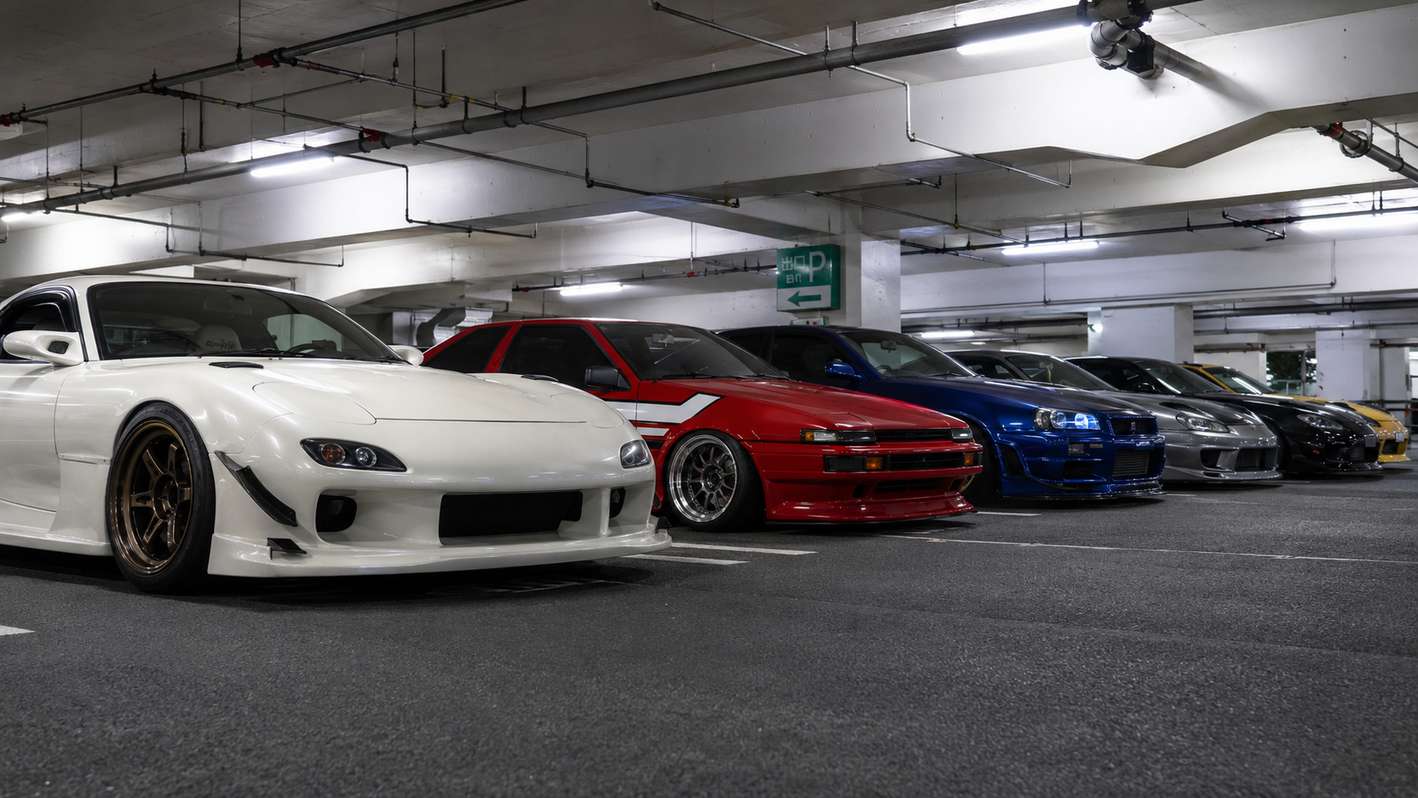
Rainy evenings have their own spot: the underground Akihabara UDX garage, free to walk into, holds its densest rows of modified cars and itasha on Friday and Saturday nights from 7 pm to midnight, heaviest on level B2F.
The alternative outdoor lots keep their own hours, Tatsumi PA No. 1 peaks from 9:30 pm onward on weekends, and Umihotaru fills after early Daikoku closures, peaking near 10 pm on Fridays.
For unadvertised meets, tuning shops and tracking apps surface what no calendar prints. And one date to know: Tokyo Auto Salon lands in January, so time a show-focused trip accordingly.
A private Daikoku night tour is the surest way in: hotel-to-hotel transport, a driver who reads the scene, and a plan B the moment police close the lot. Go early on weekends, relax midweek, and book any specific car at least 48 hours ahead.
Go ifYou want the meet without sharing a cabin or a scheduleYou would rather not navigate the Shuto Expressway or the last trainYou have a specific car on the list, like an R34, and time to book ahead
Skip ifYou cannot get in and out of a low sports car unaidedYou need a guaranteed drifting or street-racing spectacle, since none happens hereYou expect a scheduled show with a fixed car list, which no night at Daikoku provides
Our pick to book
Daikoku & Tokyo Private JDM Tour in 700HP R34 GT-R4.9★ (195) · 3 - 4 hours · Hotel pickup · Free cancellation
The things travelers ask before committing to a private night out at the meet.
Tokyo2026
The spiral ramps glow above the meet while Skylines roll in under the pylons. Bring a coat in winter, the sea wind bites at 1°C.
What exactly is a private Daikoku JDM tour?
You and your group get a dedicated JDM car with a local enthusiast behind the wheel, picked up at your hotel and driven out to the Daikoku Parking Area meet along the Wangan Route. Nothing is shared with strangers.
Will my hotel be covered for pickup and drop-off?
Standard door-to-door pickup for private Daikoku tours covers Tokyo's 23 special wards, with Shibuya, Shinjuku, Roppongi, Akasaka and the districts around Tokyo Station at the center of the zones. Hotels outside central Tokyo usually cost extra, so check availability when you book.
Can I guarantee a specific car, like an R34 GT-R or a Supra?
A specific model always depends on availability, group size and maintenance on the day. Some operators confirm a chosen car by message at least 48 hours before the tour, so plan ahead if a certain car matters to you.
Many R34 rides turn out to be an R34 GT-T, since the all-wheel-drive GT-R version is rarer.
What happens if the police close Daikoku PA on the night?
Closures happen without warning on busy nights, usually from around 7:30 pm, and cars are moved off the lot.
Your guide redirects to another gathering spot, most often Umihotaru PA across the bay or Tatsumi PA on the Shuto Expressway, and several tours give you the choice of a full refund if you would rather stop there.
Could I really get stranded at Daikoku PA without a tour?
Yes. The parking area sits on an expressway island behind fences, so walking out is illegal and physically impossible, and there is no taxi stand. Ride apps rarely pick up from inside, especially during a shutdown. A private tour guarantees your round trip.
What does the booking cover, and what do I pay for myself?
Private tours include the expressway tolls, fuel, parking fees and your hotel transfers. Food, drinks from the Lawson or the diners, and souvenirs come out of your own pocket.
How long does the whole night take?
Plan on 3 to 4 hours door to door from central Tokyo, though longer routes run up to 6 hours. Most groups spend about an hour parked at Daikoku PA itself, walking among the cars.
Will I make it back before the last train?
Standard evening runs return between 10 pm and 11:30 pm, before Tokyo Metro and JR services wind down around midnight. Midnight runs finish later, but they drop you at your hotel, which matters because the trains stop running for the night.
What if it rains, or a typhoon rolls in?
Rain does not cancel the drive. Turnout at the meet thins out because polished show cars stay home, but regulars still show up and guides hand out umbrellas. For typhoons and highway closures, operators contact you in advance to reroute, reschedule or refund.
Can a couple or a solo traveler book a private charter?
Yes. Several private plans price by group size for one to three guests, and one sports car night charter is offered exclusively for a single passenger. With a car that seats three, a group of four travels across two vehicles.
Your own 700Hp R34 GT-R on a private JDM night run
A completely private JDM tour to Daikoku PA in a 700HP R34 GT-R, with hotel pickup anywhere in Tokyo and free cancellation up to 24 hours before you ride.
 Your best match